If you’re searching for double oven repair in Naperville, you’re likely dealing with one oven that won’t heat, an unresponsive control panel, or a built-in wall oven that’s no longer performing as it should. Because double wall ovens have separate heating systems for each cavity, diagnosing the exact problem is essential before replacing parts. In this guide, we’ll explain the most common built-in wall oven issues, their causes, when a repair is the best option, and what Naperville homeowners should know before calling a technician.
The most common problems with double built-in wall ovens are one cavity heating unevenly or not at all while the other works fine, a control panel that stops responding, and a self clean cycle that fails partway through or triggers a blown thermal fuse. What makes double ovens different from a standard range oven is that each cavity usually runs its own independent heating elements, temperature sensor, and in many models its own control board, so a failure rarely takes down both ovens at once, and figuring out which specific system failed is what actually determines the repair.
If one side of your double oven has stopped behaving normally, here’s how to think through what’s actually happening before a technician gets involved, and why these units come with a few repair considerations that a standard single oven doesn’t.
Why Double Ovens Fail Differently Than Single Ovens
A double wall oven is essentially two separate ovens sharing one cabinet cutout and often one exterior control panel, but the internal systems, bake and broil elements, temperature sensors, and door hardware, are typically independent for each cavity. That’s actually good news when something goes wrong, since a failed lower oven usually has no effect on the upper oven’s ability to heat properly, which helps narrow down where a problem is coming from right away.
According to Consumer Reports member survey data, the most common reasons people repair a wall oven are a control panel that stops responding, cited by about a third of respondents, followed by the oven failing to heat effectively, and a self clean cycle that breaks or stops working partway through. Those three categories cover the large majority of double oven service calls, which is worth knowing before you start guessing at more exotic causes.
One Oven Not Heating While the Other Works Fine
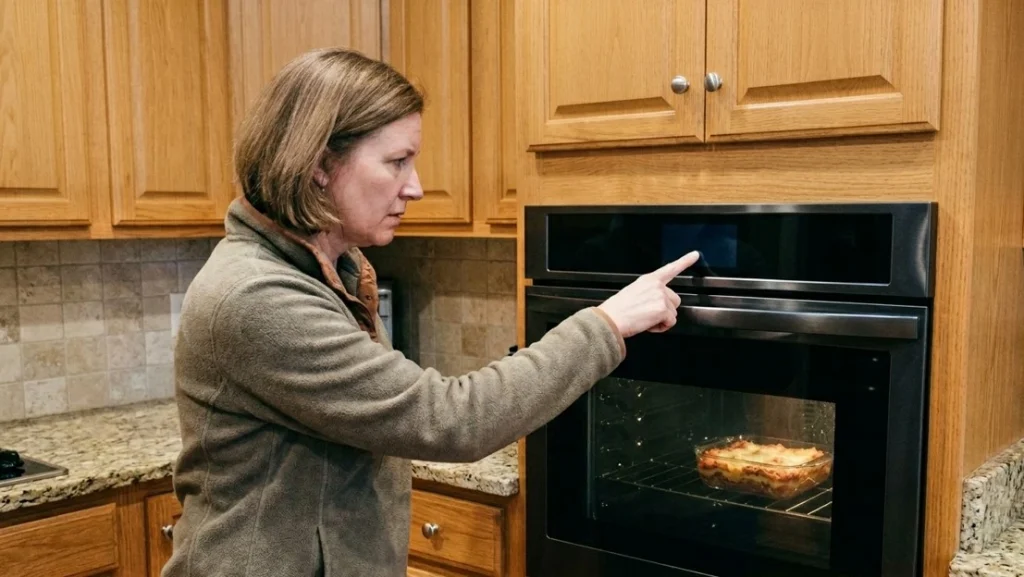
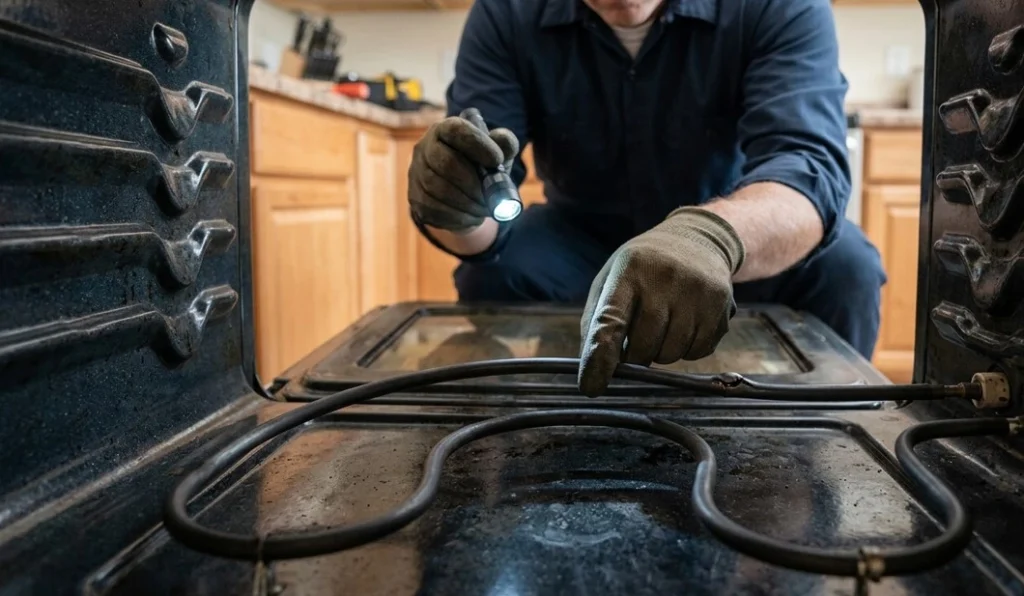
This is the single most common double oven complaint, and it almost always points to something specific to the affected cavity rather than a shared system. A bake or broil element that’s failed won’t glow the uniform bright orange it should when the oven is heating, and this is something you can usually confirm just by watching through the window. A faulty temperature sensor in that specific cavity can also cause the affected oven to run cool, overheat, or shut off prematurely while feeding inaccurate data to its control board, even though the physical element itself is fine.
A blown thermal fuse is another possibility worth knowing about, particularly if the affected oven previously went through an overheating event or a self clean cycle that didn’t finish properly. This safety component is designed to cut power if the oven gets dangerously hot, and once it blows, it has to be replaced rather than reset, since it’s a one time safety device by design.
Control Panel or Display Problems
A dead or unresponsive control panel is the single most reported wall oven repair issue, and on a double oven this often affects both cavities at once since they frequently share a single exterior display and control board, even when their internal heating systems are separate. If neither oven responds to input despite having power, the control board itself, or the ribbon cable connecting it to the display, is the most likely culprit.
It’s worth trying one simple step before assuming the worst. Disconnecting power at the breaker for a few minutes and then restoring it resets the control board on many models and can resolve a temporary glitch without needing any part replaced at all. If the panel stays unresponsive after that reset, the issue has moved from software to hardware, and a technician can confirm whether the board or the connecting wiring needs replacement.
Self Clean Cycle Failures
A self clean cycle that starts but doesn’t finish, or that trips a hidden safety mechanism, is a well documented double oven complaint, and it’s connected to a couple of specific components. The door latch motor has to confirm the door is fully locked before a self clean cycle will even begin, so a failed latch motor is a common reason self clean won’t start in the first place. If a self clean cycle previously ran too hot or too long due to another fault, it can blow the thermal fuse mentioned earlier, which then prevents the oven from heating at all, for baking or self cleaning, until that fuse is replaced.
Because self clean cycles run at extremely high temperatures, well above normal baking range, this is one area where a genuine component failure is more likely to cascade into a second problem, and it’s worth having a technician check the door latch and thermal fuse together rather than assuming a single part fixed everything.
Door and Hinge Issues Specific to Double Ovens
The added weight of two stacked oven doors puts more strain on hinges and springs than a single oven ever experiences, and worn or weakened hinges are a common reason a double oven door starts sagging, closing unevenly, or failing to seal tightly against the gasket. A door that doesn’t seal properly lets heat escape during both baking and self cleaning, which can look like a heating problem even when the elements and sensor are working correctly, so it’s worth checking the door and gasket condition before assuming a more expensive internal component is at fault.
Repair Versus Replacement for a Double Oven
Repair versus replacement math looks a little different for a double oven than for a standard range, mainly because these units cost considerably more to replace and the labor for accessing a built in unit is more involved than pulling out a freestanding range. Consumer Reports data shows that a solid majority of wall oven repairs succeed on the first attempt, and given that a double oven’s replacement cost is typically well above what a single range costs, repair remains the financially sensible choice in most situations, especially when the failure is isolated to one cavity or a single component like an element, sensor, or door latch.
The calculation shifts if a double oven is genuinely old, meaning 20 years or more, and parts availability becomes a real obstacle, which does happen with older or discontinued models. In that situation, a technician who’s upfront about limited parts availability, rather than one who keeps ordering parts on a guess, is doing you a favor by steering the conversation toward replacement sooner rather than later.
Why Built-In Ovens Deserve a More Experienced Technician
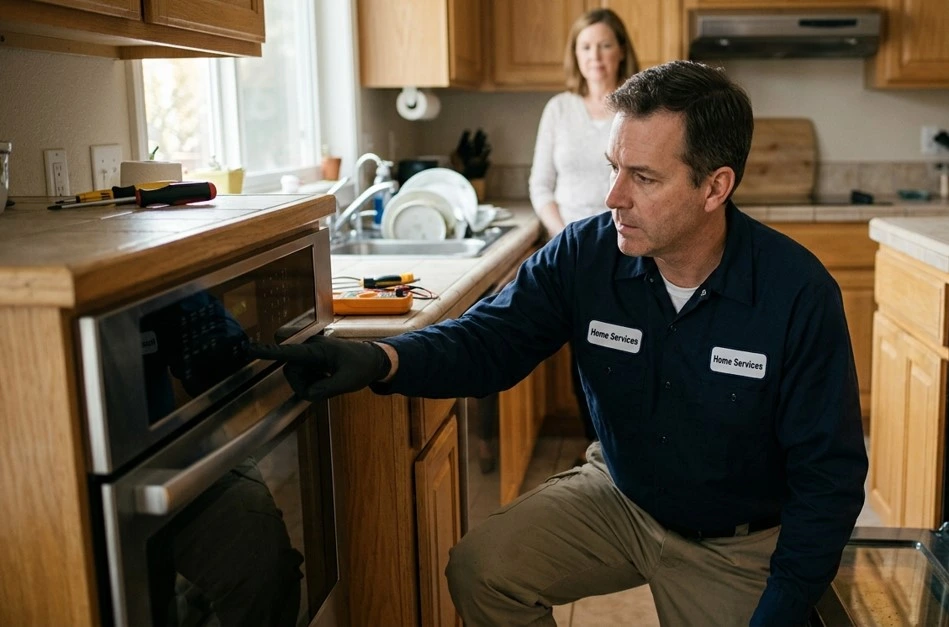
Built in double ovens involve more than swapping a part. Accessing the internal wiring and components typically means removing the entire unit from its cabinet cutout, which requires proper tools and technique given that these units are heavy and hardwired directly into the home’s electrical system rather than plugged into a standard outlet. It’s a reasonable question to ask a technician directly whether they have specific experience with built in double ovens, since the diagnostic and access process is meaningfully different from working on a freestanding range.
If you’re dealing with a double oven where one cavity has stopped heating properly, the control panel isn’t responding, or self clean keeps failing partway through, our technicians at Naperville Appliance Fix have experience with built in wall ovens across major brands and can identify exactly which system has failed before recommending a repair. You can see more about how we handle oven diagnostics, including elements, sensors, control boards, and door components, on our oven repair page.
Frequently Asked Questions
Why does only one side of my double oven work? Each cavity in a double oven typically has its own heating elements and temperature sensor, so a failure in one usually doesn’t affect the other. The most common causes are a failed bake or broil element, a faulty temperature sensor, or a blown thermal fuse specific to that cavity.
What’s the most common reason a double wall oven needs repair? According to Consumer Reports member survey data, a nonresponsive control panel is the single most common reason people repair a wall oven, followed by the oven failing to heat effectively and self clean cycle failures.
Why did my self clean cycle stop working partway through? This is often connected to a failed door latch motor, which must confirm the door is locked before the cycle can run, or a blown thermal fuse from a previous overheating event, which prevents the oven from heating at all until it’s replaced.
Is it worth repairing a double oven, or should I replace the whole unit? In most cases, repair is the more practical option, particularly since double ovens cost significantly more to replace than a single oven and a large share of wall oven repairs succeed on the first attempt. Replacement becomes more sensible mainly when the unit is 20 or more years old and parts are becoming difficult to source.
Can I repair a built-in double oven myself? It’s not recommended for anything beyond very basic tasks like replacing a light bulb. Accessing internal components typically requires removing the entire unit from its cabinet cutout, and these ovens are hardwired directly into your home’s electrical system rather than plugged into a standard outlet.
Sources referenced: Consumer Reports’ guide on wall oven repair versus replacement for member survey data on common failure points and repair success rates, and the U.S. Consumer Product Safety Commission’s home electrical safety guidance for context on the risks of working around hardwired, high voltage appliances.