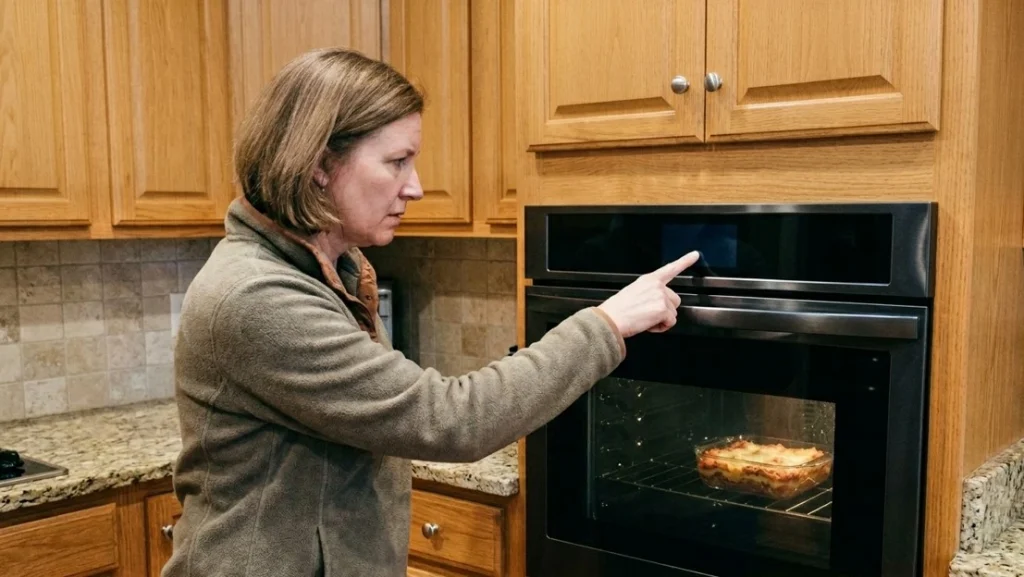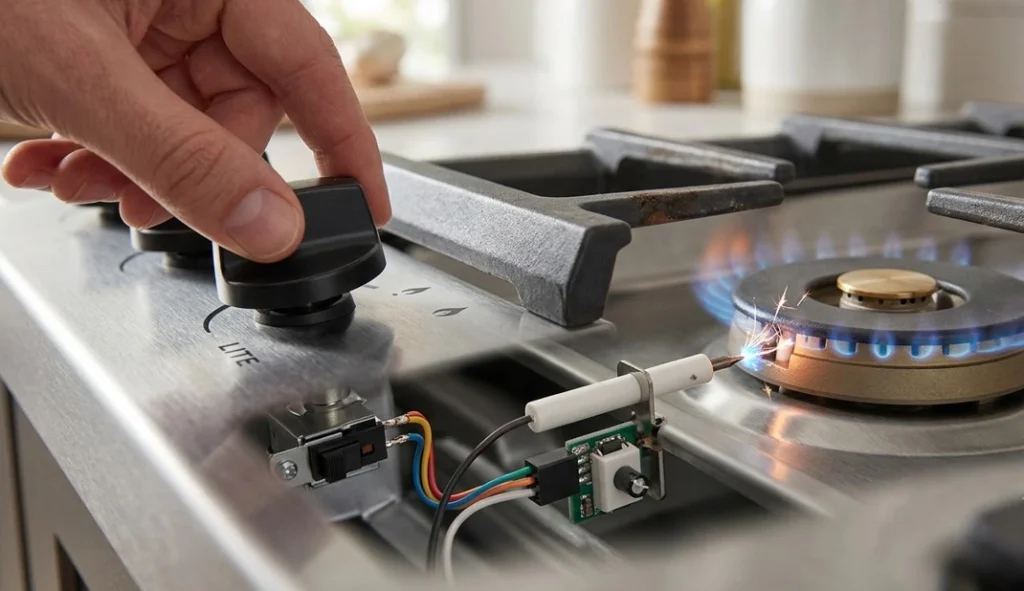
If your Oven Is Preheating Too Slowly In Naperville, the problem is often caused by a weakening heating element or a faulty temperature sensor. Slow preheating not only delays cooking but can also increase energy use and lead to uneven baking results. Understanding the warning signs and knowing which component is responsible can help you avoid unnecessary repairs and restore your oven’s performance quickly.
A slow preheat is more often the heating element than the sensor, since a weakening bake element can still glow and technically work while producing noticeably less heat, whereas a failing sensor usually shows up as an oven that seems to preheat at a normal pace but then cooks inaccurately once you’re actually baking. The good news is you don’t have to guess between the two. A simple test with an inexpensive oven thermometer, explained below, will tell you within about 15 minutes which component is actually behind the problem.
Most electric ovens should reach 350 degrees in roughly 10 to 15 minutes. If yours is regularly taking 20 minutes or more, something in the heating or sensing system isn’t performing the way it’s supposed to, and here’s how to figure out exactly what.
The Simple Test That Tells You Which Part Is at Fault
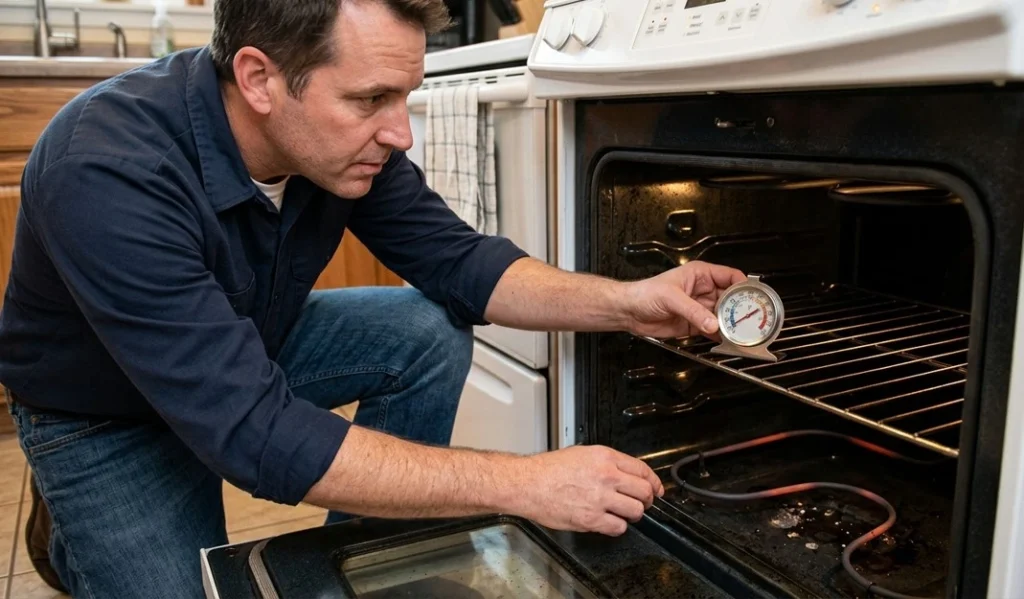
Place an inexpensive oven thermometer on the center rack, set the oven to bake at 350 degrees, and time how long it takes to actually reach that temperature according to the thermometer, not just when the oven itself signals that preheating is complete. This single test separates the two most likely causes almost immediately.
If the thermometer confirms the oven is genuinely slow to reach 350, taking 20 minutes or longer, and the heating element inside doesn’t glow a uniform, even orange the whole time, you’re most likely looking at a weakening heating element. If instead the oven beeps to signal preheat is done well before the thermometer agrees, for example the display says preheat complete at the 12 minute mark but the thermometer still reads 300 degrees, that’s a strong indicator the temperature sensor is feeding the control board inaccurate information rather than the element itself struggling to produce heat.
Why a Weakening Heating Element Causes Slow Preheat
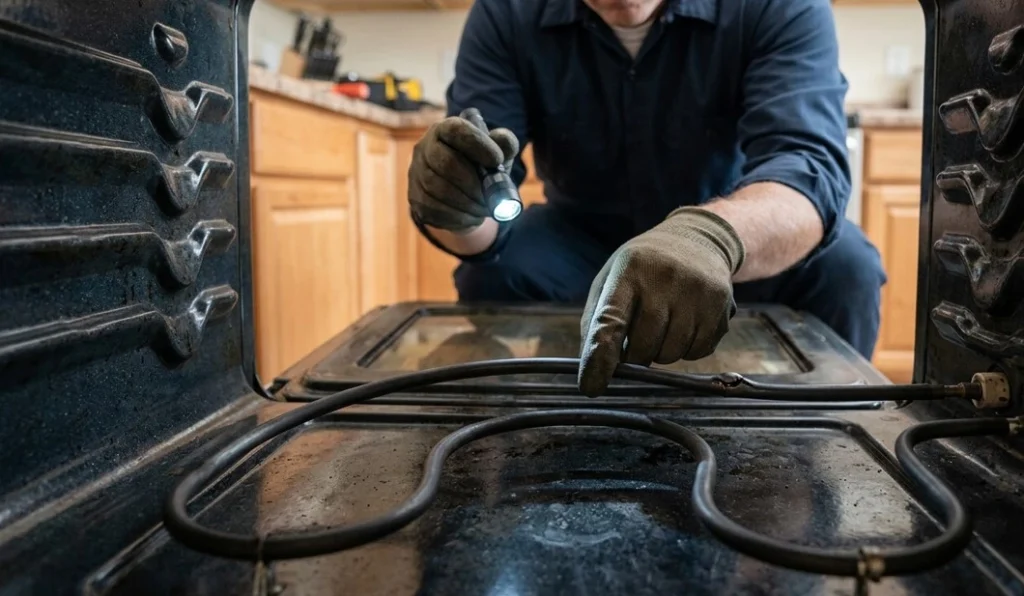
The bake element is responsible for the majority of the heat during preheat, and it doesn’t necessarily fail all at once. As the metal coil ages through repeated heating cycles, its resistance can shift in a way that lets it still glow and still technically function, while producing meaningfully less heat than it did when new. This is the most common reason an oven that used to preheat quickly starts taking noticeably longer without any single dramatic failure.
A visual check backs up what the thermometer test tells you. Watch the element through the oven window while it’s heating. It should glow a consistent, even orange across its entire length within a few minutes. Dark spots, uneven glow, visible warping, or a section that never seems to heat at all point toward a failing element, and this is a component a technician can test directly with a multimeter for continuity rather than relying on a visual impression alone.
Why a Faulty Sensor Creates a Different Kind of Slow
A temperature sensor problem is a little more deceptive because it doesn’t always feel like slow preheating in the way people expect. The sensor’s job is to tell the control board what the actual cavity temperature is, and if it’s reading inaccurately, whether from age related drift, grease buildup on the probe, or the sensor shifting out of its proper position, the control board can shut off heating prematurely because it believes the target temperature has already been reached.
This is why sensor issues often show up more clearly in your cooking results than in the preheat timer itself. Food that consistently comes out underdone despite following recipe times exactly, or an oven that seems to hit temperature quickly but bakes inconsistently afterward, points toward the sensor rather than the element. A dirty or grease coated sensor probe is worth ruling out first, since simply wiping it clean sometimes resolves the issue entirely without any part needing replacement.
Other Culprits Worth Ruling Out Before Assuming a Part Has Failed
Before concluding it’s the element or the sensor, a couple of simple checks can save you a service call entirely. A worn or gapped door gasket lets heat escape as fast as the oven can produce it, which drags out preheat time regardless of how well the element and sensor are functioning. The classic paper test works well here: close the oven door on a piece of paper positioned along different points of the seal, and if it slides out easily anywhere along the edge, the gasket has lost its seal and needs replacing.
Overcrowding the oven with extra racks, using foil to line the oven floor, or running exhaust fans nearby during preheat can also slow things down by restricting airflow or pulling heat away from the cavity. These are worth ruling out first since they cost nothing to check and occasionally explain the entire problem.
When It’s Neither the Element Nor the Sensor
Occasionally, both the element and the sensor test fine individually, and the actual cause is the control board itself, which manages power distribution and can develop faults that mimic a weak element or a bad sensor from the outside. This isn’t something a homeowner can typically confirm without proper testing equipment, and it’s one of the reasons a professional diagnosis catches the right issue faster than a guess and replace approach, especially once you’ve ruled out the more obvious culprits like the gasket and airflow.
Why This Is Worth Fixing Sooner Rather Than Later
A slow preheating oven isn’t just an inconvenience while you wait around the kitchen. It typically means the oven is working harder than it should to reach and hold temperature, which translates to unnecessary energy use over time, and it often gets worse gradually rather than staying stable, meaning today’s 20 minute preheat can become 30 minutes a few months from now. Catching a weak element or a drifting sensor early usually means a straightforward, affordable repair rather than a bigger issue down the line.
Getting an Accurate Diagnosis
Both a heating element and a temperature sensor are among the more affordable and quicker oven repairs, and a technician can typically confirm which one is at fault, or rule out the gasket and control board, within a single visit using proper testing equipment rather than trial and error.
If your oven has started taking longer to preheat or you’re getting inconsistent baking results, our technicians at Naperville Appliance Fix can pinpoint whether it’s the element, the sensor, or something else entirely, and give you a clear repair estimate before any work begins. You can see more about how we handle electric and gas oven issues, including heating elements, sensors, and control board diagnostics, on our oven repair page.
Frequently Asked Questions
How long should it normally take an oven to preheat to 350 degrees? Most electric ovens reach 350 degrees within 10 to 15 minutes. If yours consistently takes 20 minutes or longer, that’s a sign something in the heating or sensing system isn’t performing correctly.
How can I tell if it’s the heating element or the sensor without calling a technician? Place an oven thermometer on the center rack and time how long it actually takes to reach 350 degrees. If the oven is genuinely slow according to the thermometer and the element doesn’t glow evenly, suspect the element. If the oven signals preheat is done well before the thermometer agrees, suspect the sensor.
Can a dirty temperature sensor cause slow or inaccurate preheating? Yes. Grease and food residue on the sensor probe can interfere with an accurate reading, which can cause the oven to cut off heating prematurely. Wiping the sensor clean is a simple first step worth trying before assuming it needs replacement.
Could a bad door seal be the real cause of slow preheating? Yes. A worn or gapped gasket lets heat escape as quickly as the oven produces it. The paper test, closing the door on a piece of paper and checking if it slides out easily, is a quick way to check the seal’s condition yourself.
Is it worth repairing a slow preheating oven, or should I just replace it? In most cases, repair is the more practical choice. Heating elements and temperature sensors are among the more affordable oven components to replace, and fixing the issue early typically costs far less than waiting until the problem worsens or leads to a bigger repair.
Sources referenced: the U.S. Department of Energy’s guidance on oven and range energy efficiency for context on how weakened components increase energy use, and UL Standards & Engagement’s home electrical safety resources for general guidance on the risks of testing or handling high voltage appliance components without proper training.