
If you’re searching for Range Hood and Exhaust Fan Repair in Naperville IL, grease buildup may be the reason your kitchen ventilation isn’t working properly. Over time, grease can clog filters, coat fan blades, reduce airflow, and even create a fire hazard. This guide explains the warning signs of range hood problems, when simple cleaning is enough, when professional repair is necessary, and how Naperville homeowners can keep their kitchen exhaust systems operating safely and efficiently.
Grease buildup becomes a genuine problem once it’s thick enough to restrict airflow, cake onto the fan blades and throw them off balance, or coat the damper flap so it sticks partway open or closed. At that point it’s no longer just a cleaning issue, it’s a performance and fire safety issue, since the National Fire Protection Association has found that cooking is the leading cause of home fires in the United States, and grease is the material most often ignited when one starts.
Most range hood problems people call a technician about, from weak suction to strange noises to lights that won’t turn on, trace back to grease somewhere in the system. Here’s how to tell when it’s a simple cleaning job versus when the buildup has already caused a mechanical problem that needs repair.
How Grease Actually Causes a Range Hood to Fail
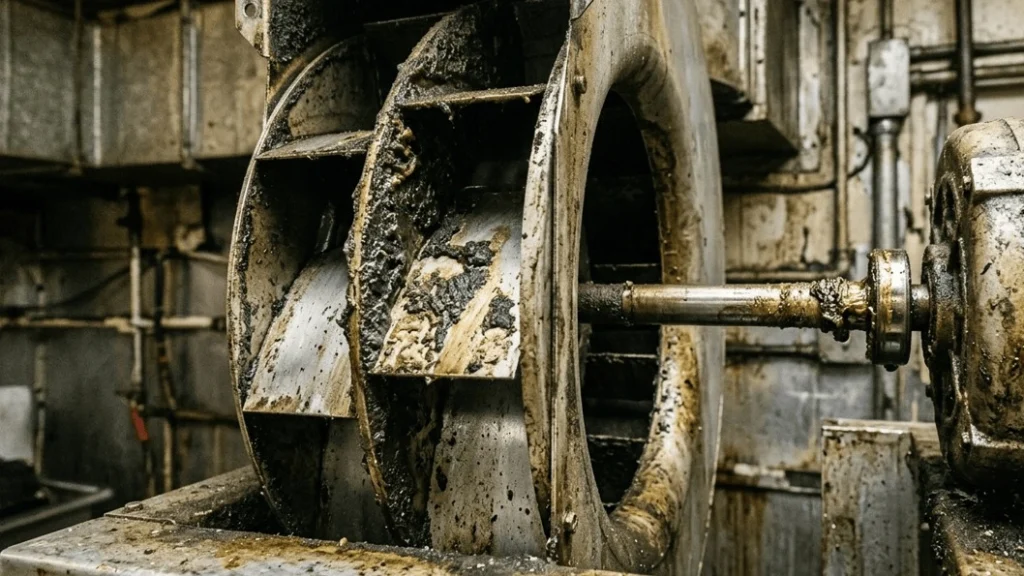
A range hood’s grease filter is designed to be the sacrificial layer, meaning it’s supposed to catch grease before it reaches anything else. When filters go too long without cleaning, grease starts making it past them and settling on the fan blades, motor housing, and ductwork instead, and that’s where a cleaning problem turns into a mechanical one.
Grease coating the fan blades adds weight and, more importantly, adds it unevenly, since buildup rarely accumulates at a perfectly consistent thickness across every blade. Even a few millimeters of uneven residue is enough to throw a fan out of balance, which shows up as a new rattling, humming, or vibration that wasn’t there before. Grease reaching the motor bearings can make the shaft stiff or cause it to grind, and a motor working harder than it should against that resistance tends to burn out sooner than one that’s kept clean.
Weak Suction: The Most Common Complaint
If your range hood turns on but smoke, steam, and odors linger instead of getting pulled up and away, grease is almost always the first thing to check, and there are a few places it likes to hide. Clogged mesh or baffle filters are the most common and easiest fix, and these generally need cleaning every one to three months depending on how often you cook, with a hot soapy soak or dishwasher cycle usually restoring them.
If clean filters don’t solve it, the duct itself is the next suspect. Grease accumulates inside ductwork gradually, and long runs with multiple bends are especially prone to it, since airflow slows at every turn and gives grease more opportunity to settle. A damper, which is the flap that’s supposed to open when the fan runs and close when it’s off, can also get stuck from grease buildup around its pivot point, and a damper that’s stuck partly closed will noticeably choke airflow even with a perfectly clean fan and motor behind it.
Unusual Noise: A Sign Buildup Has Gone Mechanical
New rattling, buzzing, or grinding noises are one of the clearer signs that grease has moved from a cleaning issue to a mechanical one. A fan blade that’s collected uneven grease will often wobble or rattle at certain speeds, and this is something you can sometimes confirm visually by removing the filters and shining a light on the blades to check for visible residue or an obviously uneven coating.
A humming sound with no actual air movement is a different signal, and it usually points to a failed capacitor or motor winding rather than grease specifically, though heavy grease buildup binding the motor shaft can produce a similar symptom. This is one of the few range hood issues where it’s worth having a technician confirm the cause with proper testing rather than guessing, since a bad capacitor and a grease bound motor call for very different repairs.
Why This Matters More Than It Might Seem
It’s easy to treat a sluggish range hood as a minor inconvenience, but the numbers make a stronger case for taking it seriously. NFPA data covering a recent five year period found that cooking causes an average of roughly 158,400 reported home fires annually in the United States, and cooking materials including oil, fat, and grease account for a majority of those ignitions. A range hood that isn’t properly venting smoke and heat away from the cooking surface isn’t just failing at comfort, it’s failing at one of its actual safety functions, and a heavily grease coated filter or duct adds fuel directly to the path a stovetop flare up would need to spread.
This doesn’t mean every range hood problem is an emergency, but it’s a good reason not to let weak suction or unusual noise sit unaddressed for months at a time.
What You Can Handle Yourself Versus What Needs a Technician
A fair amount of range hood maintenance is genuinely doable without professional help. Removing and washing mesh or baffle filters, wiping down the visible interior surfaces of the hood, and replacing a spent charcoal filter on a recirculating, ductless model are all straightforward tasks that resolve a meaningful share of weak suction complaints on their own.
A few situations call for a professional instead. Grease that’s reached the fan motor or bearings, a damper that’s stuck and not just dirty on the surface, ductwork that needs to be opened up and cleaned along its length, or any electrical symptom like a control board that’s stopped responding or wiring that shows signs of heat damage are all better handled by someone with the right tools and experience working inside these units. Annual professional inspection is also worth scheduling even if nothing seems obviously wrong, particularly for households that cook frequently or use high heat methods like wok cooking, since that’s exactly the use pattern that accelerates grease accumulation.
Keeping Buildup From Becoming a Repair
A simple maintenance rhythm goes a long way toward preventing grease from ever reaching the point of mechanical failure. Clean or wash mesh and baffle filters monthly if you cook often, and no less than every two to three months for lighter use. Replace charcoal filters on ductless models every three to six months, since they can’t be cleaned and simply lose effectiveness over time. Wipe down the hood’s interior and visible fan area periodically rather than waiting for a deep clean to become necessary, and keep an ear out for any new noise, since catching a wobble or grind early is far cheaper than waiting for a motor to fail outright.
If your range hood has developed weak suction, new noise, or simply isn’t clearing smoke and odors the way it used to, our technicians at Naperville Appliance Fix can determine whether the cause is a cleaning issue or a mechanical one, and handle whichever repair is actually needed. Take a look at our full appliance repair services to see everything we cover, from range hoods and exhaust fans to the ranges and ovens they sit above.
Frequently Asked Questions
How do I know if my range hood problem is just dirty filters or something more serious? Start by cleaning or replacing the filters, since this resolves the majority of weak suction complaints on its own. If suction is still weak after clean filters are back in, or if you notice new noise, vibration, or the fan not turning at all, the issue has likely moved beyond a simple cleaning fix.
How often should I clean my range hood filters? Mesh and baffle filters generally need cleaning every one to three months depending on how often you cook, using hot soapy water or a dishwasher cycle. Charcoal filters on ductless, recirculating models can’t be cleaned and typically need replacement every three to six months.
Can grease buildup actually cause a fire? Yes. According to the National Fire Protection Association, cooking is the leading cause of home fires in the United States, and cooking materials including oil, fat, and grease are the most commonly ignited materials in those fires. A range hood clogged with grease is less able to clear heat and vapor away from the cooking surface, which adds risk rather than reducing it.
Why does my range hood make a rattling or humming noise? Rattling often comes from grease coating the fan blades unevenly, which throws them off balance even with a small amount of buildup. A humming sound with no air movement more often points to a failed capacitor or motor winding, though a heavily grease bound motor shaft can produce a similar effect.
When should I call a professional instead of cleaning it myself? Filter cleaning and basic wipe downs are safe to do yourself. Grease that’s reached the motor or bearings, a stuck damper, ductwork buildup, or any electrical symptom like an unresponsive control board are better left to a technician with the right tools and training.
Sources referenced: the National Fire Protection Association’s cooking safety data on the leading causes of home fires, and the U.S. Fire Administration’s report on residential cooking fires for additional detail on ignition materials involved in kitchen fires.

Pingback: How to Extend the Life of Your Oven | Oven Repair in Naperville