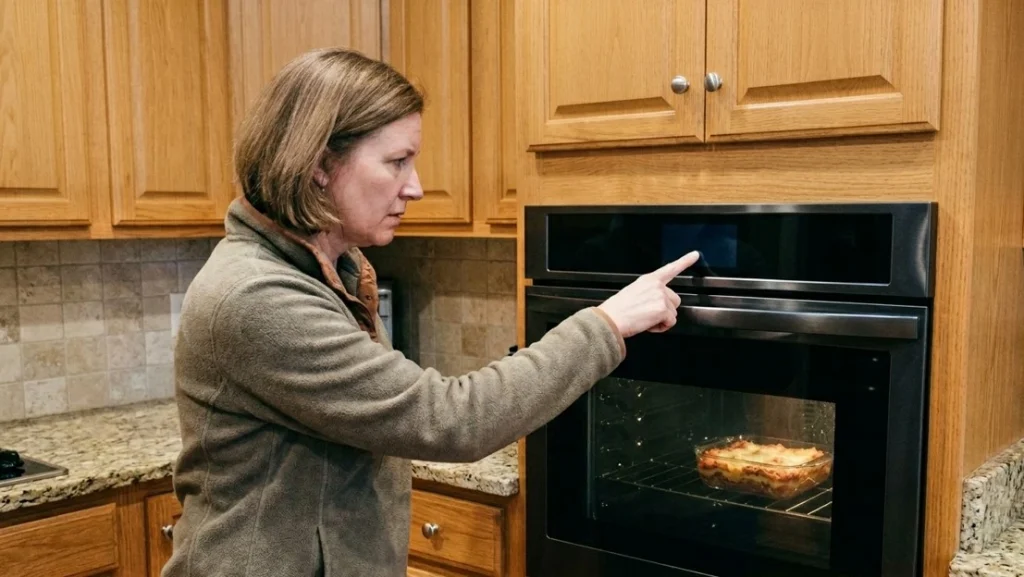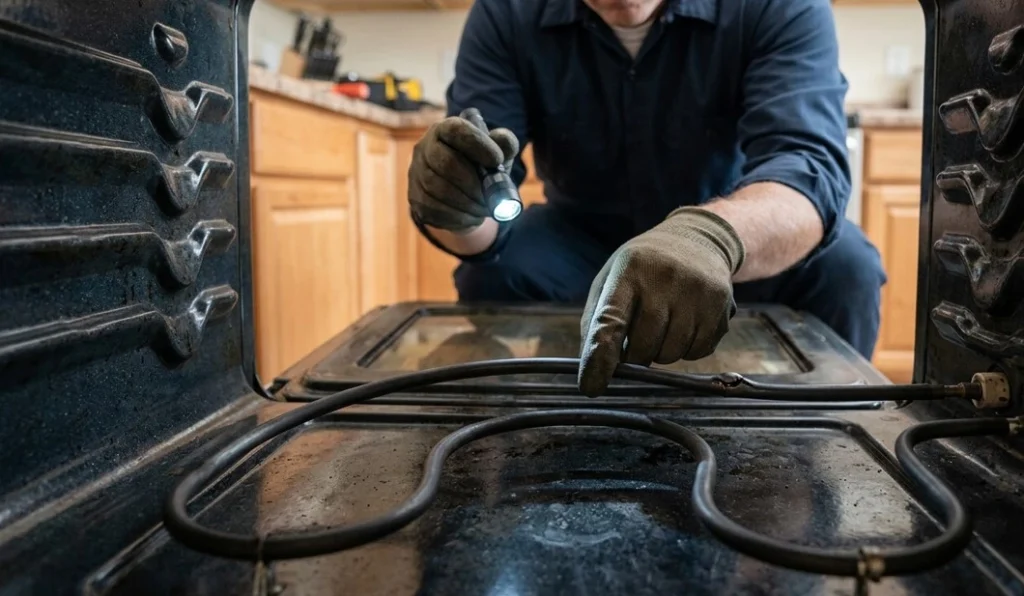
Gas Oven Not Heating Evenly In Naperville is a common issue homeowners experience when a weak igniter, faulty temperature sensor, or oven calibration problem affects heating performance. If your oven takes too long to preheat or cooks food unevenly, a professional diagnosis can help restore accurate temperatures and prevent more costly repairs.
If your baked goods are coming out pale on one side and burnt on the other, or your oven takes 20 minutes to reach 350 degrees when it used to take 8, the components below are where a technician will start looking first, and understanding how they work makes it much easier to know what you’re dealing with before you ever pick up the phone.
How a Gas Oven Is Supposed to Heat in the First Place
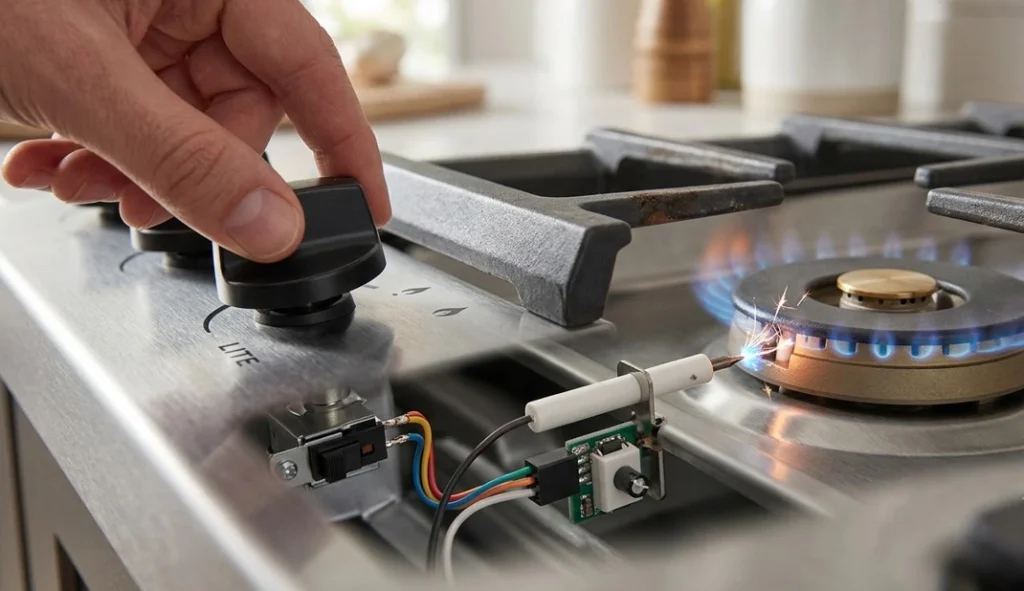
It helps to understand the sequence before troubleshooting it. When you set a gas oven to bake, the igniter, usually a small ceramic component called a hot surface igniter, begins heating up and glows increasingly bright as electricity flows through it. As it gets hot enough, it draws enough current to trigger a bimetal arm inside the gas safety valve, which physically opens and releases gas to the burner tube. The now white hot igniter lights that gas, and a flame appears. Once the oven’s interior reaches your set temperature, a thermostat or temperature sensor signals the control to cut power to the igniter, closing the valve until the oven cools enough to need another heating cycle.

That whole sequence, ignition to shutoff, typically takes under two minutes in a properly functioning oven. When any single link in that chain weakens, the oven doesn’t necessarily fail completely, it just gets worse at doing its job, which is exactly why uneven heating is often more frustrating to diagnose than an oven that simply won’t turn on at all.
Why a Weak Igniter Causes Uneven Heat, Not Just No Heat
A failing igniter doesn’t usually go from perfect to dead overnight. It degrades gradually, and that gradual decline is a major reason ovens start heating unevenly before they stop heating altogether.
Here’s the mechanism. An igniter needs to glow at a specific amperage to pull enough current through the gas safety valve. As the ceramic element ages and its resistance changes, it can still glow, sometimes even glow brightly, without drawing sufficient amperage to fully open the valve. The result is a smaller, weaker, or delayed flame that doesn’t distribute heat evenly across the oven cavity. You might notice the back of a dish browning while the front stays undercooked, or a preheat cycle that used to take 8 minutes now stretching past 20.
A useful diagnostic sign homeowners can watch for, without opening up the appliance, is the color and behavior of the igniter glow through the oven window. A healthy hot surface igniter glows a bright, consistent white or orange and typically ignites the burner within 30 to 90 seconds. A dim, yellowish glow, or a delay well beyond that window, points toward an igniter that’s on its way out, even if it hasn’t failed completely yet.
How Calibration Problems Create Hot and Cold Spots
The second major culprit is calibration, and it’s a bit less intuitive because the igniter and burner can be working perfectly while the oven still cooks unevenly.
Every gas oven relies on a temperature sensor, sometimes still called a thermostat, mounted inside the cavity to tell the control board what the actual air temperature is. If that sensor drifts out of calibration, or if it’s positioned too close to a heating element or airflow path, it reports an inaccurate temperature back to the control. The oven might think it’s at 350 degrees when it’s actually closer to 375, or it might cycle the burner on and off more erratically than it should, creating temperature swings that show up as unevenly baked food, particularly with delicate items like cookies, cakes, or custards that are sensitive to even small temperature shifts.
Most modern ovens with electronic controls include a calibration offset feature, often accessed by holding the bake button for several seconds, that lets you nudge the displayed temperature up or down to compensate for drift. This can mask minor calibration issues, but it’s not a substitute for diagnosing a genuinely failing sensor, and pushing the offset too far in either direction is usually a sign that the sensor itself needs replacing rather than adjusting.
Other Contributors Worth Ruling Out First
Igniters and calibration account for the large majority of uneven heating complaints, but a few other factors are worth checking before assuming a part needs replacing.
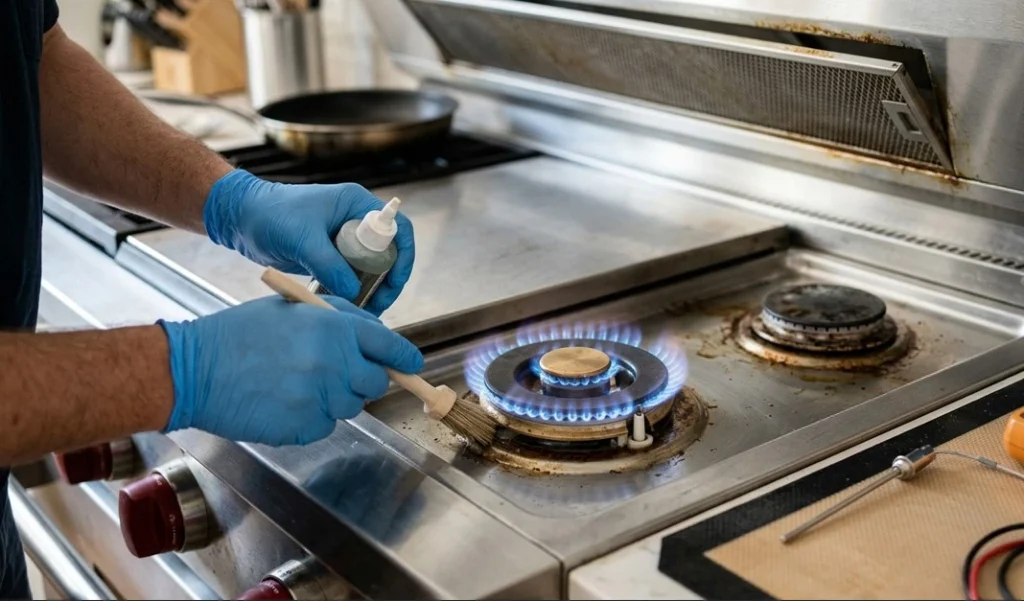
A door that doesn’t seal tightly lets heat escape unevenly, particularly if the gasket has warped or come loose on one side, which can make one half of the oven noticeably cooler than the other. Blocked or dirty burner ports from grease and food debris can also cause weak or lopsided flames even with a perfectly healthy igniter, so a simple deep clean is worth doing before scheduling a repair. Rack position and bakeware also matter more than most people expect, since dark or warped pans and improperly centered racks can create the impression of an oven problem when the appliance itself is functioning normally.
Why This Isn’t a DIY Fix, and Why That’s a Safety Issue
It’s worth being direct about this part. Gas oven components sit right at the intersection of electrical and gas systems, and testing an igniter’s amperage or a safety valve’s response correctly requires a multimeter and an understanding of live voltage testing that goes beyond swapping a part and hoping for the best. A door left slightly open, a burner that’s only partially igniting, or a valve that isn’t sealing fully can allow unburned gas or excess carbon monoxide to build up, particularly in a kitchen with poor ventilation.
The Environmental Protection Agency specifically recommends keeping gas burners properly adjusted, since a persistent yellow tipped flame is generally a sign of maladjustment and increased pollutant emissions rather than something to ignore. If you ever notice a yellow or orange flame instead of blue, a strong gas odor, or symptoms like headache and nausea that improve when you leave the house, that’s a signal to stop using the oven and call a professional immediately rather than continuing to troubleshoot.
When to Call a Technician
A same day or next day service call makes sense once you notice any of the following: a preheat cycle that’s meaningfully slower than it used to be, visibly uneven browning across multiple dishes and recipes rather than just one, a dim or delayed igniter glow, or a control panel calibration offset that’s already been pushed to its maximum and still isn’t fixing the problem.
Most Naperville households find that igniter replacements and thermostat or sensor recalibrations are among the more affordable major appliance repairs, especially compared to a full range replacement, and a technician can usually confirm which component is at fault within a single visit using amperage and continuity testing rather than guesswork.
If your gas oven has started cooking unevenly, taking longer to preheat, or showing a weak or delayed igniter glow, our technicians at Naperville Appliance Fix can diagnose the exact cause on the first visit and explain your options clearly before any work begins. You can see more detail on how we handle gas and electric range issues on our oven repair page, including igniters, temperature sensors, and control board diagnostics.
Frequently Asked Questions
Why does my gas oven heat unevenly instead of just not heating at all? Uneven heating usually happens when a component is degrading rather than fully failed. A weak igniter may still glow but draw insufficient current, and a miscalibrated temperature sensor can cause the burner to cycle inaccurately, both of which create hot and cold spots rather than a complete lack of heat.
How can I tell if my igniter is failing? Watch the glow through the oven window when you turn the oven on. A healthy igniter glows bright white or orange and ignites the burner within 30 to 90 seconds. A dim or yellowish glow, or a significant delay beyond that window, points to a weakening igniter.
Can I fix oven calibration myself? Most electronic ovens allow you to adjust a small temperature offset through the control panel, which can help with minor drift. However, if the offset needs to be pushed to its maximum to get accurate results, the temperature sensor itself is likely failing and needs professional replacement rather than further adjustment.
Is an oven that heats unevenly a safety concern? It can be. A yellow or orange flame instead of blue, a persistent gas smell, or symptoms like headache and nausea that ease when you leave the house are signs of a combustion problem that should be addressed immediately rather than treated as just a cooking inconvenience.
How much does it typically cost to fix a gas oven igniter or thermostat? Costs vary by brand and model, but igniter and sensor replacements are generally among the more affordable major appliance repairs, and a technician can usually confirm the exact cause and cost during a single diagnostic visit.
Sources referenced: the EPA’s guidance on combustion products for proper burner maintenance and adjustment, and the CPSC’s carbon monoxide poisoning prevention guidance for recognizing and responding to combustion related safety risks in the home.