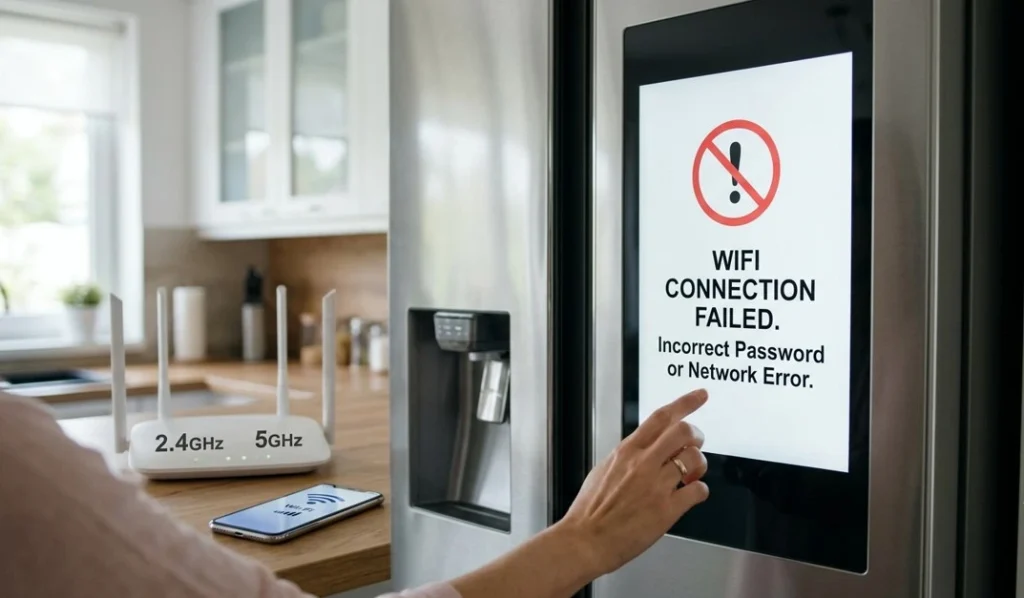
Smart appliances cost more to repair than traditional appliances in 2025 for five compounding reasons: they contain more components that can fail independently, their specialized electronic parts cost more than mechanical parts, diagnosing software-layer problems requires tools and training that standard mechanical repair does not, OEM parts restrictions limit which technicians can access genuine replacement components, and tariffs on imported circuit boards and control modules have added 5 to 20 percent to parts costs since early 2025. Understanding these cost drivers helps homeowners make smarter decisions about which appliances to buy, which to repair, and when replacement is the more financially sound choice.
The Scale of the Problem: What the Data Actually Shows
The appliance repair industry crossed a structural inflection point in 2025. For decades, the dominant repair categories were mechanical: compressors, motors, drum bearings, heating elements, and drain pumps. These components are manufactured in volume, are stocked widely, and can be diagnosed with relatively straightforward electrical testing. A skilled technician familiar with the mechanical systems of a refrigerator or washing machine could work efficiently across brands because the underlying physics of refrigeration and mechanical agitation do not vary much from one brand to another.
IoT appliances have changed this in ways the industry is still adjusting to. Smart appliances with Wi-Fi experience 87 problems per 100 units, while consumers who actively use Wi-Fi features experience 92 problems per 100 appliances, nearly 50 percent more than non-connected appliances. This data, drawn from the inaugural J.D. Power U.S. Appliance Reliability and Service Study released in September 2025 based on 12,755 appliance reliability responses, is not a marginal difference. It represents a structural reliability gap that translates directly into higher service call volume and, because of the complexity involved, higher costs per repair.
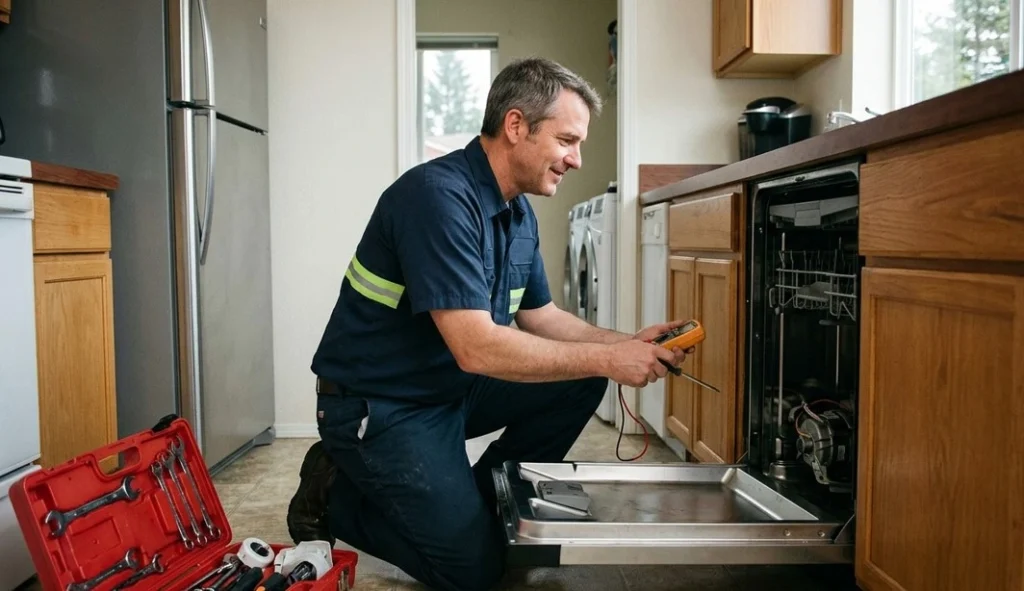
The growing installed base of Wi-Fi and Bluetooth connected appliances is generating a new category of repair demand that requires software diagnostics alongside traditional mechanical skills. The technician who was fully equipped to handle every refrigerator repair in 2010 may not have the diagnostic tools, firmware access, or software training to handle a Samsung Family Hub or GE Profile Opal refrigerator in 2025. That skills gap is part of why smart appliance repair costs more, and part of why choosing the right local technician matters more than it did a decade ago.
Reason 1: More Components Mean More Points of Failure
A traditional washing machine from 2005 contained a motor, a pump, a control board, a timer, a lid switch, and a handful of sensors. That is roughly six to eight categories of potential failure. A modern LG ThinQ front-load washing machine contains all of those plus a WiFi module, a Bluetooth chip, an AI Direct Drive motor controller, a ThinQ connectivity board, a touchscreen UI assembly, a smartphone synchronization layer, multiple additional sensors for load sensing and vibration analysis, and an embedded software stack that communicates with LG’s cloud servers in real time.
Each of those additional components is a point of failure that did not exist in 2005. A WiFi module failure, a ThinQ connectivity board failure, and a control board failure can produce symptoms that appear superficially identical, requiring software-level diagnostic tools to distinguish. When a traditional washer’s control board failed, the repair path was relatively linear: test the board, confirm failure, order a replacement, install it. When a smart washer’s control system fails, the diagnostic path branches across hardware, firmware, and connectivity layers before a technician can confidently identify which specific component needs to be replaced.
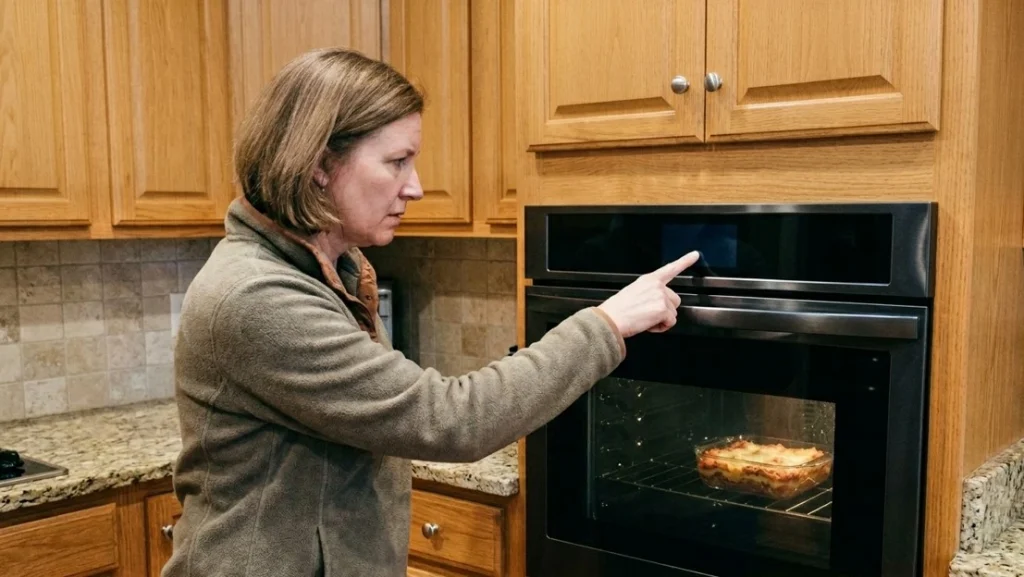
Smart ovens with Wi-Fi connectivity, touchscreen displays, and app integration consistently show 10 to 20 percent higher service rates than their traditional counterparts from the same brand. The additional electronics, including touchscreen displays, Wi-Fi modules, cameras, and sensor arrays, introduce failure points that do not exist in traditional models. This pattern holds across every major appliance category. The appliance performs its core function normally, refrigerating or washing or cooking, while the connected layer fails, and diagnosing that connected layer requires skills and tools that go beyond what conventional appliance repair training covers.
Reason 2: Electronic Parts Cost Significantly More Than Mechanical Parts
The cost structure of smart appliance repair reflects the cost structure of the components involved. Mechanical parts like heating elements, drain pumps, and door seals are manufactured in high volume, sourced from multiple suppliers, and priced competitively because they serve large product populations across many model years. A dryer heating element that fits thirty different models from three different brands costs between $20 and $50 in most cases. A certified technician can stock it because the demand is predictable and the part fits broadly.
Smart appliance control boards, touchscreen assemblies, WiFi modules, and AI processing chips are a different category entirely. They are often proprietary to specific model lines, manufactured in smaller volumes, and available from a single source, the original equipment manufacturer. A Samsung Family Hub display board, a GE Profile SmartHQ connectivity module, or an LG ThinQ AI DD motor controller may cost $150 to $400 in parts alone before any labor is factored in. These parts cannot be stocked broadly because each is specific to a narrow product line, which means they are often ordered on demand, adding days to the repair timeline and adding the cost of expedited shipping to the total repair bill.
The average emergency repair visit costs $187 for traditional appliances and 20 to 30 percent more for smart models requiring specialized diagnostics. That premium reflects both the higher cost of smart appliance components and the longer diagnostic time required to isolate which component within a complex multi-layer system has actually failed.
Tariffs have added another layer to this cost structure in 2025. Tariffs on parts imported from China and Mexico, including compressors, circuit boards, and motors, are pushing appliance repair costs up 5 to 20 percent, according to IBISWorld data. Independent repair businesses are absorbing some of these increases but passing portions on to consumers. Circuit boards and control modules for smart appliances are disproportionately affected by these tariffs because they are predominantly manufactured in Asia, meaning the tariff impact falls hardest on exactly the parts category that smart appliance repair depends on most heavily.
Reason 3: Software Diagnostics Require Different Training and Tools
Diagnosing a mechanical appliance failure requires a multimeter, a wiring diagram, and knowledge of how the specific appliance’s systems interact. Diagnosing a smart appliance failure requires all of that plus access to the appliance’s embedded diagnostic software, firmware version history, error code logging systems, network communication protocols, and in some cases manufacturer-specific diagnostic hardware that connects to proprietary data ports.
Samsung’s family of connected appliances communicates through the SmartThings platform, and diagnosing SmartThings-layer failures requires familiarity with that specific ecosystem. LG ThinQ appliances use the ThinQ app’s Smart Diagnosis feature, which transmits audio-encoded diagnostic data that is decoded through the app’s pattern recognition system. GE Profile appliances connect through the SmartHQ platform with its own diagnostic architecture. Whirlpool and KitchenAid share a common platform but use proprietary diagnostic tools that are distinct from anything in the Samsung or LG ecosystem.
A technician who is expert in Samsung connectivity diagnostics may have limited familiarity with the GE Profile SmartHQ system, and vice versa. This brand-specific fragmentation of diagnostic knowledge is one of the most significant factors driving smart appliance repair complexity, and it is why the appliance repair industry is investing heavily in platform-specific training programs. Programs from appliance repair technical certificates to manufacturer training academies are increasing in demand. Certified training improves onboarding speed and job performance. Modern field tools and smart diagnostic platforms help technicians diagnose faster and with greater accuracy.
For Naperville homeowners, the practical implication is that not every appliance repair company is equally equipped to handle every smart appliance brand. A company that has invested in platform-specific training and diagnostic tools for Samsung, LG, GE, Whirlpool, and Bosch systems will diagnose and repair these appliances faster, more accurately, and with a higher first-visit completion rate than one that handles smart appliance calls with conventional mechanical diagnostic approaches.
Reason 4: OEM Parts Restrictions Limit Access and Drive Up Costs
One of the most consequential structural issues affecting smart appliance repair costs in 2025 is the restriction many manufacturers place on genuine OEM parts availability. Major appliance manufacturers have historically sold replacement parts through a network of authorized distributors, accessible to both authorized technicians and independent repair shops. Smart appliances have complicated this model in ways that directly affect what independent technicians can access and at what price.
Some smart appliance manufacturers have moved toward what the repair industry calls parts pairing, where a replacement part is electronically locked to a specific appliance’s serial number and cannot function if installed by anyone other than an authorized technician using proprietary programming software. This practice, borrowed from the smartphone industry, means that even when an independent technician has sourced the correct part at a fair price, they may be unable to complete the repair without manufacturer software access that is restricted to the authorized service network.
The response to these restrictions has been a growing right-to-repair movement at the state legislative level. Illinois HB2549, introduced in the 2025 to 2026 legislative session, requires that every manufacturer of an electronic or appliance product make service and repair facilities available to owners of the product, and that the manufacturer make available to service and repair facilities sufficient documentation, functional parts, and tools, inclusive of any updates, on fair and reasonable terms to effect the diagnosis, maintenance, or repair of a product.This legislation, along with companion bill SB 122, represents Illinois’s push to ensure that Naperville homeowners and the independent technicians who serve them have access to the parts, tools, and documentation needed to repair smart appliances without being forced into manufacturer-controlled repair channels.
The national momentum behind right-to-repair is significant. <cite index=”34-1″>The 2026 right-to-repair legislative template reinforces and expands the 2025 prohibition on parts pairing by clarifying that manufacturers may not use software-based restrictions to limit access to parts or tools or to control who is permitted to perform repairs, ensuring that component replacement down to the board level cannot be undermined through software locks or access restrictions.</cite> For smart appliance owners in Naperville and across Illinois, this legislative direction is meaningful because it will, if enacted, expand the pool of qualified independent technicians who can fully service connected appliances without being locked out of proprietary programming tools.
Reason 5: The Technician Skills Gap and Its Effect on Labor Costs
The appliance repair industry is experiencing an aging workforce and insufficient training pipelines. This talent gap pushes labor costs up and accordingly inflates service rates. The broader technician shortage in skilled trades has been well-documented across HVAC, plumbing, and electrical fields, and appliance repair is affected by the same demographic and training pipeline dynamics. What makes the smart appliance dimension of this problem particularly acute is that the skills needed to service connected appliances effectively are not simply an extension of traditional appliance repair training. They represent a genuinely different skill set that incorporates networking knowledge, software diagnostics, platform-specific firmware management, and electronics troubleshooting at a component level beyond what a mechanical repair background provides.
Training a technician to work competently on a Samsung Family Hub refrigerator, an LG ThinQ washing machine, a GE Profile smart oven, and a Whirlpool connected dishwasher requires investment in platform-specific education that takes time and money. Companies that make that investment charge labor rates that reflect it. Companies that do not make that investment may charge lower rates but provide slower, less accurate diagnostics, lower first-visit completion rates, and a higher probability of misdiagnosis that results in unnecessary parts replacement and repeat service calls.
For Naperville homeowners, this means that the cheapest initial service call on a smart appliance may not be the least expensive overall path to a working appliance. A technician who spends three service calls diagnosing a problem that a properly equipped and trained technician resolves in one visit generates more total cost in labor, diagnostic fees, and appliance downtime even if the per-visit rate was lower.
The Dual Nature of Smart Technology: Higher Failure Rate, Better Self-Diagnosis
The honest assessment of IoT appliances and repair complexity requires acknowledging both sides of the equation. Smart appliances do cost more to repair and do fail at higher rates. They also provide diagnostic capabilities that traditional appliances cannot match, capabilities that can convert what would have been an expensive diagnostic visit into a resolved problem through an app-based self-check.
Modern smart appliance systems achieve 94 percent accuracy in diagnosing common issues like drainage failures, with 82 percent of cases resolved through simple program adjustments rather than costly service calls. When an LG ThinQ washer detects a drain pump stress level above normal parameters through its Smart Diagnosis system, it alerts the homeowner before the pump fails entirely, enabling a proactive repair at lower cost than an emergency visit after a mid-cycle failure with a load of wet laundry. When a GE Profile refrigerator’s SmartHQ monitoring identifies a temperature sensor reading drift pattern that historically precedes a defrost system failure, that predictive alert has genuine financial value.
The predictive maintenance capability of connected appliances represents a genuine advantage over traditional appliances, where failures are invisible until they become complete. Studies show that IoT-integrated maintenance systems can reduce unplanned downtime by 30 to 50 percent, translating directly to lower repair bills and extended appliance lifespans. The net financial effect of smart appliance ownership depends on how effectively the homeowner and their repair service leverage these diagnostic capabilities, and that depends on choosing technicians who are trained to work with them.
What the 2025 Repair Cost Landscape Actually Looks Like for Smart Appliances
To give Naperville homeowners a concrete sense of the cost differential between traditional and smart appliance repair, here is how the numbers break down across common appliance categories in 2025 and 2026.
Traditional refrigerator repairs, involving mechanical components like compressors, door seals, or defrost heaters, typically run $150 to $400 in total cost. Smart refrigerator repairs involving control board failures, WiFi module replacements, or touchscreen display assembly issues run $250 to $650, with the premium reflecting both higher parts costs and longer diagnostic labor. For smart refrigerator repair in Naperville specifically, the diagnostic visit that correctly identifies a WiFi module failure versus a main board failure versus a display assembly failure is the most valuable service the technician provides, since misdiagnosing the specific failed component at the software layer results in replacing a working part at significant cost.
Traditional washing machine repairs involving pumps, motors, and bearings typically run $100 to $450. Smart washer repairs involving ThinQ connectivity boards, AI motor controller failures, or touchscreen UI assemblies run $200 to $550, again with the premium driven by part cost and diagnostic complexity.
Traditional oven control board replacements run $150 to $350. Smart oven touchscreen assembly replacements and connected control board repairs run $250 to $500, reflecting the proprietary nature of the display components and the firmware programming that may be required to activate replacement boards on some platforms.
According to industry analysis from Fluid Services, the paradox of modern appliance ownership is that while appliance prices have dropped roughly 30 percent in real terms since 1995, repair costs have not followed the same downward trajectory, because the complexity of the systems being repaired has increased faster than manufacturing efficiency has reduced the cost of the components involved. Smart appliances extend this trend further: they are priced competitively at retail while carrying higher repair cost exposure across their service life.
The Right to Repair Movement and Its Impact on Naperville Homeowners
The legislative response to smart appliance repair complexity is actively developing, and Illinois is among the states where this movement has produced specific legislative proposals with direct relevance to DuPage County homeowners.
Illinois SB 122 and HB 2549 both address the core barriers to independent smart appliance repair: access to parts, documentation, and diagnostic tools on fair and reasonable terms. The Illinois Right to Repair advocacy at illinois.repair.org has organized support across the state for these bills, which would require manufacturers to make service documentation and functional parts available to independent repair shops for a period of three to seven years after the last date a product model was manufactured, depending on the product’s price point.
The practical effect of right-to-repair legislation on smart appliance repair costs in Naperville, if enacted, would be meaningful. Independent local repair companies would gain access to the same OEM parts and diagnostic documentation that manufacturer-authorized service centers currently control. Parts pairing restrictions that prevent non-authorized technicians from activating replacement components would be prohibited. The competitive pressure this creates on authorized service pricing would benefit homeowners across every smart appliance category.
Households save an average of $330 annually by repairing instead of replacing, and 84 percent of Americans support laws requiring fair access to repair. That savings figure assumes the repair option remains economically viable, which is exactly what parts access restrictions threaten and right-to-repair legislation is designed to preserve.
How the Industry Is Adapting to Smart Appliance Repair Complexity
The appliance repair industry is not standing still in the face of IoT complexity. The most forward-thinking companies, including those serving the Naperville market, are investing in exactly the capabilities that smart appliance repair requires.
Repair services are becoming part of city-wide IoT ecosystems, working alongside smart building platforms. Sensors and analytics within residential buildings help recognize appliance issues, and technicians receive dispatches and system insights triggered by building systems. The AI is enabling real-time monitoring and early issue detection via Bluetooth modules, with technicians receiving early alerts on parts needing attention.</cite> For Naperville homeowners, this means the best local repair companies are moving toward a predictive model where appliance monitoring data informs service scheduling before a failure becomes a crisis rather than after.
Platform-specific certifications are becoming a meaningful differentiator in the local market. A technician certified on Samsung SmartThings diagnostics, LG ThinQ Smart Diagnosis, GE SmartHQ platform, and Whirlpool connected appliance systems brings a breadth of software-layer expertise that the local market increasingly demands. For homeowners in DuPage County whose homes contain a mix of smart appliances from multiple brands, this multi-platform certification matters practically at every service call.
OEM supply chain strain is another factor shaping the 2025 repair landscape. OEM supply chains remain strained in 2025, with many brands struggling with backlogs and delays in spare parts for smart appliances. This has boosted demand for independent repair services, which offer refurbished parts or creative fixes faster than OEM service centers. For Naperville homeowners facing a repair that cannot wait for a two-week OEM parts delivery, an independent local technician with access to quality aftermarket components and established distributor relationships is often the fastest path to a working appliance.
What Naperville Homeowners Should Do Differently Because of IoT Repair Complexity
Smart appliance ownership in 2025 rewards preparation in ways that traditional appliance ownership did not require. A few specific habits protect Naperville homeowners from the worst outcomes of IoT appliance repair complexity.
Keep firmware updated proactively. Manufacturers release firmware updates that address known bugs, sensor calibration drift, and software vulnerabilities that produce false error codes or premature component failures. An appliance running outdated firmware is more likely to generate service-call-requiring errors that a firmware update would have prevented, and it is harder to diagnose accurately because the technician’s diagnostic tools expect the current firmware version. For Samsung, LG, GE Profile, and Whirlpool connected appliances, firmware updates install automatically over WiFi or through the companion app and require only that the appliance remain connected.
Document every error code that appears, including codes that resolve after a power cycle. A pattern of occasional errors that always self-clear is a leading indicator of intermittent component failure that will eventually become permanent. That documented history, shared with a technician at the time of the service call, converts a vague “it sometimes doesn’t work” description into a traceable diagnostic pattern that points toward the specific failing component.
Consider the repair cost exposure of smart features when purchasing. Not every smart feature carries equal repair risk. WiFi connectivity and companion app integration add modest complexity. Full touchscreen display assemblies, interior cameras, and embedded AI processing chips add substantially more. For homeowners whose primary priority is reliable long-term ownership rather than maximum connectivity features, choosing an appliance model from the same brand with fewer smart features and a simpler control architecture meaningfully reduces expected lifetime repair costs.
For Naperville homeowners who have already purchased smart appliances and want the best possible service experience when repairs are needed, choosing a local technician who has invested in platform-specific training and diagnostic tools across major brands produces better outcomes than either a national chain with generic capabilities or an independent technician who has not kept pace with IoT diagnostic requirements.
The full range of smart appliance repair services available at Naperville Appliance Fix covers every major connected appliance category, from smart refrigerators and WiFi-connected washers to touchscreen ovens and IoT dishwashers, with platform-specific diagnostic capability across Samsung, LG, GE Profile, Whirlpool, KitchenAid, and Bosch systems.
The Bottom Line: What IoT Complexity Means for Your Repair Bill
Smart appliances cost more to repair in 2025 because they contain more components, those components cost more, diagnosing them requires more specialized expertise, parts access restrictions limit the competitive market, and tariffs have raised the cost of the imported electronics at the core of every connected appliance.
None of this makes smart appliances a bad purchase. Their predictive diagnostic capabilities, energy efficiency improvements, and convenience features deliver genuine value. It does mean that the lifetime cost of ownership for a connected appliance includes a higher expected repair cost than a comparable traditional model, and that the financial case for repair over replacement is somewhat narrower for smart appliances than for their simpler predecessors.
The most practical response is to treat smart appliance ownership as an informed financial decision: understand the repair cost exposure, keep the firmware current, document error patterns, and build a relationship with a local technician who has the specific diagnostic capabilities these appliances require before you need them at 8:00 PM on a Wednesday when the refrigerator stops cooling.
Contact Naperville Appliance Fix to discuss the smart appliances in your home and what platform-specific diagnostic capabilities are available for your specific brands and models.
Naperville Appliance Fix serves homeowners across zip codes 60540, 60563, 60564, 60565, 60566, and 60567. Call (630) 467-7265 for certified smart appliance diagnostics and repair on Samsung, LG, GE Profile, Whirlpool, KitchenAid, Bosch, and all major connected appliance platforms.