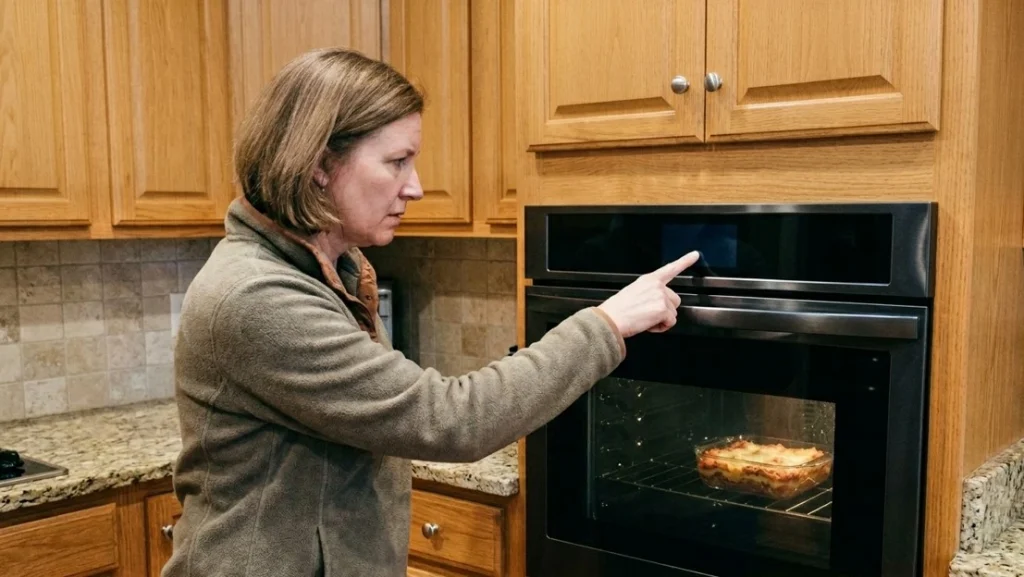
The direct answer: Modern appliances self-diagnose problems through embedded sensors, microprocessors, and cloud-connected companion apps that monitor performance in real time, generate error codes when faults are detected, and in some cases transmit diagnostic data directly to manufacturer support systems or local technicians before a homeowner even notices something is wrong. These self-diagnosis systems are genuinely useful: they can resolve a meaningful percentage of problems through guided owner-level fixes and significantly improve first-visit repair completion rates when a technician is needed. They cannot, however, physically repair anything, access components behind panels, distinguish between a sensor reading an accurate fault and a sensor that has itself failed, or handle the sealed refrigerant systems, high-voltage circuits, and gas connections that define the most consequential appliance repair scenarios.
From Guesswork to Data: How Appliance Diagnostics Changed
The history of appliance diagnostics is a history of reducing uncertainty. A refrigerator technician in 1975 arrived at a service call with no information about what was wrong. They relied on the homeowner’s description, manual inspection, and accumulated experience with common failure patterns to work toward a diagnosis. The process was slow, sometimes expensive, and occasionally resulted in parts being replaced that turned out not to be the actual cause of the problem.
The first wave of improvement came with microprocessor-based error code systems in the 1980s and 1990s. Manufacturers began equipping appliances with self-diagnostic routines that could detect specific fault conditions and display a numeric or alphanumeric code on the control panel. The code told a trained technician which system had flagged an error, narrowing the diagnostic scope from the entire appliance to a specific subsystem. This was a genuine improvement, but the codes alone did not tell the technician why the fault had occurred or whether the flagging sensor was itself functional.
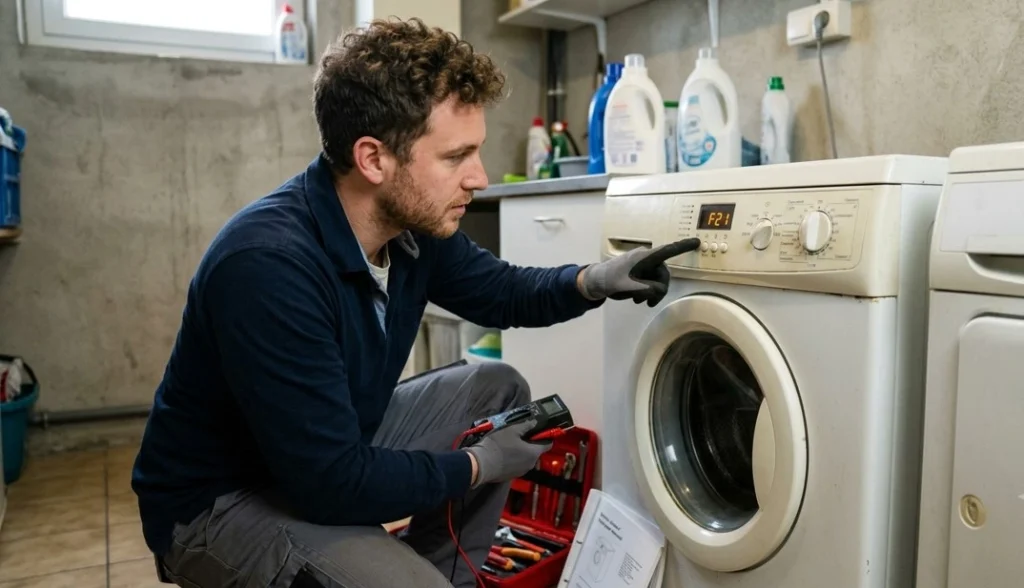
The current generation of smart appliance diagnostics goes substantially further. <cite index=”22-1″>Smart appliances leverage advanced sensors and IoT connectivity to monitor their performance in real time. These systems can detect issues as they arise and notify users through apps or alerts, making diagnostics far more accurate and efficient.</cite> The difference between a 1990s error code and a 2025 smart diagnostic is the difference between a smoke alarm going off and a building management system that identifies the specific room, the detected compound, and the source before the fire department arrives.
The Internet of Things has further transformed remote troubleshooting by enabling smart appliances to self-diagnose and communicate technical issues directly to repair technicians. This technology allows for immediate analysis of system performance, electrical consumption, and potential mechanical failures, dramatically reducing downtime and repair costs for homeowners.
How Self-Diagnosis Actually Works: The Technology Behind the Feature
Understanding what is actually happening inside an appliance when it runs a self-diagnosis helps homeowners interpret the results accurately and understand where the system’s genuine limits begin.
Sensors and Microprocessors: The Foundation
Every major self-diagnosing appliance contains a network of sensors that continuously measure operating parameters and report those readings to an onboard microprocessor. A modern refrigerator may contain temperature sensors in the fresh food compartment, the freezer, the evaporator coil, and the condenser, along with current sensors on the compressor circuit, door open sensors, and humidity sensors in some models. A smart washing machine monitors motor current draw, drum rotation speed, water inlet flow rate, drain pump pressure, door lock status, vibration levels, and water temperature simultaneously throughout every cycle.
The microprocessor compares each sensor reading against a programmed range of acceptable values. When a reading falls outside its acceptable range for a defined period, the control board registers a fault. Depending on the appliance and the nature of the fault, it may attempt a self-correction, such as running an additional defrost cycle, before displaying an error code or sending an app notification.
Audio Encoding: LG’s Smart Diagnosis Approach
LG’s Smart Diagnosis system, available across its ThinQ-connected washers, refrigerators, dishwashers, and ranges, uses an approach that is elegantly simple in concept. <cite index=”33-1″>The Smart Diagnosis feature uses a combination of sound and digital signals to transmit specific information about the appliance’s performance and any potential issues. When you activate Smart Diagnosis, the device emits a series of tones, and a trained LG service technician or the Smart ThinQ app itself can then interpret these sounds to pinpoint the exact problem the appliance is facing.</cite>
To use Smart Diagnosis, open the ThinQ app on your mobile phone, select the top left menu icon on the home screen, select Smart Diagnosis, select the relevant appliance, then select Start and follow the instructions on screen to proceed. The encoded audio transmission contains a compressed data packet representing the appliance’s current fault log, sensor readings, operating history, and firmware version. The app decodes this packet and presents a plain-language assessment of what the data indicates.
Cloud-Connected Diagnostics: Samsung SmartThings and GE SmartHQ
Samsung’s SmartThings platform and GE’s SmartHQ platform both use a WiFi-based diagnostic architecture rather than audio encoding. When a Samsung Family Hub refrigerator detects an abnormal sensor reading, it logs the event to Samsung’s cloud servers in real time, which means the diagnostic history is already recorded before the homeowner even opens the SmartThings app to investigate. A technician who connects to that appliance’s SmartThings record before arriving for a service call can review days or weeks of performance data rather than only the current fault state.
GE’s SmartHQ platform works similarly. The SmartHQ app provides connected appliance monitoring, notifications for detected issues, and the ability to run diagnostic checks remotely for compatible GE Profile and GE Appliances models. When GE’s SmartHQ system detects a pattern that historically precedes a specific component failure, it can alert the homeowner proactively, enabling a repair appointment to be scheduled before the failure has fully occurred rather than after the appliance has stopped working.
Whirlpool’s Connected Appliance Monitoring
Whirlpool’s connected appliance platform, which also covers KitchenAid and Maytag brands, operates through the Whirlpool app. For washers and dryers specifically, the platform monitors cycle completion, error events, and maintenance alerts, such as filter-cleaning reminders and drum-cleaning cycle recommendations. The diagnostic depth on Whirlpool’s platform is currently less granular than LG ThinQ or Samsung SmartThings for error code analysis. Still, the proactive maintenance alert system produces genuine value for homeowners who might otherwise forget routine maintenance that prevents failure.
What Self-Diagnosis Does Well: The Genuine Wins
Smart appliance self-diagnosis has produced measurable improvements in three specific areas that directly benefit homeowners.
Faster Accurate Diagnosis
<cite index=”25-1″>Smart appliances send detailed error messages to technicians, enabling them to bring the right tools and parts. Many brands offer apps that guide homeowners through simple troubleshooting steps, eliminating unnecessary service calls.</cite> When a technician knows before arriving that an LG washer’s drain pump is operating above its normal current draw threshold, they arrive with the correct replacement pump rather than a general toolkit and a blank diagnostic slate. That preparation converts what might have been a two-visit repair into a single-visit resolution, saving the homeowner both time and money.
Converting Emergency Repairs Into Planned Maintenance
Predictive diagnostics represent the highest-value application of appliance self-diagnosis. When a smart refrigerator detects that its compressor is drawing 15 percent more current than its baseline for the same cooling load, this pattern typically precedes compressor failure by weeks or months. An alert at this stage enables a proactive repair appointment during normal business hours, at standard service rates, with the correct part sourced in advance. The alternative, a compressor failure that occurs suddenly on a weekend evening, produces an emergency service call at premium rates, food spoilage while waiting for the repair, and a potentially longer appliance downtime while the part is ordered.
Technicians arrive at service calls with detailed diagnostic information that guides targeted repair efforts rather than time-consuming on-site diagnosis. Remote diagnostic capabilities enable service scheduling based on actual repair requirements.
Eliminating Guesswork on Simple Problems
A meaningful percentage of appliance service calls involve problems that are resolvable without any hardware replacement: a drain filter that needs cleaning, a child lock that was accidentally activated, a load that was too large for the washer to balance, or a firmware bug that a software update has already fixed. Self-diagnosis systems handle these scenarios well by presenting the homeowner with guided troubleshooting that resolves the issue before a technician visit is needed. Modern smart appliance systems achieve 94 percent accuracy in diagnosing common issues like drainage failures, with 82 percent of cases resolved through simple program adjustments rather than costly service calls.
The Seven Things Self-Diagnosis Cannot Do
This is where the honest assessment of smart appliance diagnostics requires confronting real limitations that marketing materials typically understate or omit entirely.
1. It Cannot Physically Repair Anything
This is the most fundamental limitation and the most obvious, but it deserves stating plainly because the sophistication of modern diagnostic systems can create an impression that the appliance is more self-sufficient than it actually is. A smart refrigerator that identifies its own defrost heater failure cannot replace that heater. A washing machine that flags its drain pump as failing cannot install the replacement. Every problem that a self-diagnosis system identifies still requires a human being with the correct tools, parts, and skills to actually resolve.
2. It Cannot Distinguish a Failing Sensor From What the Sensor Is Reporting
This is the most technically consequential limitation. When a temperature sensor in a refrigerator reports a reading of 85 degrees in a compartment that is set to 38 degrees, the self-diagnosis system will flag a cooling failure. That reading could accurately reflect a real cooling failure: a defrost system breakdown, an evaporator fan failure, or a sealed system problem. It could also mean the temperature sensor itself has failed and is generating a false reading, while the refrigerator is cooling perfectly normally.
Distinguishing between these two scenarios requires a technician with a calibrated external temperature probe and the ability to physically access the evaporator coil area. The self-diagnosis system cannot test its own sensors for accuracy. It can only report what its sensors are reporting. Some problems will require tools and knowledge that a homeowner does not have, and it is often better to call a technician for these situations.
3. It Cannot Access Sealed Systems
Refrigerant-based sealed systems, which include the compressor, condenser coil, evaporator coil, and the copper or aluminum tubing connecting them, are physically sealed and inaccessible to any software-based diagnostic. A self-diagnosis system can detect that the compressor is running but the appliance is not reaching its set temperature, which is consistent with a refrigerant leak, a failed compressor, or a blocked expansion valve. It cannot determine which of these is the actual cause, and it cannot test refrigerant charge level, which requires specialized EPA-certified equipment that must be physically connected to the system.
Refrigerant handling is also legally restricted. EPA Section 608 requires certification for any work involving refrigerant in sealed systems. This is not a limitation of current technology that will eventually be solved by smarter diagnostics. It is a physical and regulatory boundary that places sealed system repair permanently in the technician domain.
4. It Cannot Handle High-Voltage Electrical Safety
Electric ranges, dryers, and some dishwashers operate on 240-volt circuits that carry serious shock risk during any access to the electrical components. Self-diagnosis systems can detect electrical faults, reporting overcurrent conditions, failed heating elements, and control board errors. They cannot safely test those systems. A technician working on a 240-volt appliance uses insulated tools, follows lockout-tagout safety protocols, and understands which components retain dangerous charges even after the appliance is unplugged. Modern repair professionals must understand sophisticated digital systems and advanced diagnostic technologies that go far beyond traditional mechanical repair techniques. The evolution of appliance technology involves intricate electronic components and interconnected systems.
5. It Cannot Diagnose Gas System Problems
Gas ranges, gas dryers, and gas water heaters involve live gas lines where an improperly diagnosed or improperly executed repair creates explosion and carbon monoxide risk. Self-diagnosis systems on gas appliances can detect igniter failures, flame sensor malfunctions, and gas valve electrical faults. They cannot test for gas leaks at fittings, detect partial blockages in gas supply lines, or perform the combustion analysis that confirms a gas appliance is operating safely after a repair. Any repair to a gas appliance’s fuel delivery system requires a licensed technician who is qualified to work on gas systems and who carries the equipment to test for leaks and verify safe operation after the work is complete.
6. It Cannot Interpret Its Own Results in Context
A self-diagnosis system reports what its sensors observe. It does not have the contextual judgment to recognize when a sensor reading is plausible versus implausible given the appliance’s age, maintenance history, and the conditions under which the fault occurred. An experienced technician who sees a fault code that does not match the symptoms reported by the homeowner recognizes the discrepancy and investigates further. A self-diagnosis system presents its findings without any mechanism for cross-referencing them against the physical reality of the appliance’s condition.
This contextual judgment is precisely what separates a skilled technician from an accurate sensor network. The technician knows that a particular Samsung model’s drain sensor frequently reports false positives after a power surge, and checks the actual drain pump function before ordering a sensor replacement. The self-diagnosis system sees the sensor flag and reports it. The human expertise interprets what the flag means in context.
7. It Has Meaningful Compatibility and Connectivity Limitations
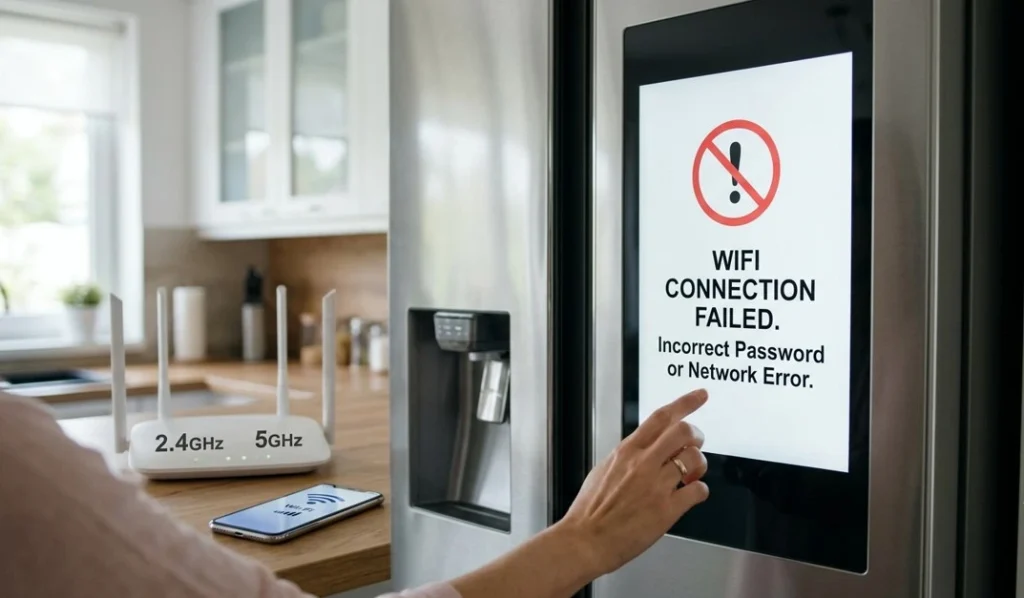
Self-diagnosis features work only when the app, the appliance firmware, and the WiFi connection are all functioning correctly. Some models that are too new to be added to the ThinQ app yet cannot use Smart Diagnosis through the app, and models without a specific required button may not be able to initiate the diagnostic sequence at all. A homeowner whose router recently changed, whose app has not been updated, or whose appliance firmware predates the current diagnostic feature set may find that the self-diagnosis system is unavailable precisely when they need it most.
Even when the system functions correctly, the results are only as useful as the homeowner’s ability to interpret and act on them. A diagnosis that recommends calling for service has done its job. A diagnosis that returns a clean report on a machine that a homeowner knows is behaving abnormally is the kind of limitation that most homeowners do not discover until they are already standing in front of a malfunctioning appliance wondering why the app says everything is fine.
How Self-Diagnosis Changes the Technician Visit (For the Better)
Even in the scenarios where a professional service call is necessary, self-diagnosis has genuinely improved the repair experience for homeowners who use it effectively.
Technicians arrive at service calls with detailed diagnostic information that guides targeted repair efforts rather than time-consuming on-site diagnosis. Remote diagnostic capabilities enable service scheduling based on actual repair requirements. The result of this preparation is measurably better first-visit repair completion rates. A technician who arrives knowing the specific fault from a Smart Diagnosis transmission, or who has reviewed the SmartThings error log from the past two weeks, is far more likely to have the correct replacement part on the truck and to complete the repair in a single visit.
For Naperville homeowners, the practical recommendation is to run your appliance’s self-diagnosis feature before calling for service, document the results with a screenshot or written note, and share that information with the technician when scheduling. Even if the self-diagnosis result is not conclusive, the error code history and performance data it captures help the technician focus their in-person diagnosis efficiently and increase the likelihood that your repair is completed in a single visit.
The full range of appliance repair services at Naperville Appliance Fix includes technicians trained on every major smart appliance diagnostic platform, including LG ThinQ Smart Diagnosis, Samsung SmartThings, GE SmartHQ, and Whirlpool’s connected appliance monitoring system. Bringing self-diagnosis data to the service call is encouraged and actively improves the diagnostic process.
How to Run Self-Diagnosis on Your Major Appliances
For Naperville homeowners who have not yet used their appliance’s self-diagnosis features, here is a practical guide to accessing them across the most common brands.
LG ThinQ Appliances: Open the LG ThinQ app, select your appliance from the home screen, navigate to Smart Diagnosis, and follow the on-screen prompts. For washers, the app will guide you through the audio tone transmission process. For WiFi-connected refrigerators, the diagnosis transmits over WiFi without requiring the audio step. The complete process for LG Smart Diagnosis on washers is available through LG’s official support documentation and takes less than five minutes.
Samsung SmartThings Appliances: Open the SmartThings app, select your appliance, and access the diagnostics or health report section. For Family Hub refrigerators specifically, the Fridge Manager app within the Family Hub display provides a Self Check feature under Settings. Tap Start to run the full diagnostic sequence and view all active error codes.
GE SmartHQ Appliances: Open the SmartHQ app and select your appliance. The GE connected platform provides maintenance reminders, error notifications, and cycle monitoring data. For SmartHQ troubleshooting and connectivity issues, GE’s official support resource covers the most common app functionality issues and when to escalate to a service call.
Whirlpool App Appliances: Open the Whirlpool app and select your connected appliance. Review any active notifications or error alerts. For Whirlpool washers specifically, error codes displayed on the control panel can be cross-referenced in the app’s help section for guided troubleshooting.
Traditional Appliances Without Apps: Appliances without WiFi connectivity typically have a manual diagnostic mode accessible through a button combination on the control panel. Consult your appliance’s user manual for the specific combination for your model. For many Whirlpool and Maytag top-load washers, rotating the cycle selector dial in a specific sequence initiates a manual test mode that cycles through each system and displays error codes.
The Ideal Division of Labor: Self-Diagnosis and Professional Repair Working Together
The most effective approach to modern appliance maintenance treats self-diagnosis and professional repair as complementary rather than competitive. Self-diagnosis is a tool that empowers homeowners to resolve simple problems independently, make informed decisions about when a technician is needed, and provide that technician with better information when they do arrive. Professional repair is the irreplaceable capability for physical component replacement, sealed system work, high-voltage and gas system intervention, and the contextual judgment that distinguishes sensor data from appliance reality.
As smart appliance diagnostic systems continue evolving, they promise to transform our relationship with household appliances from one of reactive maintenance to predictive partnership, creating homes that care for themselves while keeping their human inhabitants informed and engaged. That vision is genuinely directionally correct. It is not, however, a replacement for skilled technicians. The physical reality of compressors, refrigerant, gas lines, and high-voltage circuits will continue requiring human expertise regardless of how sophisticated the monitoring layer becomes.
For Naperville homeowners with washer repair needs, refrigerator issues, oven failures, or any other major appliance problem, the right sequence is clear: run the self-diagnosis first, document the results, attempt any guided owner-level fix the app recommends, and then call a certified local technician when the problem persists, or the self-diagnosis identifies a component failure.
The Bottom Line
Modern appliance self-diagnosis is a genuine technological achievement that has improved the appliance ownership experience in measurable, documented ways. It has not eliminated the need for professional repair technicians, and it was not designed to. What it has done is make every service call more efficient by reducing diagnostic uncertainty, make some service calls unnecessary by guiding homeowners through resolvable issues, and make appliance failures more predictable by surfacing developing problems before they become complete breakdowns.
Understanding what your appliance’s self-diagnosis system can and cannot tell you puts you in a stronger position as a homeowner: you know when to trust the app’s guidance, when to override the app’s clean report because something still seems wrong, and when the right next call is to a technician rather than to the manufacturer’s customer support line.
Contact Naperville Appliance Fix for a same-day diagnostic visit when your appliance’s self-diagnosis results point to a hardware repair, or when the appliance is behaving abnormally, but the app is not giving you a clear answer.
Naperville Appliance Fix serves homeowners across zip codes 60540, 60563, 60564, 60565, 60566, and 60567. Call (630) 467-7265 for certified smart appliance repair on all major brands including LG ThinQ, Samsung SmartThings, GE Profile SmartHQ, Whirlpool, KitchenAid, Bosch, and Frigidaire.