Open the dishwasher expecting clean dishes and get hit with a musty, damp smell instead. That mildew odor isn’t just unpleasant — it’s usually a sign that water, food waste, or mold is sitting somewhere it shouldn’t. If you’ve been searching for dishwasher repair in Naperville because the smell keeps coming back no matter how many cycles you run, this guide breaks down exactly where the odor comes from and what it takes to get rid of it for good.
Why Your Dishwasher Smells Like Mildew
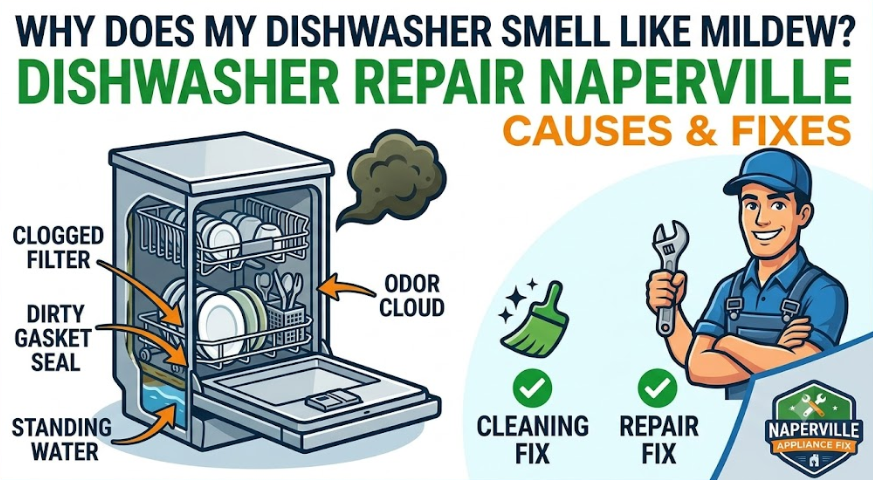
A mildew smell almost always comes from trapped moisture combined with food debris that never fully drains or dries out. The most common sources are a clogged filter, a dirty door gasket, a kinked or clogged drain hose, or a partial clog in the air gap and drain line. Naperville’s hard water speeds up the problem by leaving mineral buildup that traps grease and bacteria in these same spots. Running a cleaning cycle helps temporarily, but if the smell returns within a week or two, there’s usually a mechanical issue — not just a cleaning issue.
Common Causes of Mildew Smell in Dishwashers
Clogged or Dirty Filter
Most dishwashers built in the last decade use a manual filter instead of a hard food disposer. Food particles, grease, and small debris collect in this filter after every cycle. If it isn’t removed and rinsed regularly, that trapped waste sits in standing water between washes and starts to smell like mildew within days.
Moldy Door Gasket
The rubber gasket around the door seals in water during the wash cycle, which also makes it a prime spot for mold growth. Grime builds up in the folds of the gasket where it’s rarely wiped down, and that’s often the strongest source of odor when you open the door.
Standing Water in the Sump or Drain Hose
A dishwasher that isn’t draining completely leaves standing water in the bottom of the tub or inside the drain hose. That stagnant water is where mold and bacteria multiply fastest. If you notice water pooling at the bottom of the tub after a cycle finishes, this is likely your main issue — and it usually means a mechanical repair, not a cleaning fix.
Blocked Air Gap or Garbage Disposal Line
Dishwashers that drain through a garbage disposal or air gap can develop a mildew smell if that connection is partially clogged. Food waste backs up into the dishwasher drain line instead of flushing out through the sink plumbing.
Hard Water Mineral Buildup
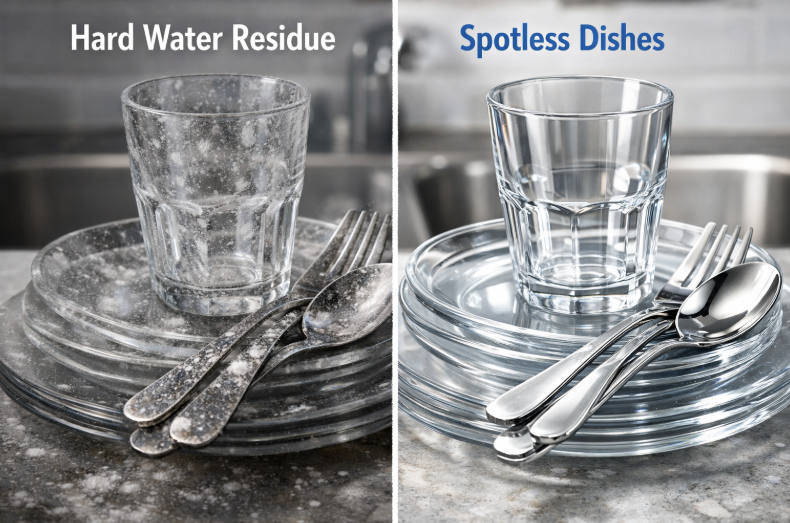
This is where local water conditions make a real difference. Naperville’s hard water leaves mineral deposits inside hoses, spray arms, and the filter housing. Those deposits create rough surfaces where grease and bacteria cling instead of rinsing away. We cover this in more detail in our breakdown of how Naperville’s hard water affects dishwashers and washing machines, including how the same mineral buildup causes the white residue problem covered in our guide on why hard water leaves white residue on dishes.
DIY Steps to Try Before Calling a Technician
- Pull and rinse the filter. Twist it a quarter turn, lift it out, and rinse under hot water with a soft brush to clear trapped debris.
- Wipe down the door gasket. Use a damp cloth with a bit of dish soap or diluted vinegar to clean along the entire seal, including the folds at the bottom corners.
- Run an empty cycle with a dishwasher-safe cleaner or two cups of white vinegar in a bowl on the top rack, followed by a separate cycle with a cup of baking soda sprinkled on the bottom.
- Check for standing water at the bottom of the tub after the cycle ends. If water is pooling instead of draining fully, that points to a mechanical problem rather than a buildup issue.
Whirlpool’s own maintenance guide confirms that stagnant water from drainage issues or a blocked filter is one of the leading causes of dishwasher odor, and recommends cleaning the filter and interior regularly to prevent it.
When Mildew Smell Signals You Need Dishwasher Repair in Naperville
If you’ve cleaned the filter, wiped the gasket, and run a vinegar cycle and the smell comes right back, the odor isn’t a cleaning problem anymore — it’s a drainage or mechanical one. Signs it’s time to call a technician instead of trying another home remedy:
- Water sits at the bottom of the tub after every cycle
- The smell returns within a few days of cleaning
- You hear gurgling from the sink when the dishwasher drains
- The dishwasher takes noticeably longer to drain than it used to
- Dishes come out with a film or smell like mildew even after washing
These symptoms usually trace back to a failing drain pump, a clogged drain hose, a faulty check valve, or a partially blocked air gap — none of which get fixed by another cleaning cycle.
How a Naperville Appliance Technician Diagnoses and Fixes the Odor
A technician starts with a diagnostic fee visit to run the dishwasher through a cycle and watch exactly where the water is failing to clear. From there, the fix depends on what’s found:
- Drain hose clog or kink: The hose is removed, cleared, and checked for proper positioning to prevent future kinks.
- Failing drain pump: If the pump motor is weak or seized, it’s tested for continuity and replaced if it can’t move water at full capacity.
- Faulty check valve: A stuck check valve lets dirty water flow back into the tub after draining. This small part is inexpensive to replace but easy to misdiagnose without testing.
- Air gap or disposal knockout plug: If your dishwasher connects through a garbage disposal, the technician checks whether the knockout plug inside the disposal was ever removed during installation — a surprisingly common oversight in newer construction that traps water with nowhere to go.
- Deep mineral buildup: For homes with heavy hard water buildup, a full descale of the spray arms, filter housing, and sump area clears blockages that a store-bought cleaner can’t reach.
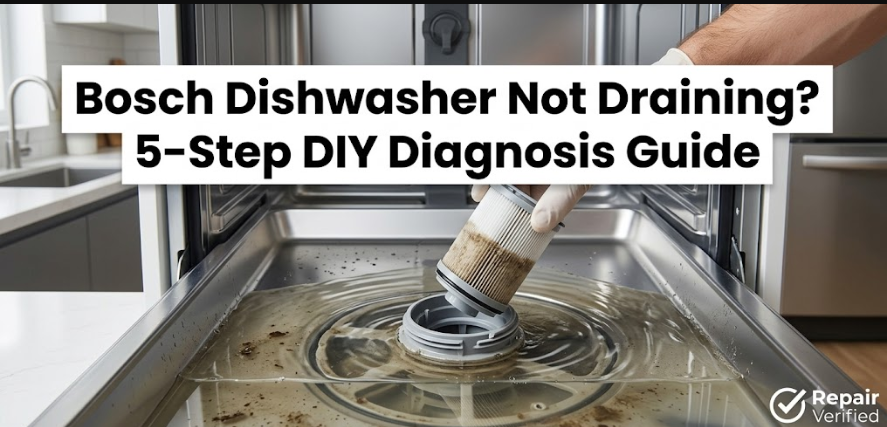
If drainage problems are part of the picture, our detailed walkthrough on diagnosing a dishwasher that won’t drain covers the step-by-step process technicians use to isolate the exact failure point.
Preventing Mildew Odor From Coming Back
- Run hot water in the sink for 30 seconds before starting the dishwasher so it fills with hot water from the first cycle
- Clean the filter every three to four weeks, more often with heavy daily use
- Leave the door cracked open after each cycle so the interior air-dries instead of trapping moisture
- Use a rinse aid to help water sheet off surfaces instead of pooling
- Schedule a hard water descale twice a year given Naperville’s mineral-heavy water supply
The EPA’s guidance on mold and moisture control notes that controlling moisture is the single most effective way to prevent mold growth in the home — the same principle applies directly inside a dishwasher that traps standing water.
For ongoing issues that DIY cleaning can’t resolve, professional Naperville appliance repair can get to the mechanical root of the problem instead of masking it cycle after cycle.
FAQs
Can a mildew smell in my dishwasher make me sick?
Mold and mildew exposure can trigger allergy symptoms or irritate the eyes, throat, and lungs in sensitive individuals. It’s not typically dangerous in small amounts, but it’s worth resolving both for hygiene and to keep it from spreading to dishes.
Will running the dishwasher with dish soap remove the smell?
No. Regular dish soap isn’t formulated for dishwashers and can cause oversudsing. Use a dishwasher-safe detergent or cleaner and address the root cause — usually a dirty filter or drainage issue — rather than just running more cycles.
Why does my dishwasher smell like mildew even though it’s new?
New dishwashers can develop odor quickly if the drain line wasn’t properly connected during installation, especially with garbage disposal knockout plugs that were never removed. This traps water from day one.
How often should I clean my dishwasher filter?
Every three to four weeks for average use, and every two weeks for households that run the dishwasher daily or have hard water.
Is a mildew smell covered by a home warranty?
Cleaning-related odor typically isn’t covered, but mechanical failures causing the smell — like a bad drain pump or check valve — often are. Check your specific policy terms before scheduling repair.
When should I stop troubleshooting and call a technician?
If the smell returns within a week of a full cleaning, or you notice standing water in the tub after cycles, it’s time for a professional diagnosis rather than repeated DIY attempts.
Serving the greater Naperville community with same-day dishwasher diagnostics and repair.