
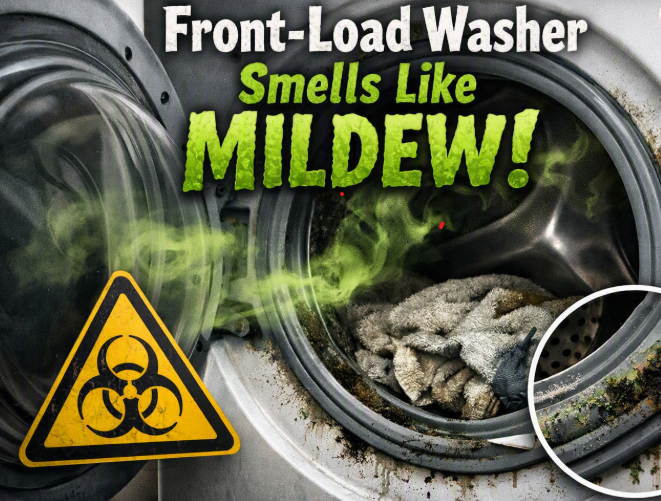
If your front-load washer smells like mildew in Naperville, you’re dealing with one of the most common complaints local homeowners bring to appliance technicians. That sour, damp odor usually starts in the door gasket or drum and spreads through your laundry room every time you open the lid. The good news: in most cases it’s fixable without replacing the machine, and a few habit changes can stop it from coming back.
Table of Contents
Why Does My Front-Load Washer Smell Like Mildew?
Front-load washers trap moisture inside a sealed rubber gasket, and that moisture combines with detergent residue, fabric softener buildup, and hair to feed mold and mildew growth. Because the door stays shut between cycles, air can’t circulate the way it does in a top-loader, so the drum stays damp and creates the perfect environment for biofilm to form. Naperville’s hard water makes this worse by leaving mineral deposits that trap even more residue along the gasket folds and detergent drawer.
What’s Actually Causing the Odor
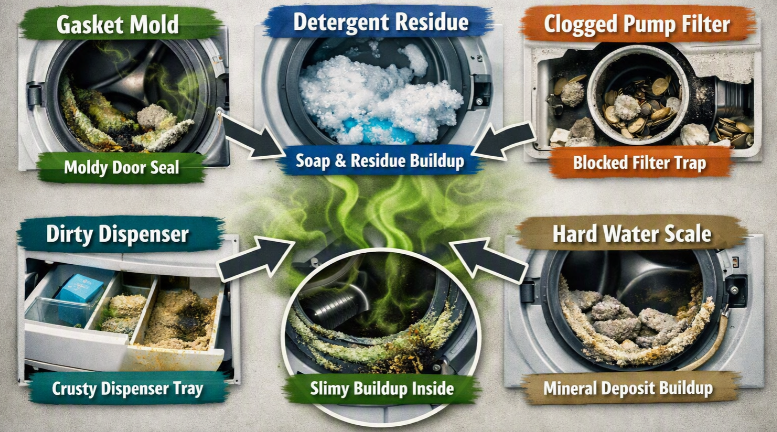
A musty smell coming from a front-load washer almost always traces back to one of these sources:
- Gasket mold – The rubber door seal folds and creases, trapping water, lint, and soap scum where it can’t dry out between loads.
- Detergent residue buildup – Using too much detergent, or using powder/liquid formulas not rated for high-efficiency (HE) machines, leaves a film that mold feeds on.
- Clogged drain pump filter – Coins, lint, and small debris collect here and hold standing water long after a cycle ends.
- Dirty dispenser drawer – Fabric softener and detergent dry into a paste inside the drawer tray, creating another hidden mold colony.
- Biofilm in the drum and hoses – Over months, a slimy layer builds up on internal components that a normal wash cycle never touches.
- Hard water mineral scale – Naperville’s water supply carries enough hardness that mineral deposits collect in the gasket folds and drawer, giving mold more surface area to grow on.
How to Clean and Fix a Mildew-Smelling Washer
Step 1: Wipe Down the Gasket After Every Load
Pull back the rubber seal and check for standing water, lint, and black or pink mold spots. Wipe it dry with a cloth after each wash, and leave the door propped open between loads so the drum can air out.
Step 2: Run a Hot Water Cleaning Cycle
Most HE washers have a “Tub Clean” or “Sanitize” cycle. Run it empty with either a washer-cleaning tablet or a cup of white vinegar to break down residue and kill mold spores clinging to the drum and gasket.
Step 3: Remove and Soak the Detergent Drawer
Slide out the dispenser tray and soak it in warm water with a splash of vinegar. Use an old toothbrush to scrub built-up paste out of the corners, then let it air dry completely before reinserting.
Step 4: Clean the Drain Pump Filter
Locate the small access panel near the bottom front of the machine, place a shallow towel underneath, and unscrew the filter cap slowly to release trapped water. Remove any debris, rinse the filter, and reseat it firmly.
Step 5: Switch to HE Detergent and Use Less of It
Standard detergent creates excess suds that don’t rinse fully in HE machines. Switching to HE-labeled detergent and cutting the amount you use by roughly a third significantly reduces the residue mold needs to grow.
Step 6: Leave the Door and Drawer Open Between Loads
This single habit change prevents more odor problems than almost anything else. Trapped moisture is the root cause, so giving the drum airflow after each wash keeps mold from re-establishing.
If you’ve worked through every step above and the smell keeps returning, that’s usually a sign of a failing door seal, a cracked drain hose, or biofilm built up deep inside components you can’t reach without disassembly. At that point, a technician can inspect the gasket, drain system, and internal hoses to find what a surface cleaning can’t fix.
When Hard Water Makes the Problem Worse
Homes across Naperville deal with above-average water hardness, and that mineral content doesn’t just affect dishes and coffee makers. Inside a washer, hard water minerals bond with detergent residue and cling to the gasket folds, making the surface stickier and more hospitable to mold. If you’ve noticed white, chalky buildup around your detergent drawer or gasket in addition to the odor, hard water is likely compounding the issue. Running a monthly cleaning cycle with a descaling tablet, rather than vinegar alone, helps break down both the mineral scale and the residue mold feeds on.
Preventing Mildew Odor Long-Term
- Leave the door and detergent drawer cracked open after every cycle
- Wipe the gasket dry once a week, not just when you notice a smell
- Run an empty hot-water cleaning cycle monthly
- Use HE detergent measured to the manufacturer’s line, not the cup’s max fill
- Check and clear the drain filter every 1–2 months
- Avoid overloading the drum, which prevents proper rinsing
Whirlpool’s own front-load washer care guide recommends this same routine of monthly tub-clean cycles and weekly gasket wipe-downs to prevent mold from establishing in the first place, which lines up with what we see in Naperville homes with the worst odor complaints.
When to Call a Technician
A persistent mildew smell that survives a full cleaning routine often points to a mechanical issue rather than a maintenance gap. A worn door seal that no longer forms a tight barrier, a partially clogged drain hose, or a failing drain pump can all trap moisture in places you can’t clean by hand. If your washer is also draining slowly, leaving standing water in the drum, or triggering error codes, it’s time for a professional diagnosis rather than another round of vinegar cycles. Our team provides appliance repair naperville for washers, dryers, and every major kitchen appliance, with same-day availability for households dealing with an odor problem that won’t quit.
Hard water is a factor in more than just washer smell — it’s also behind a lot of the dishwasher and drum issues we see across town. If you want the full picture on how local water quality affects your machines, our breakdown on why Naperville’s hard water is destroying your dishwasher and washing machine covers what to watch for and how to protect your other appliances too.
Frequently Asked Questions
Why does my front-load washer smell like mildew even after I clean it?
Residue and mold can hide in places a surface wipe-down doesn’t reach, including inside the drain hose, behind the gasket folds, and inside the drain pump filter housing. A deeper clean or professional inspection usually resolves lingering odor that survives a standard cleaning cycle.
Is it safe to keep using a washer that smells musty?
Yes, in most cases it’s safe to run loads, though the odor can transfer to clothing, especially towels and workout gear. It’s worth addressing quickly since mold buildup can eventually affect the door seal and drain components.
How often should I run a cleaning cycle on my washer?
Once a month is a reasonable baseline for most Naperville households, though homes with heavier laundry use or noticeably hard water may benefit from cleaning every two to three weeks.
Does leaving the washer door open really make a difference?
It makes a significant difference. Moisture trapped behind a closed door is the single biggest contributor to gasket mold, so airing out the drum after each cycle is one of the most effective prevention habits available.
Can hard water alone cause a mildew smell, or is it always about cleaning habits?
Hard water doesn’t cause mold on its own, but it accelerates the problem by leaving mineral deposits that trap detergent residue and moisture more effectively. Combining regular cleaning with a descaling routine addresses both causes at once
What’s the difference between a smell from the gasket and a smell from the drain?
Gasket odor tends to be strongest right when you open the door, while drain-related odor often lingers throughout the wash and can come with slow draining or standing water. If you notice standing water alongside the smell, the drain system is the more likely source.
Should I use bleach to get rid of the smell?
Bleach can damage rubber gaskets and rinse components with repeated use, so it’s better reserved for occasional deep cleans rather than routine maintenance. A monthly hot-water tub-clean cycle with a washer-safe cleaning tablet is gentler and just as effective for regular upkeep.
