1. Failed Evaporator Fan Motor
This is the single most frequent cause of a refrigerator not cooling when the freezer still works perfectly.
The evaporator fan motor is a small but critical component located behind the back panel inside your freezer. Its job is to continuously pull air over the cold evaporator coils and push that chilled air throughout both the freezer and refrigerator compartments. The moment this motor fails, the freezer stays cold because it is directly adjacent to the coils, but the refrigerator gets no airflow at all and quickly warms up.
How to check: Open the freezer door and listen. You should hear a faint hum or feel cold air circulating even when the door is cracked. Many refrigerators have a door switch that cuts the fan when the door opens, so you may need to manually press and hold the door switch to keep the fan running while the door is open. If you hear nothing or the blades do not spin freely when turned by hand, the motor has likely failed.
What it costs: An evaporator fan motor replacement in Naperville typically runs between $150 and $300 including labor, depending on the brand and model.
2. Frozen Evaporator Coils Due to a Defrost System Failure
This is almost as common as the evaporator fan issue, and the two are often related.
Modern refrigerators are designed to defrost themselves automatically. The defrost system runs a heating element across the evaporator coils several times a day to melt any frost that has accumulated. If any part of this system breaks down, frost builds up slowly over days and weeks until it completely encases the evaporator coils. Once the coils are buried in ice, no air can pass over them, and the refrigerator section stops cooling.
The defrost system has three main components that can fail independently:
Defrost heater: This is the heating element that melts frost off the coils. A burnt-out heater means frost never gets melted. You can test it with a multimeter for continuity.
Defrost thermostat: This sensor monitors the temperature of the evaporator coils and signals the heater to turn on when frost accumulates. A failed thermostat means the heater never receives that signal.
Defrost timer or control board: Older refrigerators use a mechanical defrost timer that cycles the defrost function on and off. Newer models use an electronic control board. Either can fail and prevent the defrost cycle from running at all.
How to check: Remove the back panel inside your freezer. If you see a solid wall of ice covering the coils, defrost failure is almost certainly your culprit. As a temporary fix, unplug the refrigerator for 24 to 48 hours with the doors open and towels on the floor. If the fridge cools normally after you plug it back in but the problem returns within a few days or weeks, one of the three defrost components needs to be replaced.
3. Stuck or Broken Damper Control Assembly
The damper control is a small air door that sits between the freezer and the refrigerator section. It opens and closes automatically to regulate how much cold air flows from the freezer into the fresh food compartment. When the refrigerator thermostat calls for cooling, the damper opens. When the correct temperature is reached, it closes.
If the damper gets stuck in the closed position, it does not matter how well the freezer is working. No cold air will enter the refrigerator at all. The damper can fail mechanically, or it can freeze shut if moisture gets into the assembly.
How to check: Locate the damper vent, which is usually found at the back or top of your refrigerator section on the wall near the freezer. Hold your hand in front of it when the refrigerator should be calling for cooling. If you do not feel any cold air moving through it, the damper is likely stuck closed. On some models you can manually inspect whether the flap opens and closes freely.
4. Dirty or Clogged Condenser Coils
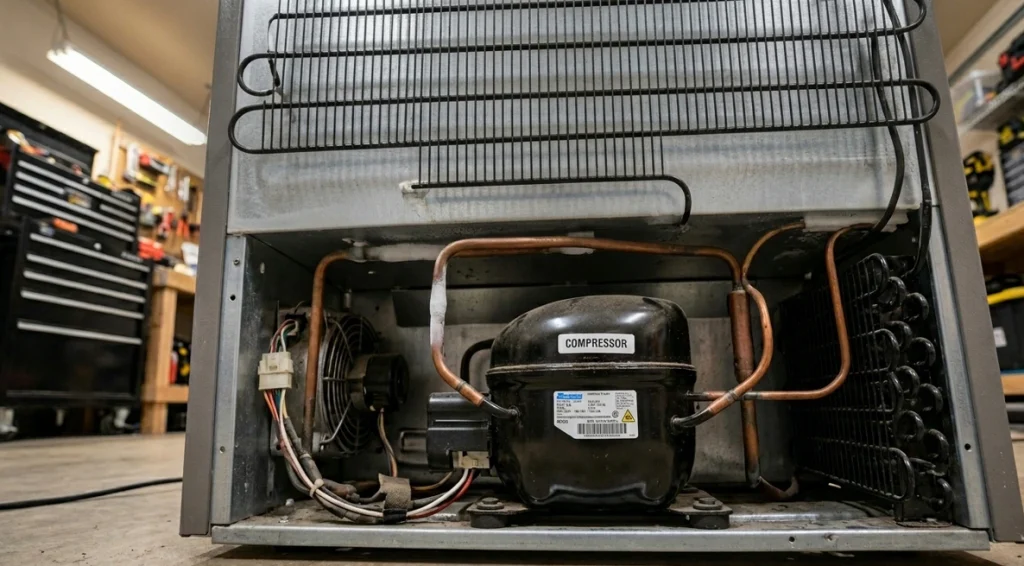
Condenser coils are located either along the back of the refrigerator or underneath it behind a front grille. Their job is to release the heat that the refrigerant absorbs inside the appliance. When those coils are coated in dust, pet hair, and debris, they cannot dissipate heat efficiently. The entire cooling system works harder and less effectively, and the refrigerator section, which requires the system to perform at its peak, often suffers more than the freezer.
This is one of the most preventable causes of refrigerator problems, and it is something homeowners can address on their own.
How to check: Pull the refrigerator away from the wall or remove the bottom grille. If the coils are visibly dirty or covered in a thick layer of dust, they need cleaning. Unplug the appliance first, then use a coil cleaning brush or a vacuum with a brush attachment to remove all accumulated debris.
How often: Condenser coils should be cleaned at least once a year. If you have pets that shed, every six months is a better interval.
5. Faulty Thermistor
The thermistor is a temperature sensor inside the refrigerator compartment. It continuously monitors the internal temperature and sends that data to the main control board. The control board uses that information to decide when to activate the compressor and the evaporator fan.
When a thermistor fails, the control board receives inaccurate readings or no readings at all. As a result, it may not signal the compressor to run, even when the refrigerator is well above a safe temperature. The freezer, which has its own separate temperature monitoring pathway in many models, continues to operate normally.
A failed thermistor is harder for a homeowner to diagnose without a multimeter. The resistance value of the thermistor should change predictably with temperature. If resistance stays flat regardless of temperature, the thermistor has failed.
6. Blocked Air Vents Inside the Refrigerator
This is the easiest problem to fix and the one most homeowners overlook. Your refrigerator has a series of small vents cut into the interior walls, particularly at the back. These vents allow cold air to enter from the freezer section and circulate throughout the fresh food compartment.
If food containers, large bags, or bulky items are pushed directly against these vents, airflow is restricted. The freezer operates normally because the blockage is in the refrigerator section, but the fridge cannot maintain a cool temperature.
Similarly, an overstuffed refrigerator prevents air from moving freely between items, creating warm pockets and making the unit work harder than it should.
How to fix: Remove items from the refrigerator and look for blocked vents along the back wall and ceiling of the compartment. Rearrange your food so nothing sits directly against those openings, and aim to keep your refrigerator at no more than three-quarters capacity to allow proper air circulation.
7. Damaged Door Gasket
The rubber gasket that runs around the perimeter of your refrigerator door creates an airtight seal when the door is closed. Over time, gaskets crack, tear, or simply lose their elasticity and stop sealing properly.
A damaged gasket allows warm, humid air to continuously seep into the refrigerator. That warm air raises the internal temperature and introduces moisture that can freeze on the evaporator coils, compounding the problem. The freezer, with a typically better-maintained gasket and a more forgiving temperature range, holds its temperature better.
How to check: Close the refrigerator door on a sheet of paper. If you can pull the paper out easily, the gasket is not sealing properly in that section. Run your hand along the entire perimeter of the closed door and feel for any air leaking outward. Also inspect the gasket visually for cracks, tears, or sections that have pulled away from the door.
8. Refrigerant Leak
A refrigerant leak is less common than the airflow problems listed above, but it does happen, particularly in older refrigerators or units that have experienced physical damage.
Refrigerant is the substance that flows through the sealed system of your appliance, absorbing heat inside the refrigerator and releasing it through the condenser coils. When there is a leak, the refrigerant level drops and the system loses its ability to absorb heat efficiently. As noted by appliance professionals, the refrigerator compartment tends to warm up before the freezer in cases of refrigerant loss, because the freezer is where the cooling actually takes place and it takes longer to lose its temperature.
Signs of a refrigerant leak include an unusual oily residue near the compressor area, a chemical smell, or the compressor running continuously without achieving proper temperatures.
This repair must be handled by a licensed technician. Refrigerants are regulated substances, and handling them without certification is illegal.
9. Faulty Main Control Board
On newer refrigerators with electronic controls, the main control board is the brain of the entire system. It processes temperature sensor data and sends operating signals to the compressor, fans, defrost system, and damper. A failing control board can cause almost any symptom, including a refrigerator that does not cool despite the freezer working normally.
Control board failures are relatively uncommon compared to the mechanical issues listed above, but they do happen, especially in refrigerators that are more than eight years old or have been exposed to power surges.
Diagnosis requires a technician who can read error codes and test board outputs directly.
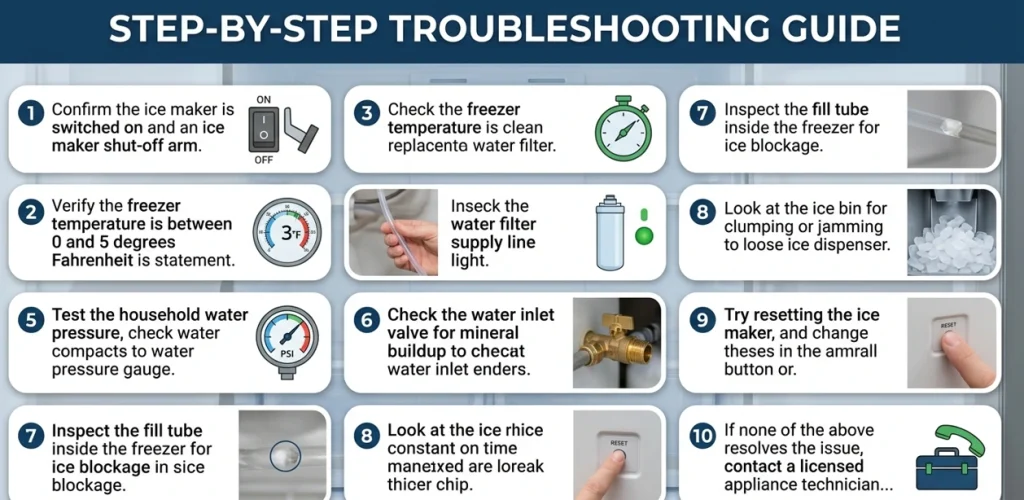
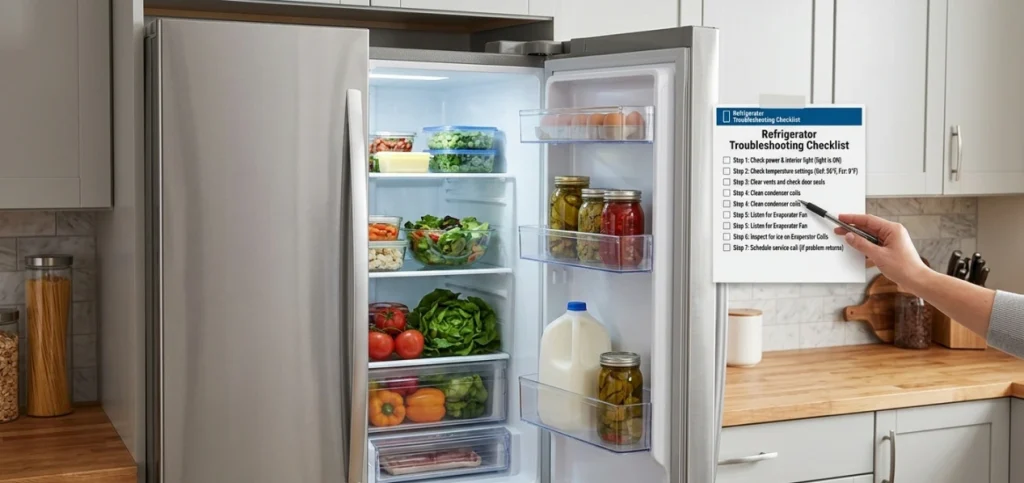
How to Troubleshoot Step by Step
If your refrigerator is warm but your freezer is still cold, work through these checks in order before calling a repair technician. Many of these steps cost nothing and can solve the problem immediately.
Step 1: Check that the refrigerator is actually receiving power and that the interior light comes on when you open the door.
Step 2: Verify the temperature settings have not been accidentally changed. The refrigerator should be set between 35 and 38 degrees Fahrenheit. The freezer should be set to 0 degrees Fahrenheit.
Step 3: Clear all items away from the interior vents and make sure the door closes fully and creates a proper seal.
Step 4: Pull the refrigerator away from the wall and inspect the condenser coils. Clean them if needed.
Step 5: Open the freezer door and listen for the evaporator fan. Press and hold the door switch to keep the fan active while the door is open. If you hear nothing, the fan has likely failed.
Step 6: Remove the back panel inside the freezer and check for ice buildup on the evaporator coils. If the coils are encased in frost, defrost the unit completely by unplugging it for 24 to 48 hours.
Step 7: If the problem returns within a few days after defrosting, schedule a service call. You are dealing with a component failure in the defrost system, fan motor, damper, or thermistor that requires professional diagnosis and repair.
Is Your Food Still Safe?
The FDA recommends keeping refrigerator temperatures at or below 40 degrees Fahrenheit to prevent bacterial growth in perishable foods. If your refrigerator has been warm for several hours, check the temperature with an appliance thermometer. Foods held above 40 degrees Fahrenheit for more than two hours should be discarded, particularly meat, poultry, seafood, dairy, cooked leftovers, and cut fruits or vegetables.
If your freezer is still working, move the most perishable items there while you troubleshoot the refrigerator.
Repair Cost Estimates for Naperville Homeowners
The cost of fixing this problem in Naperville varies depending on which component is responsible:
Cleaning dirty condenser coils can cost nothing if you do it yourself, or around $75 to $100 if a technician does it as part of a service call.
Replacing a door gasket typically costs between $50 and $200 depending on the brand and model.
An evaporator fan motor replacement generally runs between $150 and $300 including parts and labor.
Defrost system repairs, covering the heater, thermostat, or timer, usually fall between $100 and $300.
A damper control assembly replacement typically costs between $100 and $200.
A refrigerant sealed system repair is the most expensive fix, ranging from $300 to over $1,000 depending on the severity and the refrigerator model.
As a general rule, if the repair cost exceeds 50 percent of what a comparable new refrigerator would cost, and the unit is more than 10 years old, replacement is usually the smarter financial decision.
When to Call a Professional in Naperville
While cleaning coils and clearing vents are tasks any homeowner can handle, the following situations call for a trained appliance repair technician:
The evaporator fan motor needs replacing. Accessing and replacing this component requires disassembling the freezer interior, and the motor must be matched exactly to your model.
The defrost system components need testing or replacement. Checking continuity in the heater, thermostat, or timer requires a multimeter and an understanding of safe electrical testing procedures.
The damper control assembly has failed mechanically or electronically.
There are signs of a refrigerant leak. This is never a DIY repair.
The control board needs diagnosis or replacement.
If your refrigerator is a Samsung, LG, Whirlpool, GE, Maytag, KitchenAid, Frigidaire, or Bosch model and you are in Naperville or the surrounding DuPage County area, a certified local technician can typically diagnose the problem on the first visit and carry common replacement parts on the service vehicle.
How to Prevent This Problem in the Future
Keeping your refrigerator running reliably does not require much effort. These habits go a long way toward avoiding the exact problem described in this article:
Clean condenser coils once a year, twice if you have pets. This single habit eliminates one of the most common causes of cooling problems.
Inspect door gaskets every six months and replace them at the first sign of cracking or looseness.
Never block the interior air vents. Keep items at least an inch away from the back wall vents of both the refrigerator and freezer sections.
Do not overstuff the refrigerator. Aim to keep it at three-quarters capacity to allow proper airflow.
Listen for the evaporator fan periodically. If you notice that you can no longer hear it running when the compressor is active, schedule a service call before the problem gets worse.
Set the correct temperatures and check them seasonally with an inexpensive appliance thermometer. Many homeowners do not realize their thermostat dial is slightly off from the actual internal temperature.
Summary
When your refrigerator is not cooling but the freezer is working fine, the problem almost always comes down to one of a handful of components involved in moving cold air from the freezer into the fresh food section. Start by checking for blocked vents and dirty condenser coils, as these are the easiest fixes. If those are clear, listen for the evaporator fan and look for frost buildup on the coils inside the freezer. A complete manual defrost will temporarily resolve a defrost system failure and confirm whether that is the root cause.
If simple checks do not resolve the issue, calling a local Naperville appliance repair technician is the right next step. Most refrigerator cooling problems caused by a failed fan motor, a defrost system component, or a damper assembly can be repaired affordably and quickly, especially when caught before the problem leads to food spoilage or further damage to the sealed cooling system.
Naperville Appliance Fix serves homeowners throughout Naperville, Aurora, Bolingbrook, Downers Grove, and the surrounding DuPage and Will County communities. Call us for same-day and next-day refrigerator repair service.
For homeowners needing fast solutions, professional emergency appliance repair services help restore refrigerators, washers, dryers, and other essential appliances quickly and efficiently.