Naperville is one of the most desirable places to live in the entire Midwest. It consistently ranks among the top cities in Illinois for quality of life, top rated school districts, and proximity to Chicago, which is why so many families and professionals choose to plant roots here every year. But in all the excitement of closing on a home and planning a move, one of the most important steps gets skipped far too often: a thorough inspection of every major appliance in the house before you unpack a single box.
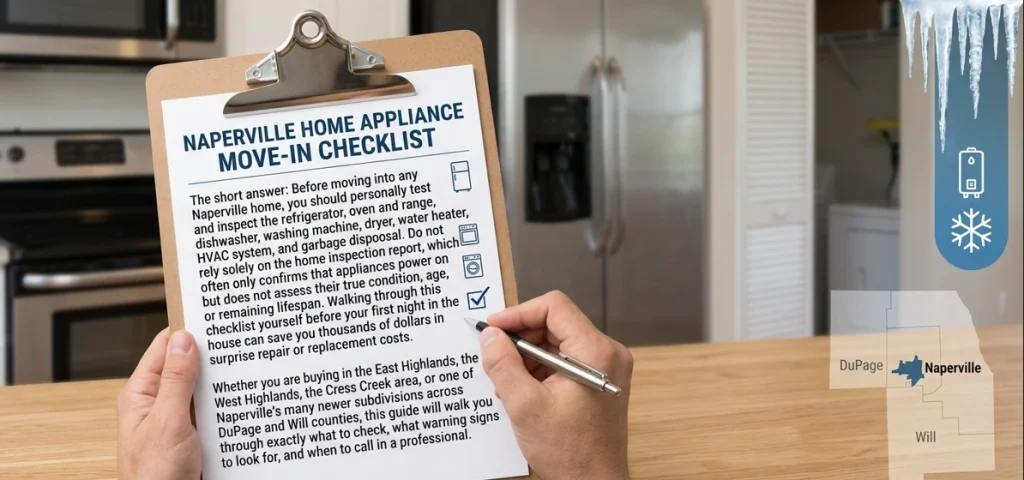
The short answer: Before moving into any Naperville home, you should personally test and inspect the refrigerator, oven and range, dishwasher, washing machine, dryer, water heater, HVAC system, and garbage disposal. Do not rely solely on the home inspection report, which often only confirms that appliances power on but does not assess their true condition, age, or remaining lifespan. Walking through this checklist yourself before your first night in the house can save you thousands of dollars in surprise repair or replacement costs.
Whether you are buying in the East Highlands, the West Highlands, the Cress Creek area, or one of Naperville’s many newer subdivisions across DuPage and Will counties, this guide will walk you through exactly what to check, what warning signs to look for, and when to call in a professional.
Why Appliance Inspection Matters More in Naperville Than You Might Think
Naperville’s housing stock is varied. Some neighborhoods feature homes built in the 1960s and 1970s with original or near original infrastructure. Others are part of developments from the 1990s and early 2000s, when the city experienced rapid population growth fueled by suburban expansion from Chicago. Even in newer subdivisions, a home that has been on the market for a while or sat vacant through one of Illinois’s brutal winters may have appliances that have been pushed to their limits.
Here is the thing about home inspections that most buyers do not fully realize: a standard general home inspection does evaluate appliances, but primarily for basic function. An inspector confirms the oven turns on, the dishwasher runs a cycle, and the furnace ignites. They are not assessing how close to the end of its service life a compressor is, whether a water inlet valve is corroding, or whether a dryer vent has been blocked by lint buildup for two years.
That gap between “it turns on” and “it will reliably serve you for the next five years” is exactly where new homeowners in Naperville end up surprised by a repair bill in their first winter.
How to Find Out How Old Your New Home’s Appliances Actually Are
Before you start running tests and checking individual components, the single most valuable thing you can do is determine how old each major appliance is. Age is the most reliable predictor of how much life an appliance has left and whether it is worth investing in maintenance versus planning for replacement.
Most major appliance brands encode the manufacturing date directly into the serial number. For GE appliances, the first two letters of the serial number represent the month and year of manufacture. For Whirlpool, which also makes appliances sold under the KitchenAid, Maytag, and Amana brand names, the third to last character in the serial number is a letter code that indicates the production year. Samsung and LG encode the manufacture date in a slightly different format, but the serial number is always your starting point.
You can find the serial number tag on a refrigerator on the interior wall, on an oven behind or inside the door frame, on washers and dryers inside the door or on the back panel, and on a water heater near the top of the unit. Once you have the serial number, a free tool like HomeSpy’s appliance age finder can decode the manufacture date for most major brands quickly.
As a general benchmark, kitchen and laundry appliances have an average service life of 13 to 15 years. Furnaces typically last 15 to 20 years with proper maintenance. Water heaters average 8 to 12 years. An appliance that is 10 or more years old at the time you move in deserves extra scrutiny, even if it appears to be functioning normally on the day you check it.
The Refrigerator: What to Test and What to Watch For
The refrigerator is one of the most expensive appliances in any home and one of the hardest to evaluate with a quick visual check. Start by confirming both the refrigerator compartment and the freezer are holding their set temperatures. Use a separate thermometer if you have one, since the interior display is not always calibrated accurately. The refrigerator section should hold between 35°F and 38°F, and the freezer should sit at 0°F.
Pull the unit away from the wall and locate the condenser coils, which are usually at the back of older models or underneath newer ones. If the coils are heavily coated in dust and debris, the compressor has been working significantly harder than it should. Coils that are very hot to the touch on an otherwise normal day suggest the compressor is overworked and may be nearing the end of its service life.
Check the door gaskets by closing the door on a piece of paper and attempting to pull it out. If it slides out easily, the seal is not creating sufficient suction and cold air is escaping. Check the interior of both compartments for any signs of water pooling in the drawers or at the base, which can indicate a blocked defrost drain. Listen for unusual sounds, particularly any loud clicking at startup, grinding, or a compressor that cycles on and off very frequently.
If the home has a second refrigerator in the garage, treat this one with even more scrutiny. Standard residential refrigerators are not designed to operate in unheated garages during Illinois winters, where temperatures can fall well below freezing. Operating a standard unit in that environment can cause the thermostat to stop running the compressor entirely, leading to spoiled food.
The Oven and Range: Beyond Just Turning It On
Most buyers check that the oven heats and the stovetop burners ignite. That is the minimum. For a more thorough check, hang an oven thermometer inside and set the oven to 350°F. After it reaches temperature, compare the thermometer reading to the set temperature. A difference of more than 25 degrees is a sign the temperature sensor or the bake element needs attention.
For a gas range, confirm all burners light promptly and produce a steady blue flame. An orange or yellow flame on a gas burner suggests incomplete combustion, which can be caused by a clogged burner port or a gas pressure issue. For electric ranges and induction cooktops, test every single element or zone, not just the ones the previous owner happened to use most.
Check the oven door seal along the perimeter. A door seal that is cracked, torn, or compressed flat no longer retains heat properly, which means longer preheat times, uneven cooking results, and higher energy bills. Replacing a door gasket is a relatively inexpensive repair, but it is worth flagging before you close.
The Dishwasher: Run a Full Cycle Before You Trust It
A dishwasher check that takes 30 seconds tells you almost nothing. The only meaningful test is running a complete wash cycle. Load it with a few dishes and run it through a full cycle. When the cycle finishes, check whether the dishes are actually clean and whether the interior of the dishwasher smells normal. An unusual odor often indicates that the filter has not been cleaned in an extended period, which is easy to fix but worth knowing about.
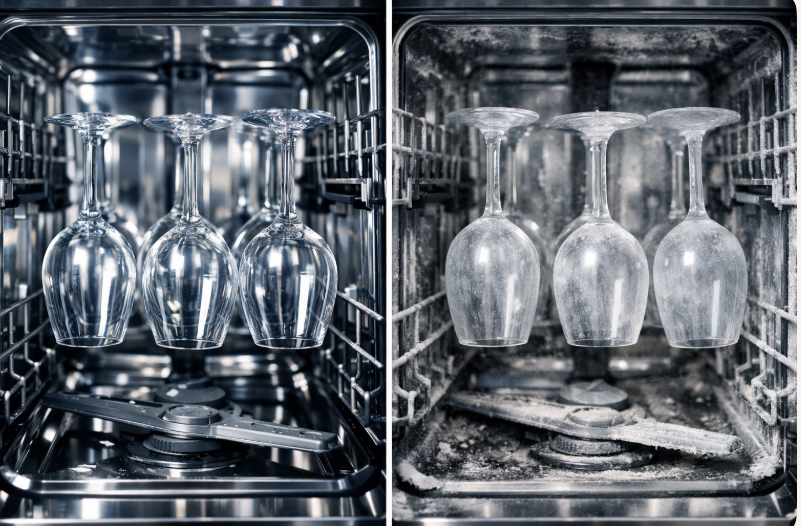
While the dishwasher is running, watch the floor beneath it and the cabinet under the adjacent sink. Any sign of moisture or pooling water during or after the cycle points to a door seal issue or a leaking inlet hose. Check the spray arms by removing them and inspecting the holes for clogs. A spray arm that is blocked with mineral deposits common in Illinois water will not clean dishes effectively regardless of what detergent you use.
Naperville’s water supply, like much of the Chicago metropolitan area, is moderately hard water. Hard water accelerates mineral buildup inside dishwashers, particularly on the heating element and the spray arms. If the unit has been in service for several years without regular cleaning, a professional service call before you start using it regularly is money well spent.
The Washing Machine: Hoses, Pumps, and Spin Cycles
Do a full load of laundry before moving day. This is genuinely the best way to evaluate a washing machine, and it tells you several things at once. Watch the machine as it fills to confirm the water inlet valve is working properly and the machine reaches the correct water level. Listen through the wash cycle for any unusual sounds, particularly loud banging, grinding, or a metallic scraping noise, all of which suggest bearing or drum issues.
Watch for excessive vibration during the spin cycle. Some movement is normal, but a washer that walks across the floor or shakes violently during spin often has a worn drum bearing, a failed suspension spring, or an out of balance load sensor problem. After the cycle ends, check the area around the base and behind the machine for any signs of water leakage.
The supply hoses that connect the washing machine to the wall valves deserve a close inspection. Rubber hoses that are cracked, bulged, or discolored around the fittings are a flood risk. If the home has been sitting vacant during an Illinois winter and the laundry area is in an uninsulated basement or garage, there is also the possibility that the inlet valve or pump sustained freeze damage that only becomes apparent when the machine runs. Braided stainless steel replacement hoses are inexpensive and far more durable than rubber, and swapping them out when you move in is a smart precaution regardless of what condition the existing hoses appear to be in.
For washer and dryer issues after your move in, Naperville Appliance Fix provides same day and next day repair appointments across Naperville and the surrounding DuPage County communities.
The Dryer: The Appliance Most Likely to Be Overlooked
Dryers are the appliance that new homeowners least frequently think to inspect carefully, and they are also one of the most potentially serious if problems go unaddressed. A blocked or partially restricted dryer vent is among the leading causes of residential house fires in Illinois.
Start by locating the dryer vent exhaust on the exterior of the home. It should have a flap cover that opens freely when the dryer is running. If the flap does not open, or if you can see lint buildup around it, the vent is at least partially blocked. From inside, check the transition hose that runs from the back of the dryer to the wall duct. Flexible foil hoses that have been crushed, kinked, or compressed behind the machine restrict airflow significantly.
Run the dryer with a small load and time how long it takes to fully dry. If a standard load of mixed laundry is still damp after 45 to 50 minutes on a regular heat setting, that is a sign of either a heating element problem or restricted airflow. If the dryer is warm but not hot, or if the exterior of the machine feels unusually hot to the touch while the drum temperature seems low, those are signals that need professional attention before regular use.
The Water Heater: Age and Sediment Are Your Main Concerns
The water heater is one of those appliances that works quietly in the background until the day it suddenly does not. Finding the serial number and decoding the manufacture date is the first thing to do. A water heater that is more than 10 years old when you move in is approaching the end of its statistically average service life, and replacing it proactively is often more economical than dealing with an emergency leak or failure.
Once you know the age, do a visual inspection of the unit. Look for any signs of rust or corrosion around the base, around the inlet and outlet connections at the top, or around the pressure relief valve. A water heater that shows exterior rust is often experiencing interior corrosion as well.
Turn on a hot water tap and let it run. The hot water should arrive within a reasonable time and should maintain a consistent temperature. A water heater that takes an unusually long time to recover after use, or one that produces water with a slightly metallic or sulfurous smell, often has a significant sediment buildup inside the tank. Flushing the tank annually is standard maintenance, but if it has not been done in years, the layer of sediment insulates the heating element from the water, forces the unit to run longer, and reduces the effective capacity of the tank.
The HVAC System and Furnace: The Most Critical Appliance in an Illinois Home
In Naperville, where winter temperatures regularly push into single digits and wind chill events make it feel colder still, your furnace is not optional equipment. Getting a comprehensive HVAC inspection before or immediately after moving in is arguably the most important appliance check you will do.
The air filter is the first thing to look at. A heavily clogged filter tells you two things: the previous occupants were not maintaining the system, and the furnace has been working under restricted airflow conditions for an unknown period of time. Replace the filter immediately regardless of its apparent condition and note the size for future reference. Most forced air systems in Naperville area homes use filters sized 16x25x1 or 20x25x1, though this varies by unit.
Check that all supply and return vents throughout the house are open and unobstructed. Walk through each room and confirm that air is flowing from supply vents when the system is running. Uneven airflow between rooms can indicate duct leaks, a failing blower motor, or zoning issues.
Have the furnace professionally inspected and tuned before your first Illinois winter in the home, particularly if you do not have documentation of recent service. A professional technician will check the heat exchanger for cracks, test the ignition system, inspect the burner assembly, verify gas pressure, and test the safety controls. A cracked heat exchanger is a carbon monoxide risk, and it is not something that shows up in a standard home inspection.
The City of Naperville also recommends keeping high efficiency furnace exhaust and intake vents clear of snow and ice accumulation during winter storms, since these vents sit close to ground level on many homes in the area and can be blocked after heavy snowfall.
For air conditioning, test the system if the season allows. Confirm that the outdoor condenser unit powers on, that it is free of debris inside the casing, and that air coming from interior vents is actually cool. Check that refrigerant lines running into the home are insulated. A system that struggles to maintain set temperature on a hot day, or one that runs continuously without cycling off, often has a refrigerant charge issue or a dirty evaporator coil.
The Garbage Disposal: A Small Appliance with Big Inconvenience Potential
Garbage disposals fail more frequently than most homeowners expect, and they are often not thoroughly evaluated during a home inspection walkthrough. Turn the unit on with cold water running. Listen for a clear, unobstructed hum. A unit that makes a buzzing sound but does not spin has a jammed or seized plate, which can sometimes be reset but often signals that the motor is on its way out.
Check under the sink for any moisture around the disposal’s sink connection or around the discharge line that connects to the drain. A slow drip that has been ignored can cause significant cabinet and subfloor damage over time. While you are under the sink, inspect the connection between the disposal and the dishwasher drain line, a common point of leakage in kitchens where both appliances see heavy use.
Red Flags That Mean You Need a Professional Before You Move In
Some findings from your walkthrough are simple enough to address yourself. Others are clear signals that a professional technician needs to evaluate the appliance before you start using it regularly. Call a professional if you find any of these:
A refrigerator compressor that runs constantly without maintaining set temperature, which often indicates the compressor itself is failing. A furnace that short cycles, meaning it fires and shuts off rapidly without reaching the set temperature. Any sign of water staining or rust around the base of the water heater. Dryer that is warm but not adequately hot, combined with any evidence of lint buildup in the vent duct. Washing machine inlet hoses that are older than five years, cracked, or show any discoloration near the fittings. An oven that reads more than 25 degrees off from its set temperature. Dishwasher that leaves standing water in the bottom after a completed cycle.
Naperville Appliance Fix serves homeowners across Naperville, Bolingbrook, Aurora, Lisle, Plainfield, and surrounding communities throughout DuPage and Will counties. Whether you have just closed on a home and want a comprehensive appliance inspection before move in, or you have discovered a problem after settling in, a local technician who knows the specific challenges of Chicagoland homes is the right call.
Building a Maintenance Calendar from Day One
One of the most practical things any new Naperville homeowner can do is create a simple maintenance calendar based on the age and condition of the appliances you found during your inspection. This is not complicated. It is just a matter of recording what you have and when things are likely to need attention.
Write down the manufacture date of each major appliance. Note any issues you found during your walkthrough and whether they were addressed. Set annual reminders to clean refrigerator condenser coils, replace furnace filters monthly during peak heating season, flush the water heater tank, clean the dryer vent, and run a cleaning cycle on the washing machine and dishwasher.
If two or more major appliances are approaching the end of their expected service life simultaneously, it is worth factoring replacement costs into your household budget now rather than being caught off guard. Naperville’s competitive real estate market often means buyers waive certain contingencies to win offers, but that does not mean appliance health should be ignored after closing.
Frequently Asked Questions About Appliance Inspection When Moving to Naperville
Does the home inspection cover all the appliances in my new home?
A standard home inspection in Illinois typically evaluates major built in appliances by operating them at a basic level. However, inspectors are generally not assessing the remaining lifespan, internal component condition, or maintenance history of each appliance. They confirm it powers on and performs its primary function, not that it is in reliable long term condition.
How do I find out how old the appliances are in my new home?
Locate the serial number tag on each appliance and use a brand specific decoder or a free online tool like HomeSpy to decode the manufacture date. The serial number location varies by appliance type but is typically on an interior wall, door frame, or back panel.
What is the average lifespan of major home appliances?
Kitchen and laundry appliances average 13 to 15 years of service life under normal use conditions. Gas furnaces typically last 15 to 20 years. Electric water heaters average 8 to 12 years and gas water heaters average 8 to 10 years. Air conditioning units average 10 to 15 years, with some systems lasting longer with proper annual maintenance.
Should I replace appliances before moving into my new Naperville home?
Not necessarily. The decision depends on age, condition, and your inspection findings. An 8 year old refrigerator in good condition with clean coils and solid gaskets likely has years of reliable service ahead of it. A 12 year old water heater with visible rust and slow recovery time is a stronger candidate for proactive replacement. Your inspection findings and the manufacture dates you decode will guide that decision.
What appliance problems are most common after Illinois winters?
The most common cold weather related appliance issues in the Chicago suburban area involve washing machine inlet valves and supply hoses that sustained freeze damage, refrigerators in unheated garages that were not designed for that environment, dryer vents blocked by ice and compacted lint, and furnaces that have been running under excessive strain due to dirty filters and blocked venting.
Who should I call for appliance repair in Naperville?
Naperville Appliance Fix provides appliance repair and inspection services across Naperville and the surrounding suburbs, including same day availability for urgent issues. From refrigerator diagnostics to washing machine repair and furnace related appliance questions, having a trusted local service provider on hand is one of the smartest steps you can take when settling into a new home.
Moving to Naperville is an exciting step, and the city genuinely earns its reputation as one of Illinois’s best communities. A few hours spent thoroughly checking your new home’s appliances before move in day can protect that investment and start your Naperville chapter on the right foot. For a professional pre move in appliance inspection or any repair needs after settling in, reach out to Naperville Appliance Fix.