The direct answer: Homeowners in Naperville’s older neighborhoods, including Cress Creek, Hobson West, Fox Valley Gardens, and similar communities built from the 1970s through the 1990s, are statistically far more likely to be living with appliances at or beyond their expected lifespan than homeowners in newer developments. Refrigerators last 10 to 15 years, dishwashers 9 to 10 years, washers and dryers around 10 to 13 years, and ranges 13 to 15 years on average. If your home’s appliances came with the house or have not been replaced in over a decade, you are likely closer to a major repair or replacement decision than you realize, and knowing the warning signs now can prevent an expensive emergency later.
Why Naperville’s Older Neighborhoods Face a Different Appliance Reality
Naperville is a city built in distinct waves, and that construction history matters enormously when it comes to appliance age. Established communities like Cress Creek were among the first subdivisions built around a golf course in Illinois, with homes dating to the 1970s and 1980s. Neighboring areas including Hobson West, Fox Valley Gardens, Maplebrook, and Ranchview followed a similar timeline, largely constructed through the 1980s and into the 1990s. These remain some of the most desirable addresses in Naperville precisely because of their mature trees, larger lots, and established character within the District 203 and District 204 school boundaries.
What often goes unmentioned in real estate listings is what is happening behind the kitchen cabinets and inside the laundry room. A home built in 1982 that has not undergone a full kitchen renovation may still be operating with appliances that were replaced once, perhaps in the late 1990s or early 2000s, putting them well past 20 years of service. Even homes that received updated appliances during a renovation a decade ago are now approaching the back half of those units’ expected lifespans.
This is not a defect of older Naperville neighborhoods. It is simply math. A neighborhood built 40 to 50 years ago has had multiple appliance replacement cycles pass through it, and unless every homeowner has been diligent about proactive replacement, a meaningful percentage of homes are running appliances that are quietly approaching or have already passed their statistical end of life.
How Long Should Your Appliances Actually Last
Understanding average appliance lifespans gives Naperville homeowners a practical framework for assessing risk in their own homes. According to lifespan data compiled from the National Association of Home Builders and corroborated by multiple appliance industry sources, here is what homeowners should expect from major appliances under normal use and reasonable maintenance.
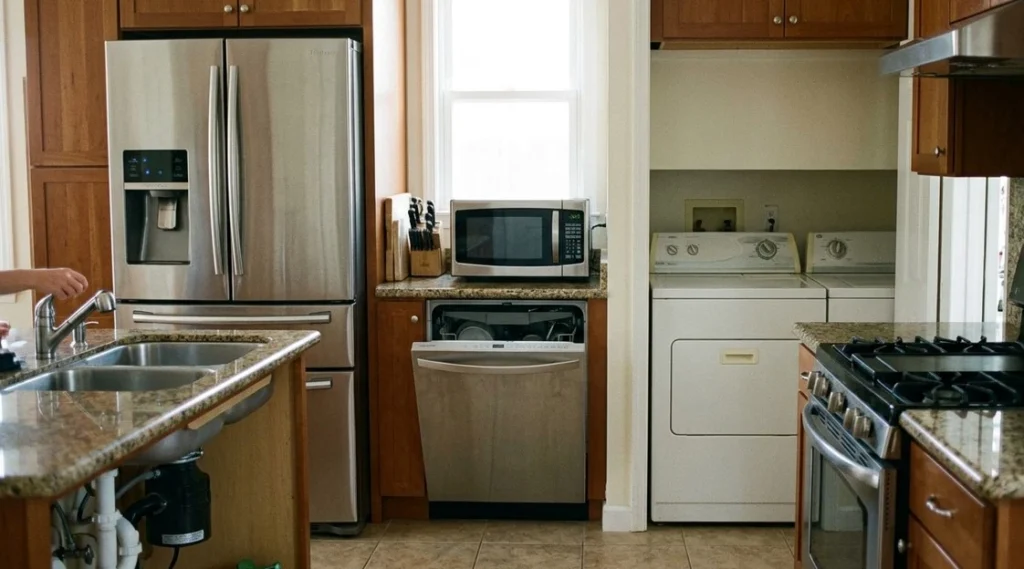
Refrigerators typically last between 10 and 15 years, with French-door and more feature-heavy models trending toward the lower end of that range due to having more components that can fail. Dishwashers average 9 to 10 years of service life. Washing machines last roughly 10 to 13 years, while dryers tend to outlast washers slightly, often reaching 13 years. Gas ranges can last 13 to 15 years, with some sources citing up to 17 years for well-maintained units, while electric ranges average closer to 13 to 15 years as well. Garbage disposals last 8 to 12 years, and microwaves have one of the shorter lifespans among kitchen appliances at 6 to 9 years.
Beyond the kitchen and laundry room, larger home systems carry their own aging timelines that matter just as much in older Naperville homes. Traditional tank water heaters last around 10 to 12 years. HVAC systems, including furnaces and central air conditioning units, typically last 15 to 20 years, though components within those systems can begin showing strain well before full replacement becomes necessary.
If you do the simple math on a home built in Cress Creek, Hobson West, or a similar Naperville neighborhood in the 1980s, and that home has not had a complete appliance refresh within the past decade, the probability that at least one major appliance is operating near or past its expected service life is high.
The Warning Signs That an Aging Appliance Needs Attention
Aging appliances rarely fail without warning. The signs are usually present for weeks or months before a complete breakdown, and recognizing them early is the single most effective way to avoid an emergency repair or a forced same-day replacement.
Refrigerators
A refrigerator approaching the end of its service life often shows inconsistent cooling, where some shelves stay cold while others do not, or where the unit cycles on and off more frequently than it used to. Condensation building up inside the unit, food spoiling faster than expected, and the compressor running louder or longer than normal are all signals worth taking seriously. Door seals on older refrigerators also degrade over time, losing their ability to form a tight seal, which forces the compressor to work harder and accelerates the appliance’s overall decline.
For homeowners in established Naperville neighborhoods noticing any of these symptoms, scheduling a refrigerator repair Naperville diagnostic visit early can often extend the appliance’s useful life by several years through a targeted repair, rather than waiting until a full compressor failure forces an emergency replacement.
Dryers
An aging dryer typically takes longer to dry each load, requiring two cycles where one used to suffice. The exterior may feel unusually hot during operation, and a burning smell, even a faint one, should never be dismissed. According to fire safety data, dryers are responsible for an estimated 15,970 home fires annually in the United States, with the leading cause being failure to properly clean the lint filter and exhaust vent system. Homes older than ten years face meaningfully elevated fire risk specifically because of degraded venting systems and components that have not been inspected or serviced regularly.
For older Naperville homes where the original dryer venting was installed decades ago, a professional dryer repair Naperville visit that includes a full vent inspection is one of the most valuable preventive steps a homeowner can take, both for appliance longevity and for household safety.
Dishwashers
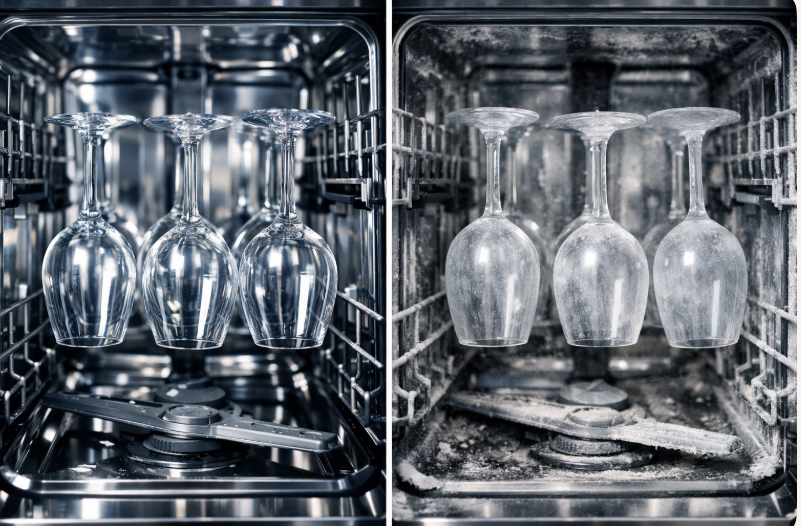
Aging dishwashers often leave dishes less clean than they used to, require pre-rinsing that was not necessary when the unit was newer, or take noticeably longer to complete a cycle. Standing water at the bottom of the tub after a cycle finishes is a common sign of pump or drain degradation. Musty odors, even after cleaning the filter, often indicate that seals and gaskets have begun to break down, which is also when leaks become more likely.
Given that dishwasher leaks are among the most expensive consequences of delayed appliance maintenance, with secondary water damage to cabinets and flooring potentially costing thousands of dollars, addressing early dishwasher symptoms through professional dishwasher repair Naperville service is one of the more financially impactful maintenance decisions a homeowner in an older Naperville home can make.
Washing Machines
Excessive vibration or movement during the spin cycle, unusual noises, and water that does not drain completely are all common signs of an aging washing machine. Front-load washers in particular can develop musty odors from accumulated residue in older gasket designs, a problem that becomes more pronounced as the gasket material degrades with age.
Ranges and Ovens
An older range or oven that heats unevenly, takes longer to reach the set temperature, or has burners that ignite inconsistently is showing the typical signs of aging components. For gas ranges specifically, any change in flame color, inconsistent ignition, or a detectable gas odor warrants immediate professional attention rather than routine monitoring, since these symptoms can indicate a developing safety issue rather than a simple performance decline.
The Maintenance That Actually Extends Appliance Life in Older Homes
For homeowners in Naperville’s established neighborhoods who want to push their appliances toward the upper end of their expected lifespan rather than the lower end, a few specific maintenance habits make a measurable difference.
Refrigerator coils should be vacuumed at least once a year to remove dust and debris that interferes with cooling efficiency and forces the compressor to work harder than necessary. This single habit is one of the most overlooked maintenance tasks in older homes, where coils may not have been cleaned in years.
Dryer lint traps should be cleaned after every single use, and the exhaust vent itself should be professionally cleaned every one to two years. This is especially important in older Naperville homes where the original venting material and routing may not match current best practices for length and bend configuration.
Dishwasher and washing machine detergent usage matters more than most homeowners realize. Excessive detergent is one of the leading causes of premature wear in both appliances, as the buildup attacks seals, gaskets, and internal mechanisms over time. Using the minimum effective amount of detergent, rather than the amount many people assume is needed for a thorough clean, meaningfully extends the service life of both appliances.
Scheduling an annual professional inspection across your major appliances, particularly once they pass the eight to ten year mark, allows a certified technician to catch developing issues, such as a weakening door seal or a slightly underperforming compressor, before they become full failures.
When Repair Makes Sense vs. When Replacement Is the Smarter Call
This is the question every homeowner in an older Naperville home eventually faces, and the answer depends on a straightforward calculation that compares repair cost to the appliance’s remaining expected lifespan and replacement cost.
A widely used guideline in the appliance industry is the fifty percent rule. If a repair will cost more than fifty percent of the price of a comparable new appliance, replacement is generally the more financially sound choice, particularly if the appliance is already in the back half of its expected lifespan. A $300 repair on a refrigerator that is six years old and otherwise functioning well is a reasonable investment. A $700 repair on a refrigerator that is fourteen years old and has had two prior service calls is a signal that replacement likely makes more sense.
Age alone should not be the only factor in this decision. A well-maintained appliance that has received regular care can sometimes outperform its statistical lifespan significantly, while a neglected appliance can fail well ahead of schedule. This is exactly why a professional diagnostic assessment matters more than simply checking the appliance’s age against a chart. A qualified technician can evaluate the actual condition of the specific components involved, the cost of the needed repair, and the realistic remaining lifespan of the unit, giving homeowners in older Naperville neighborhoods the information they need to make a financially sound decision rather than guessing.
The full range of appliance repair services available across Naperville includes exactly this kind of honest repair-versus-replace assessment, helping homeowners in established neighborhoods avoid both premature replacements and repairs that do not make financial sense given an appliance’s age and condition.
Budgeting for Aging Appliances in an Older Naperville Home
Given how predictable appliance aging actually is, homeowners in established Naperville neighborhoods benefit from treating appliance replacement as a planned expense rather than an unplanned emergency.
A practical approach is to inventory every major appliance in the home along with its approximate age and condition, then map out a realistic replacement timeline based on the lifespan averages outlined above. An appliance approaching its tenth year, particularly a dishwasher or microwave, should be budgeted for replacement within the next one to three years even if it is currently functioning without issue. This kind of proactive planning prevents the common scenario where multiple appliances fail in the same year, creating a financial strain that proper planning would have avoided.
Setting aside a modest monthly amount specifically earmarked for appliance repair and replacement, even as little as fifty to one hundred dollars per month, builds a meaningful reserve over a few years that smooths out the financial impact of the inevitable replacement cycle that comes with owning an older home.
The Bottom Line for Naperville’s Established Neighborhoods
Living in one of Naperville’s older, established neighborhoods comes with genuine advantages, including mature landscaping, larger lots, strong community character, and proximity to excellent schools and the city’s historic downtown. It also comes with a higher statistical likelihood that your home’s appliances are approaching or have already passed their expected service life.
The good news is that this is entirely manageable with the right awareness. Knowing your appliances’ approximate age, recognizing the early warning signs of decline, performing the maintenance that genuinely extends appliance lifespan, and budgeting proactively for the eventual replacement cycle will keep most homeowners ahead of the curve rather than caught off guard by a sudden failure.
If you are unsure how much life is left in your home’s current appliances, a professional assessment is the fastest way to find out. Contact Naperville Appliance Fix for an honest evaluation of your aging appliances and a clear recommendation on whether repair or replacement makes the most financial sense for your specific situation.
Naperville Appliance Fix serves established and newer neighborhoods alike across zip codes 60540, 60563, 60564, 60565, 60566, and 60567. Call (630) 467-7265 for same-day diagnostic appointments on all major appliance brands.