The direct answer: New construction homes in Naperville are not immune to appliance problems, and in some cases face more issues in the first three years than homeowners expect. The most common culprits are installation errors made during the building process, builder-grade appliance quality, electrical and water line connection mistakes, and the rising complexity of smart appliances that fail at higher rates than their simpler predecessors. Knowing what to watch for during this window can save new Naperville homeowners thousands of dollars in avoidable repairs and water damage.
The Myth of the Trouble-Free New Build
There is a common assumption among homeowners moving into a new construction property in Naperville: everything is brand new, so nothing should break for years. That assumption feels logical, but it does not match what actually happens inside new homes during the first three years of ownership.
According to the inaugural J.D. Power U.S. Appliance Reliability and Service Study released in 2025, appliances purchased within the past one to three years experience a meaningful rate of problems, and the study specifically tracked failure patterns during this exact ownership window. The research found that connected appliances with Wi-Fi and Bluetooth capabilities experience an average of 87 problems per 100 units, while appliances without connectivity features experience 63 problems per 100 units. Both numbers represent a far higher failure rate than most new homeowners expect from equipment they consider brand new.
For Naperville homeowners moving into developments near Route 59, the Fox River corridor, or newer subdivisions in the 60564 and 60565 zip codes, understanding why new construction homes generate appliance service calls so quickly changes how you approach the first three years of ownership. The issue is rarely about appliance age. It is almost always about installation, appliance grade, and the rushed pace of residential construction.
Why New Construction Homes Generate Appliance Problems So Quickly
Builder-Grade Appliances Are Built to a Price Point, Not a Performance Standard
Production home builders in Naperville and across the Chicago suburbs typically include a package of appliances as part of the base home price. These builder-grade appliances are selected primarily for cost efficiency rather than long-term reliability. Builders negotiate bulk purchasing agreements with manufacturers, and the models included in those agreements are frequently entry-level units within a given brand’s lineup, even when the brand name itself sounds premium.
This matters because entry-level appliances generally use simpler components, thinner-gauge sheet metal, and less robust motors and compressors than mid-range or premium models from the same manufacturer. A builder-grade dishwasher and a mid-tier dishwasher from the same brand can look nearly identical on the showroom floor while having meaningfully different internal component quality. New Naperville homeowners are often surprised to learn that the appliances conveying with their new home are not necessarily the same quality tier they would have chosen if shopping independently.
Installation Errors During Rushed Construction Timelines
This is the single most significant factor behind early appliance failures in new construction homes, and it is also the most preventable with proper inspection.
Residential construction operates on tight, often compressed schedules. Subcontractors installing appliances, running water lines, and wiring electrical circuits frequently work under deadline pressure to keep the overall build on schedule. According to research on new construction plumbing defects, problems with appliance water connections often do not become obvious during the final walkthrough because everything appears to function correctly at first. Issues typically surface after a few weeks or months of normal use, once buildup, pressure changes, or thermal cycling exposes a connection that was never properly sealed or tightened.
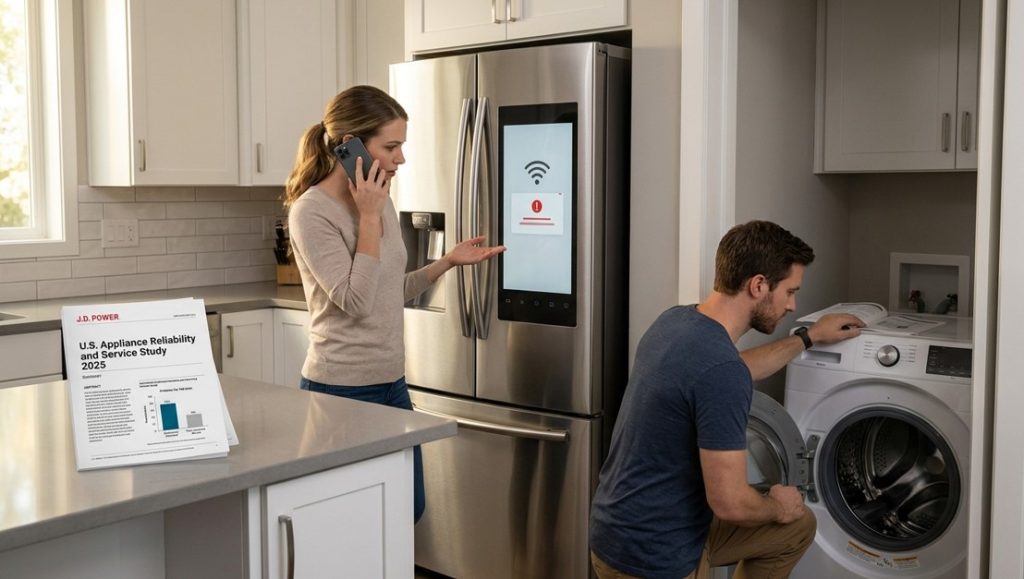
Common installation defects found in new Naperville construction include loose water supply line fittings behind refrigerators and dishwashers, improperly sloped drain lines that cause dishwashers and washing machines to drain slowly or back up, dryer vents that are not properly sealed or are crushed during wall installation, and electrical circuits that were not sized correctly for the actual draw of the appliance installed.
Electrical issues are particularly common in new builds. According to research on new construction electrical problems, faulty wiring, improper grounding, and circuits not designed to handle the load of modern kitchen and laundry appliances are among the most frequently documented defects in newly built homes. When a high-draw appliance such as an electric range, dryer, or refrigerator is connected to a circuit that was not properly calculated for its amperage requirements, the appliance experiences inconsistent power delivery that can damage control boards and motors well before the unit reaches the end of its expected lifespan.
The Complexity Problem with Modern Smart Appliances
New construction homes built in the past few years increasingly include smart, Wi-Fi-connected appliances as standard or near-standard features. These appliances offer genuine conveniences, including remote diagnostics, energy usage tracking, and mobile notifications. They also introduce significantly more points of potential failure than the simpler mechanical appliances they replaced.
The J.D. Power study findings on connectivity and reliability are notable specifically because they isolate connectivity as an independent risk factor. An appliance with more sensors, circuit boards, and software-dependent functions has more components that can fail, and new construction homes are exactly where these newer, more complex appliance models are most likely to be installed as standard builder packages.
The Appliances Most Likely to Need Repair in a New Naperville Home’s First Three Years
Dishwashers
Dishwashers are particularly vulnerable to installation-related problems because they involve water supply lines, drain connections, and electrical wiring all within a confined cabinet space that is often one of the last items installed during the build process. Loose water supply fittings, improperly aligned drain hoses, and inadequate door gasket seating are common defects that produce leaks within the first year of occupancy.
A leak that begins as a minor drip under a new dishwasher can saturate the cabinet base and subfloor before a homeowner notices anything wrong, since the leak is often hidden behind the cabinet kickplate. Naperville homeowners who notice any moisture, musty odor, or water pooling near a new dishwasher should schedule professional dishwasher repair in Naperville immediately rather than waiting to see if the issue resolves on its own.
Refrigerators
Refrigerators in new construction homes face two primary risk categories. The first is water line connections for ice makers and water dispensers, which are frequently the source of slow leaks when fittings were not properly tightened during installation. The second is electrical circuit issues, since refrigerators require a dedicated, properly grounded circuit to function reliably, and any shortcuts taken during the rough-in electrical phase can produce intermittent cooling failures or compressor stress that shortens the appliance’s effective lifespan.
New Naperville homeowners should pay close attention to refrigerator temperature consistency during the first several months of occupancy. A refrigerator that struggles to maintain consistent temperature, cycles unusually frequently, or produces unusual noises warrants a refrigerator repair Naperville diagnostic visit to rule out an installation-related electrical or water supply issue before it escalates into compressor damage.
Electric and Gas Ranges
Range installations involve some of the highest-stakes electrical and gas connection work in the entire home. Electric ranges require dedicated high-amperage circuits, and gas ranges require precise, leak-free gas line connections. According to research from appliance installation specialists, incorrect amperage and inadequate grounding on high-draw appliances like ranges and ovens are among the most common installation defects found in new residential construction, and these issues can produce anything from inconsistent heating performance to genuine fire and shock hazards.
Gas range installation carries additional risk. Improperly sealed gas fittings can allow small amounts of gas to escape into the kitchen, creating both a safety hazard and, over time, component corrosion that affects burner and igniter performance. Naperville homeowners with a gas range that produces inconsistent flame size, takes longer than expected to ignite, or has any detectable gas odor should request oven and range repair in Naperville immediately, as these symptoms can indicate an installation defect that requires prompt professional attention.
Washers and Dryers
Laundry appliances in new construction homes face vent and drain-related installation issues most frequently. Dryer vents that are crushed, improperly sealed, or routed with too many bends during wall framing reduce airflow significantly, which both extends drying time and creates a meaningful fire risk due to lint accumulation in a restricted vent path. Washing machine drain lines that are improperly sloped or undersized can cause water backup and overflow issues that surface gradually as mineral buildup accumulates inside the drain pathway.
The Hidden Risk: Why “It’s Still Under Warranty” Does Not Mean “It’s Free to Fix”
Many new Naperville homeowners assume that any appliance problem during the first three years is automatically covered under the manufacturer’s warranty, the builder’s warranty, or both. The reality is more complicated.
Manufacturer warranties typically cover defects in materials and workmanship on the appliance itself, but they generally do not cover damage caused by improper installation. If a dishwasher fails because of a manufacturing defect, the manufacturer warranty applies. If the same dishwasher fails because the installing subcontractor used an incorrectly sized drain hose or failed to properly tighten a water supply fitting, that failure falls into a gray area that manufacturers frequently deny as an installation issue rather than a product defect.
Builder warranties, which typically cover structural and systems issues for a period ranging from one to two years depending on the builder and the specific warranty terms, may or may not extend to appliance installation defects depending on how the warranty document is written. Naperville homeowners should review their builder warranty documentation carefully to understand exactly what installation-related appliance issues are covered and for how long.
This coverage gap is precisely why a professional diagnostic visit matters so much during the first three years of new home ownership. A qualified technician can determine whether a given appliance failure stems from a manufacturing defect, which should be addressed through the manufacturer warranty process, or an installation error, which may fall under builder warranty coverage or may require direct repair at the homeowner’s expense if both warranty windows have closed.
Warning Signs Naperville New Homeowners Should Watch for During the First Three Years
Certain symptoms during the early years of new home ownership warrant immediate professional attention rather than a wait-and-see approach.
Flickering lights or tripped breakers when an appliance runs indicate the circuit may not have been properly sized for that appliance’s electrical draw. This is both an appliance performance issue and a potential fire safety concern that should never be ignored.
Any moisture, dampness, or musty smell near a water-connected appliance signals a possible installation defect in the supply or drain line. Catching this early prevents the cabinet, flooring, and subfloor damage that develops when a slow leak runs undetected for weeks or months.
Inconsistent dishwasher drainage or standing water after a cycle often points to an improperly sloped or sized drain line installed during construction rather than a problem with the dishwasher itself.
A dryer that takes noticeably longer than expected to dry a load is frequently a sign of a restricted or improperly installed vent path, which both wastes energy and creates a documented fire risk according to fire safety research from the National Fire Protection Association on dryer-related home fires.
Inconsistent refrigerator temperatures or a unit that cycles unusually often during the first year can indicate either a manufacturing issue or an electrical supply problem from the circuit installation.
According to appliance installation safety research, real-world cases ranging from gas leaks to significant water damage have resulted from installation errors that were not caught early, which is exactly why new construction homeowners benefit from treating these warning signs as immediate action items rather than minor annoyances to monitor.
What New Naperville Homeowners Should Do in the First 90 Days
The first three months of occupancy are the highest-value window for catching installation defects before they cause secondary damage or void warranty eligibility.
Test every water-connected appliance thoroughly within the first two weeks of moving in. Run the dishwasher through a full cycle and inspect the cabinet base afterward. Check behind the refrigerator for any moisture around the water line connection. Run the washing machine through a complete cycle and confirm the drain empties fully and quickly.
Document the model and serial numbers of every appliance in the home, along with photos of the installation, particularly the connections behind and beneath major appliances. This documentation becomes valuable if a dispute arises later about whether a failure was a manufacturing defect or an installation error.
Schedule a baseline professional inspection during the first 60 to 90 days of ownership, even if no problems have appeared yet. A certified technician can identify marginal installation issues, such as a water line fitting that is slightly loose or a dryer vent with reduced airflow, before they progress into an active failure. This proactive visit typically costs far less than the water damage restoration or appliance replacement that results from an undetected installation defect running for months.
The complete range of appliance repair services available in Naperville includes diagnostic visits specifically designed for new construction homes, where the technician evaluates not just the appliance itself but the quality of the surrounding installation work.
When to Call a Professional vs. When to Contact Your Builder
Determining whether a new home appliance issue should go through the builder’s warranty process or be addressed directly through appliance repair depends on the root cause of the problem.
If the appliance itself has failed due to a manufacturing defect unrelated to installation, such as a control board failure or a compressor that fails despite proper installation, the manufacturer’s warranty is typically the correct first call.
If the problem stems from how the appliance was connected to water, gas, or electrical systems during construction, the builder’s warranty department should be notified, since this falls under their responsibility for the quality of the installation work performed by their subcontractors.
If the root cause is unclear, which is common, a professional appliance repair diagnostic is the right starting point. A qualified technician can identify whether the issue traces back to the appliance or the installation, giving the homeowner the documentation needed to pursue the correct warranty path while also addressing any immediate safety concerns.
The Bottom Line for New Construction Homeowners in Naperville
A new home does not guarantee trouble-free appliances. In many cases, the rushed pace of residential construction, the use of builder-grade appliance models, and the increasing complexity of smart, connected appliances combine to create a higher likelihood of issues during the first three years than many new homeowners anticipate.
The good news is that most of these problems are preventable or catchable early with the right approach. Testing appliances thoroughly in the first weeks of occupancy, documenting installation conditions, watching for the specific warning signs outlined above, and scheduling a proactive diagnostic visit during the first 90 days will catch the vast majority of installation-related defects before they become expensive water damage claims or premature appliance failures.
For Naperville homeowners navigating their first months or years in a new construction home, having a trusted local resource for diagnosis and repair removes the guesswork from determining whether an issue is a quick fix, a manufacturer warranty claim, or a builder responsibility.
Contact Naperville Appliance Fix for a new construction diagnostic visit, and get a clear, honest assessment of your appliances and their installation before small issues become expensive problems.
Naperville Appliance Fix serves new construction and established homes across zip codes 60540, 60563, 60564, 60565, 60566, and 60567. Call (630) 467-7265 for same-day diagnostic appointments on all major appliance brands.