The short answer: Delaying appliance repair in Naperville almost always costs more than fixing the problem early. What starts as a $150 fix can quietly escalate into a $1,500 compressor replacement, a $3,800 water damage restoration bill, or a monthly electricity charge that climbs without any obvious cause. Small appliance problems do not stay small. They compound, spread, and eventually force your hand at the worst possible time.
Why Naperville Homeowners Put Off Appliance Repairs (And Why It Backfires)
There is a predictable pattern that plays out in homes all across Naperville, in neighborhoods from Cress Creek to River Run to the newer builds along Route 59. A refrigerator starts making a faint humming noise. A dishwasher develops a slow drip under the cabinet. A dryer takes two cycles to dry what used to take one. None of these symptoms feel urgent. Life is busy. The appliance is still technically working. The repair can wait until next week, or next month, or whenever things slow down.
By the time “things slow down,” the problem has grown. The humming refrigerator is now struggling to hold temperature. The drip under the dishwasher has been quietly soaking the cabinet floor and the subfloor beneath it for three months. The dryer vent is partially blocked and creating a heat buildup that a certified technician would flag as a fire risk.
This is not a worst-case scenario. It is the most common scenario. Understanding exactly what happens when repairs get delayed and what those delays cost in real dollars gives Naperville homeowners the context to make better decisions before a small inconvenience turns into a genuine emergency.
Hidden Cost #1: The Repair Bill That Multiplies
The most direct financial consequence of delayed appliance repair is that minor mechanical problems become major ones. A component that needs a simple adjustment or an inexpensive part replacement will, if left alone, place stress on every connected part of the appliance. Those secondary components then begin to fail as well, and what might have been a single-part fix becomes a multi-part overhaul.
The numbers tell this story clearly. A simple $150 repair today could prevent a $1,500 replacement next year. What might have been a $30 part and a 20-minute service visit could easily transform into multiple parts needing replacement and several hours of labor.
Consider how this plays out with a refrigerator. A worn door seal is one of the most common and inexpensive refrigerator repairs, often costing between $75 and $150 in parts and labor. A damaged seal allows cold air to escape, which forces the compressor to run longer and harder to maintain the set temperature. Over weeks and months of that extra strain, the compressor degrades far faster than it should. Compressor replacement, when that day arrives, typically runs between $400 and $650 in parts alone, with labor on top of that. The homeowner who put off a $100 door seal fix ends up paying four to six times more because the delay transferred the stress to the most expensive component in the entire appliance.
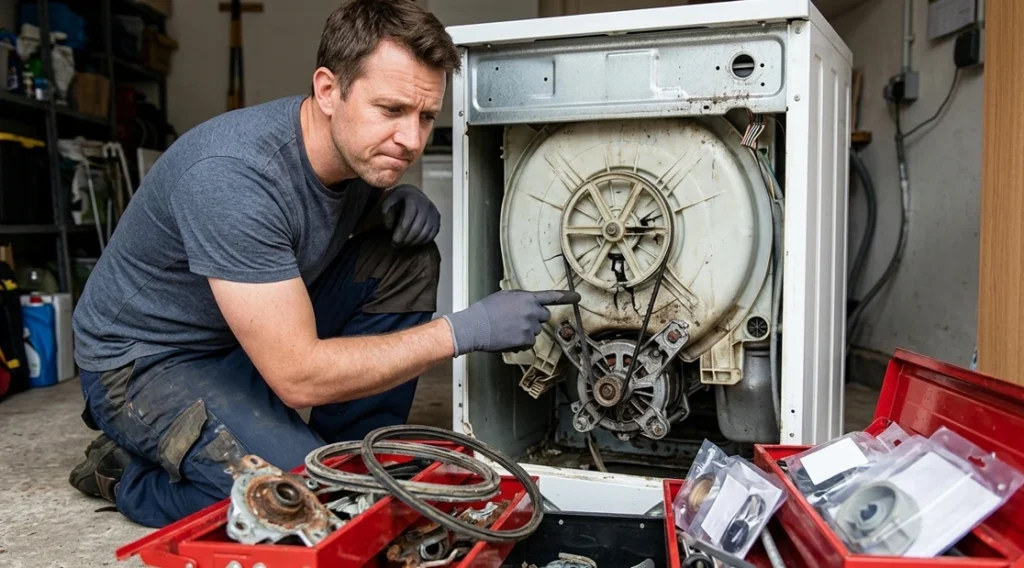
This cascading failure dynamic applies across every major appliance category. A dishwasher pump seal that costs $80 to replace becomes a full pump motor replacement at $200 to $400 if ignored. A dryer heating element that runs $100 to fix places thermal stress on the motor and control board if left unaddressed, turning a simple repair into a much more complex diagnostic job.
Professional dryer repair in Naperville addresses these issues at the component level before the stress migrates to more expensive parts. The earlier a certified technician diagnoses the problem, the narrower and less expensive the repair scope will be.
Hidden Cost #2: The Energy Bills You Are Already Paying
This is the hidden cost that most Naperville homeowners never connect back to a malfunctioning appliance. When an appliance is not working properly, it almost always uses more energy to accomplish the same job. That energy waste shows up on your ComEd bill every month, silently draining money while the appliance continues to appear functional.
The numbers are significant. A properly functioning refrigerator uses between 400 and 600 kilowatt-hours per year. A faulty one can hit 800 kilowatt-hours, a 30 to 100 percent increase in consumption. At Illinois residential electricity rates, that difference translates into $50 to $120 of additional annual electricity cost from a single appliance. Over the 15-year lifespan of a refrigerator, the difference between an efficient and an inefficient unit can exceed $2,000 in electricity costs alone.
Dryers present an even more pronounced energy penalty when not functioning correctly. Electric dryers can use up to 900 kilowatt-hours per year under normal operation, but inefficiencies from a clogged vent, a failing heating element, or a worn drum seal add 20 to 30 percent to that figure. A dryer that takes two cycles to finish one load is not just inconvenient; it is doubling the energy cost of every laundry cycle in your home.
The ENERGY STAR program tracks appliance efficiency benchmarks and has documented how maintenance and timely repair can preserve efficiency ratings that most appliances are designed to maintain throughout their expected service life. When a mechanical problem prevents an appliance from operating within its designed parameters, the gap between actual energy use and rated energy use grows with every passing week.
For Naperville homeowners dealing with a refrigerator that cycles too frequently, a dryer that runs long, or a dishwasher that requires multiple washes to get dishes clean, the appliance itself is the most likely explanation. A professional diagnostic visit will identify whether a straightforward repair can restore normal energy consumption, which often pays for itself within a few billing cycles.
Hidden Cost #3: Water Damage and the Bills That Follow
Some of the most expensive consequences of delayed appliance repair have nothing to do with the appliance itself. They come from what the malfunctioning appliance does to the surrounding structure of your home while you wait.
Water-connected appliances, including refrigerators with ice makers and water dispensers, dishwashers, and washing machines, are responsible for a significant share of residential water damage claims in DuPage County. The pattern is consistent: a slow leak develops at a hose connection, a door gasket, or an internal seal. The homeowner notices a minor symptom, perhaps a slightly damp cabinet floor or a faint musty smell, and puts off calling for service. The leak continues.
Water damage that gets addressed within the first 24 to 48 hours typically costs far less because you are preventing secondary damage like mold growth, structural weakening, and material deterioration. Wait a week, and you are likely looking at mold remediation on top of water damage restoration. The average cost of water damage restoration runs between $1,383 and $6,378, with most homeowners spending around $3,864 according to HomeAdvisor’s 2025 national cost data.
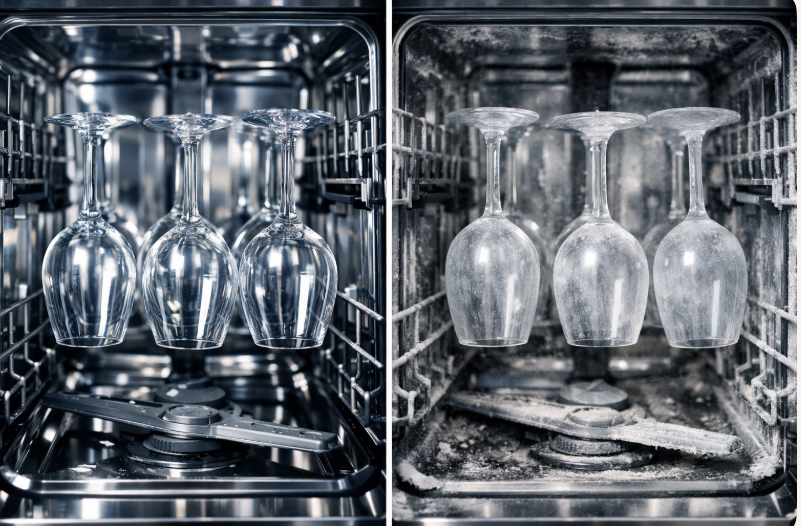
Kitchen dishwasher leaks are particularly destructive because of where they occur. Water that migrates under a dishwasher reaches the cabinet base, the flooring, the subfloor, and in some cases the wall framing. Particleboard and MDF cabinet bases, which are common in Naperville homes built between the 1980s and 2000s, absorb water and lose structural integrity quickly. A slow leak running for three to six months before discovery results in average total damage costs of $11,000 according to documented leaking appliance repair data. A dishwasher repair that addresses the leak at its source, whether a faulty pump seal, a degraded door gasket, or a cracked supply line, costs between $175 and $325 in most cases. The math between early intervention and delayed discovery is not subtle.
Refrigerators with ice maker lines present a related risk. A supply line that develops a pinhole leak behind the refrigerator can run for months before it becomes visible. By then, the flooring behind the unit, the baseboard, and in some cases the wall behind may be saturated and beginning to host mold colonies. Homeowners insurance typically covers sudden and accidental water damage from appliance failures, but policies commonly exclude gradual leaks that the homeowner should have caught and addressed. That exclusion means the water damage from a slow refrigerator leak is far more likely to be an out-of-pocket expense than coverage from a quick pipe burst.
Scheduling a refrigerator repair at the first sign of pooling water, unusual moisture near the unit, or ice maker irregularities is not just about preserving the appliance. It is about protecting the flooring, cabinetry, and structural materials that surround it.
Hidden Cost #4: The Fire and Safety Risks Nobody Budgets For
Some delayed appliance repairs carry consequences that go well beyond financial loss. They create physical safety risks for everyone in the home, and in Naperville where homes in older neighborhoods sit close together on established lots, fire risk has community implications as well as personal ones.
Dryers are the most documented example. According to the National Fire Protection Association, an estimated 15,970 home fires annually in the United States are attributed to clothes dryers, with the leading cause being failure to clean the lint filter and exhaust vent system. The average property damage per dryer fire is approximately $10,600. Homes with dryers older than ten years face a fire risk up to 30 percent higher than those with newer appliances, largely due to degraded venting systems and worn components that allow heat to build up in ways newer machines are designed to prevent.
The warning signs of a dryer heading toward a dangerous failure are not subtle once you know what to look for. Clothes that take significantly longer to dry than normal, a burning smell during operation, a dryer exterior that feels unusually hot to the touch, and lint accumulating outside the vent opening are all indicators that the exhaust system is compromised. Each of these symptoms is repairable at a fraction of what fire damage would cost. Each of them is also commonly ignored or attributed to the dryer simply being old. The NFPA’s home fire prevention resources offer clear guidance on dryer maintenance intervals and warning signs that every homeowner should review at least annually.
Gas-powered appliances, including gas ranges, ovens, and gas dryers, introduce an additional safety dimension when repairs are delayed. Faulty igniters and worn valve connections can allow unburned gas to accumulate, creating both health risks from exposure and explosion risk from ignition. These are not theoretical concerns. They are the exact scenarios that certified appliance technicians are trained to diagnose and correct, and they are far easier and far less expensive to address in the early stages of malfunction than after a failure event.
Hidden Cost #5: Shortened Appliance Lifespan and Premature Replacement Costs
Every major appliance in a Naperville home has an expected service life. Refrigerators are designed to last 15 years. Gas ovens typically perform for 15 years as well. Washers and dryers carry expected lifespans of 11 and 14 years respectively. Dishwashers are designed for approximately 10 years of normal operation.
These lifespans assume the appliance is maintained and repaired when problems arise. When repairs are consistently delayed, the mechanical stress of operating with compromised components accelerates wear on every part of the machine. An appliance that should last 15 years may need replacement in 10 or 12 years if it has spent extended periods running in a degraded state. The cost of premature replacement is one of the most significant hidden costs of the delay pattern, and it is also one of the least visible because it materializes years after the original decisions were made.
New appliances range in cost from $375 for entry-level models to over $2,000 for mid-range full-feature versions of the same category. Replacing a refrigerator, washer, and dryer in the same year because all three have been poorly maintained and have failed ahead of schedule can represent a $4,000 to $6,000 outlay that proper care and timely repairs would likely have pushed another five to seven years into the future.
According to ConsumerAffairs appliance repair cost data, repairing an appliance costs between $80 and $900 on average, while replacing the same appliance runs from $200 to well over $1,000. For appliances in the early to middle portion of their expected service life, repair is almost always the more economical choice by a meaningful margin.
The repair-versus-replace decision gets harder when an appliance has been allowed to deteriorate because multiple systems have failed simultaneously. A technician diagnosing a refrigerator that has been running with a bad door seal and degraded condenser coils for two years may find compressor damage as well. At that point, the repair cost approaches replacement cost, and the decision becomes genuinely difficult. That situation is largely avoidable with earlier intervention.
The Warning Signs Naperville Homeowners Should Never Ignore
Understanding which symptoms signal an imminent escalation helps homeowners prioritize which calls to make sooner rather than later.
Unusual noises from any appliance are a communication. Grinding, banging, rattling, or squealing sounds indicate mechanical components under abnormal stress. These sounds do not resolve on their own. They intensify as the affected component degrades further.
Extended cycle times in dryers, dishwashers, and washing machines indicate that the appliance is working harder than it should to complete its function. The energy waste associated with extended cycles adds up monthly while also accelerating wear.
Unexplained increases in utility bills are one of the most underappreciated warning signs. When a ComEd bill rises without a corresponding change in usage habits or seasonal explanation, a malfunctioning appliance is a logical first suspect.
Water near appliances is never a normal operating condition. Any moisture observed near a refrigerator, dishwasher, or washing machine warrants immediate investigation. The cost difference between a same-day repair and a water damage restoration job is the difference between hundreds and thousands of dollars.
Burning smells from dryers or ovens require same-day attention. They are not a sign that the appliance needs to run more cycles to break in. They are a warning that heat is reaching materials it should not be reaching.
What a Timely Repair Actually Costs vs. What Delay Costs
For Naperville homeowners who want a direct cost comparison, here is what the numbers actually look like across common delay scenarios.
A refrigerator door seal repair costs $75 to $150. Ignoring it until compressor failure brings that cost to $500 to $900, plus the energy waste of $50 to $100 per month during the delay period.
A dishwasher pump seal repair costs $100 to $200. Ignoring it until a slow leak has been running for three months produces water damage restoration costs of $1,383 to $6,378, not including cabinet replacement or mold remediation.
A dryer vent cleaning and heating element check costs $80 to $150. Ignoring it until the appliance fails completely, or until a fire event occurs, produces replacement costs of $400 to $1,200 for the appliance, or property damage averaging $10,600 per dryer fire incident.
A washer suspension rod replacement costs $120 to $200. Ignoring it until the drum damages the interior of the machine turns the repair into a near-total replacement scenario.
These are not scare tactics. They are the documented cost progressions that appliance repair professionals see repeatedly across the Naperville market and nationally.
How to Stop the Delay Pattern Before It Costs You
The most effective approach is to treat unusual appliance behavior as a scheduling prompt, not as a signal to monitor the situation for a few more weeks.
When something sounds different, performs differently, or produces any moisture or odor it did not produce before, that is the moment to call. Not the moment to search for the repair number. Not the moment to tell yourself it is probably nothing. The moment to book the appointment.
The full range of appliance repair services available to Naperville homeowners covers every common appliance category with same-day and next-day availability, upfront pricing before any work begins, and certified technicians who carry the parts needed for most common repairs on the first visit. Getting a professional diagnostic at the first sign of a problem is almost always the cheapest option available, and it is reliably cheaper than any of the alternatives that delay creates.
If you are already noticing a symptom that has been present for a few weeks, the call is still worth making now. Every additional day an appliance operates with an unresolved mechanical problem adds to the eventual repair bill, to the energy waste, and to the risk of secondary damage. The best time to call was when you first noticed the symptom. The second best time is today.
Contact Naperville Appliance Fix for a same-day diagnostic appointment and an upfront estimate before any repair work begins.
Naperville Appliance Fix serves homeowners across zip codes 60540, 60563, 60564, 60565, 60566, and 60567. Call (630) 467-7265 for same-day and next-day appliance repair service on all major brands.