Illinois winters are no joke. If you live anywhere from Naperville to Rockford, you already know that temperatures between December and March can plunge well below freezing, with wind chills making it feel even colder. What most homeowners overlook, though, is that those brutal cold snaps do not just affect how comfortable your home feels. They quietly take a toll on the appliances you depend on every single day, from your refrigerator and washing machine to your dishwasher and dryer.
The short answer to the question: Yes, Illinois winter weather absolutely affects your home appliances. Freezing temperatures cause water lines to ice over, compressors to overwork, dryer vents to clog with ice buildup, and electronic components to become brittle and fail ahead of schedule. The good news is that most of this damage is preventable with the right maintenance steps and a little seasonal awareness.
This guide breaks down exactly which appliances are most vulnerable, what the cold does to each one, and what you can do right now to protect your investment before the next polar vortex hits the Chicago metro area.
Why Illinois Winters Are Especially Harsh on Appliances
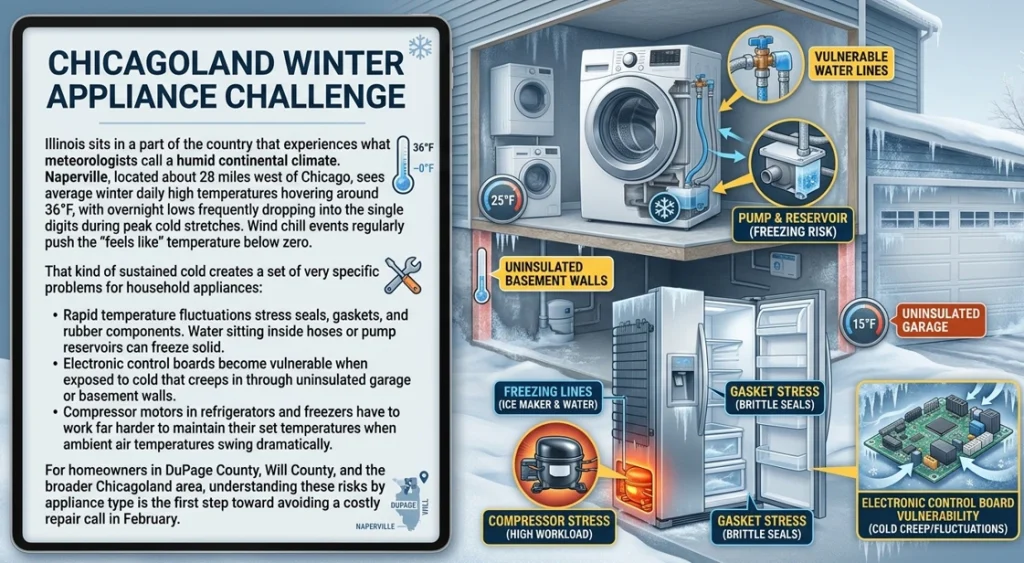
Illinois sits in a part of the country that experiences what meteorologists call a humid continental climate. Naperville, located about 28 miles west of Chicago, sees average winter daily high temperatures hovering around 36°F, with overnight lows frequently dropping into the single digits during peak cold stretches. Wind chill events regularly push the “feels like” temperature below zero.
That kind of sustained cold creates a set of very specific problems for household appliances:
Rapid temperature fluctuations stress seals, gaskets, and rubber components. Water sitting inside hoses or pump reservoirs can freeze solid. Electronic control boards become vulnerable when exposed to cold that creeps in through uninsulated garage or basement walls. Compressor motors in refrigerators and freezers have to work far harder to maintain their set temperatures when ambient air temperatures swing dramatically.
For homeowners in DuPage County, Will County, and the broader Chicagoland area, understanding these risks by appliance type is the first step toward avoiding a costly repair call in February.
How Cold Weather Affects Your Refrigerator and Freezer
Your kitchen refrigerator is generally well protected inside a temperature controlled home. However, if you have a second refrigerator or a standalone freezer in an unheated garage or basement, you are dealing with a different situation entirely.
When a refrigerator sits in a space where ambient temperatures drop below 35°F to 38°F, the appliance’s thermostat can be tricked into thinking the compressor does not need to run. The fridge essentially reads the surrounding cold air as refrigeration, which means the internal compartment never actually gets cold enough. The result is spoiled food, even though the unit appears to be running fine.
On the flip side, when outdoor temperatures are extreme, a refrigerator’s compressor has to run almost continuously to compensate for temperature differentials and drafts. Condenser coils that are already dusty or dirty make this worse by reducing heat dissipation, forcing the motor to run hotter and longer. Over time, this accelerates compressor wear.
What you should do:
Keep your condenser coils clean by vacuuming them every few months. If your second fridge lives in an unheated garage, consider whether it is truly designed for that environment. Garage ready refrigerators are built with a secondary heater in the thermostat to handle ambient cold. Standard units are not. If the appliance has visible ice buildup in unusual places or you notice food spoiling despite normal temperature settings, schedule a diagnostic check before the problem gets worse.
For refrigerator repair in Naperville and the surrounding suburbs, Naperville Appliance Fix offers fast diagnostic appointments so you are not left guessing about what the cold did to your unit.
The Impact of Freezing Temperatures on Washing Machines
Washing machines are among the most cold weather vulnerable appliances in your home, especially if yours sits in a garage, basement, or against an exterior wall that is not well insulated. The reason comes down to water.
Your washer uses a water inlet valve and a series of hoses to fill the drum before each cycle. When temperatures drop below 32°F in the space where the machine sits, any water remaining in those hoses or the pump can freeze. When water turns to ice inside a pump or inlet valve, the pressure it creates can crack the valve housing or rupture the hose entirely. Then, when temperatures rise again and the ice thaws, you end up with a flood.
Dryer vent blockages are another serious winter issue. During winter months, the warm moist air expelled by your dryer encounters cold outdoor temperatures at the vent exit point. If the vent cap becomes partially obstructed by ice, snow, or lint buildup, that warm air can condense and freeze inside the duct. A blocked dryer vent does not just mean longer dry times. It is one of the leading causes of residential dryer fires.
Winter clothing compounds this problem. Heavy sweaters, thick jeans, and thick cotton towels absorb significantly more water than summer clothes, which means your dryer has to work longer and harder per load during the coldest months of the year.
What you should do:
Wrap your washer’s water supply hoses with foam pipe insulation, which is inexpensive and available at any hardware store in the Naperville area. If the machine sits in an unheated space, disconnect water supply lines entirely between laundry sessions and only reconnect them when you are ready to run a load. Make sure your dryer vent hood is clear of snow and ice, particularly after major Illinois snowstorms. Consider scheduling a professional dryer vent cleaning before winter, especially if it has been more than a year since the last service.
You can read more about washer and dryer repair services in Naperville to understand when a professional needs to step in versus what you can handle yourself.
What Happens to Your Dishwasher in Cold Weather
Dishwashers are another appliance with water at the heart of their function, and that makes them vulnerable to many of the same cold weather problems as washing machines. If your kitchen is near an exterior wall with inadequate insulation, the water inlet valve and supply line can freeze, especially in older homes in the western suburbs where insulation may not meet modern standards.
A frozen inlet valve often cracks under the pressure, meaning the first warm day after a cold snap can bring an unwelcome surprise under your kitchen sink. Beyond freezing, cold air infiltration through cabinet walls causes the appliance’s heating element to work harder during the wash cycle, which increases energy consumption and puts extra wear on the element itself.
What you should do:
Keep cabinet doors beneath the kitchen sink slightly open during periods of extreme cold to allow warmer air from the room to circulate around the plumbing. If you notice your dishwasher is taking longer to complete a wash cycle or leaving dishes wetter than usual, that can signal a heating element under extra stress. A professional inspection before winter gets into full swing is a smart investment.
How Winter Cold Strains Your HVAC System and Furnace
Your furnace is the hardest working appliance in your home from November through March. In Illinois, heating costs represent the single largest household energy expense during winter, and a furnace that has not been properly serviced going into the season is one that will likely leave you without heat at the worst possible moment.
High efficiency furnaces common in Naperville area homes have exhaust and intake vents positioned near ground level, often on the side of the home. These vents are particularly prone to ice and snow blockage after winter storms. When either vent becomes obstructed, the furnace can trip its safety sensor and shut down completely, leaving the home without heat.
Air filters are another critical factor. During winter, most Illinois homeowners keep windows closed and run the HVAC system continuously. Dirty filters restrict airflow, force the system to work harder, and significantly reduce indoor air quality. Changing filters every 30 days during heavy use periods is the standard recommendation for most systems.
What you should do:
Schedule a professional furnace tune up before the heating season begins, ideally in October or early November. Check high efficiency vent pipes after every major snowstorm to confirm they are clear. Replace air filters monthly during peak heating months. If your furnace is making unusual sounds, cycling on and off frequently, or producing uneven heat, do not wait on getting it looked at. For residents across Naperville and Aurora, prompt furnace repair is critical before temperatures hit extreme lows.
Water Heater Performance During Illinois Winters
Your water heater is working overtime during winter months, particularly in colder areas of the home like basements. The cold water entering the unit during January in Illinois is significantly colder than in summer, which means the heating element or gas burner has to run longer and harder to bring water to the desired temperature.
Tank style water heaters in uninsulated or poorly insulated basements lose heat faster when surrounded by cold air, which means the unit runs additional cycles just to maintain standby temperature. This accelerates wear on the heating element over time. Tankless water heaters can actually freeze if installed in locations exposed to outdoor air without proper freeze protection measures.
What you should do:
Wrap your water heater tank with an insulating jacket, which is widely available at home improvement stores. Keep the thermostat on the unit set no lower than 120°F, which balances energy efficiency against hot water demand. If your hot water heater is more than ten years old and you notice it taking longer to recover between uses, winter is often the season when aging units finally fail.
Power Surges, Outages, and Your Appliances
Illinois winters regularly bring ice storms and high wind events that cause power outages across DuPage and Will counties. When power is restored after an outage, the sudden return of electricity can send a voltage spike through your home’s circuits, and your appliances are directly in the path of that surge.
Refrigerators, dishwashers, and washing machines with electronic control boards are especially susceptible to surge damage. A control board failure can make a perfectly functional appliance behave as though it has completely broken down, even when the mechanical components are entirely fine.
What you should do:
Unplug sensitive appliances when you know a major winter storm is approaching and power reliability is uncertain. Consider investing in whole home surge protection, which is installed at your electrical panel and protects every outlet and circuit. When power returns after an outage, give it a few minutes before plugging appliances back in, and leave one lamp plugged in as an indicator light so you know when electricity is restored.
Signs Your Appliance Was Damaged by Cold Weather
Illinois homeowners often do not realize winter caused appliance damage until days or weeks after a cold snap. Watch for these warning signs:
Your refrigerator is running constantly or the interior is not staying as cold as it should. Water is pooling under your washing machine or around the base of your water heater. The dishwasher is not completing cycles or leaving standing water in the bottom. Your dryer is taking two or three cycles to dry a single load. The furnace is short cycling, meaning it turns on and off rapidly without reaching the set temperature. There is an unusual noise coming from any appliance that was not there before the cold snap.
Any one of these symptoms after a particularly cold stretch of Illinois weather warrants a professional diagnostic check. Catching a failing inlet valve, cracked hose, or struggling compressor early almost always costs significantly less than waiting for the problem to escalate.
A Seasonal Appliance Maintenance Checklist for Illinois Homeowners
Staying ahead of winter appliance problems does not require a lot of time or money. Running through this checklist in late October or early November can save you serious headaches through the coldest months of the year.
Before winter arrives, clean the condenser coils on all refrigerators and freezers, especially any units in garages or basements. Inspect washing machine inlet hoses for cracks, bulges, or brittleness and replace any that look questionable. Insulate hoses and supply lines on appliances in unheated spaces. Have your furnace professionally serviced and replace the air filter. Check your dryer vent from the outside to confirm it opens freely and is not obstructed. Set your water heater to 120°F and consider adding an insulating blanket if the unit is in a cold basement. Confirm your home’s thermostat is working correctly and program it to maintain at least 55°F even when you are away for extended periods.
The City of Naperville’s cold weather resources page also recommends keeping furnace vent pipes clear after snowstorms and ensuring your gas meter remains free of ice and snow accumulation throughout the winter.
When to Call a Professional Appliance Repair Technician
Some appliance winter problems are simple DIY fixes, like adding pipe insulation to washer hoses or clearing a dryer vent cap of ice. Others require a trained technician with the right diagnostic tools and replacement parts.
Call a professional if you notice water leaking from any appliance after a cold stretch, since this often indicates a cracked valve or ruptured hose. A refrigerator that stops cooling despite appearing to run normally, a furnace that fails to ignite, or a washing machine that will not fill are all situations where professional diagnosis is the right call rather than guessing.
Naperville Appliance Fix serves homeowners across Naperville, Bolingbrook, Aurora, Lisle, and the surrounding DuPage and Will County communities. Whether it is a refrigerator acting up after a polar vortex or a washing machine that took on water damage from a frozen hose, having a reliable local repair service you can call makes all the difference when winter appliance problems strike.
Frequently Asked Questions
Can freezing temperatures in a garage damage my refrigerator?
Yes. Standard refrigerators are not designed for garage environments where temperatures drop below 35°F. In those conditions, the thermostat may stop the compressor from running, which paradoxically causes food inside to spoil. Garage ready refrigerators have a built in heater to prevent this problem.
How do I know if my washing machine hose is about to fail from cold weather damage?
Look for visible cracks, bulges, or discoloration on the hose. If you have had the machine for more than five years in a cold basement, consider replacing the hoses as a precaution. Braided stainless steel hoses offer significantly better cold weather durability than standard rubber hoses.
Is it safe to run my dishwasher when it is very cold inside the house?
If your home is being maintained at normal temperature, yes. If you have left the house unheated during an extended trip in winter and temperatures inside have dropped significantly, it is worth running your faucets and checking water lines before using the dishwasher.
How often should I change my furnace filter during an Illinois winter?
For most HVAC systems, every 30 days during peak winter use is the standard recommendation. Homes with pets or residents with allergies may benefit from even more frequent changes.
What is the minimum temperature I should keep my home at in winter to protect appliances?
The City of Naperville recommends keeping your thermostat no lower than 55°F even when the home is unoccupied. This protects both pipes and appliances from freeze damage while keeping energy costs reasonable.
For appliance repair services across Naperville, Aurora, Bolingbrook, Lisle, and surrounding communities, visit Naperville Appliance Fix. From refrigerator repair to washing machine and dishwasher service, our local technicians are ready to help you get through the Illinois winter without a major appliance breakdown.